Which packaging structure fits my product?
Compare rigid boxes, folding cartons and corrugated packaging before choosing finishes.
Packaging knowledge
Explore five connected topics: product families, structures, industry applications, materials and finishes, and procurement. Start with a decision, then follow the relevant guide to samples and specifications.

Start with your buying question. Each guide explains the options, what to confirm and what to send for a specification review.
Compare rigid boxes, folding cartons and corrugated packaging before choosing finishes.
Review bottle orientation, insert support and removal access with the actual product.
Identify specification, quantity and packing choices to discuss before compromising presentation.
Plan bag dimensions from the finished outer box and review the complete loaded set.
Review fit, opening, artwork and finishes before confirming production.
Prepare product measurements, quantity, destination, references and an achievable delivery requirement.
01 / Knowledge library
Start with the packaging system: compare boxes, bags and inserts before specifying individual components.
Hohner lists a plastic snapcase with its Special 20. Compare one recess with a two-part presentation.
Read the guide →Specify guitar slide box dividers using measured inner diameter, outer diameter and length, with finger access to lift the centre slide first.
Read the guide →Kyser describes its acoustic Quick-Change model as spring-loaded. Let the buyer grip the frame on removal.
Read the guide →Dunlop's standard range includes several gauges and variety packs. Calculate height from full envelopes.
Read the guide →Korg's Pitchclip 2 instructions identify the clip, display and power button and describe adjusting the display angle. Follow the closing flap through its arc.
Read the guide →Nikon identifies the HB-90 as a bayonet hood for specific lenses. Try a saddle before specifying a full ring.
Read the guide →Nikon lists screw-on filters by size. Decide which case the buyer can lift first.
Read the guide →Really Right Stuff's installation guide shows how a plate interfaces with the tripod socket. Give the upright its own clearance.
Read the guide →Peak Design's Slide Lite illustrates a strap system with separate anchor connections. Keep metal hardware away from the visible textile.
Read the guide →Manfrotto describes a collapsible grey and white target that packs smaller than its open format. Keep closure flaps away from the working face.
Read the guide →Mitutoyo documents models with different jaw and depth-bar configurations. Put retention where the owner allows it.
Read the guide →Starrett lists outside micrometer sets with standards and an adjusting wrench. Decide what faces the drawer opening.
Read the guide →Starrett lists the 25-881J with a lug back installed and a separate flat back included. Set the seating depth from the body.
Read the guide →Nikon publishes objective families with different mounting threads. Give labels a stable reference.
Read the guide →Starrett describes its 98-8 with a cross-test vial as well as the main vial. Check the complete folded closure.
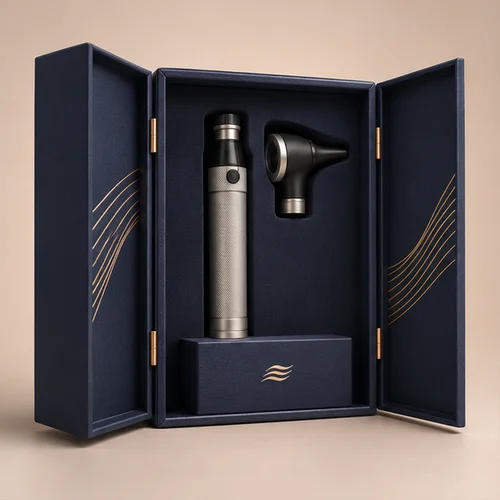
Read the guide →Check dealer shelf width, hinge swing and handle access before commissioning an upright double-door otoscope display box.
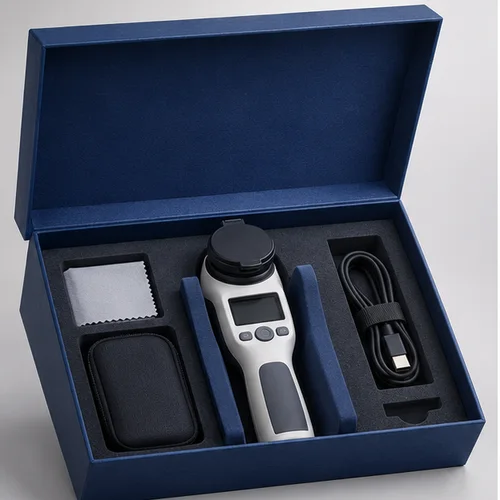
Read the guide →Specify the tray ledge, lifting points and lower dock cavity for a dermatoscope kit. Compare loaded and empty lower-bay samples before tooling.
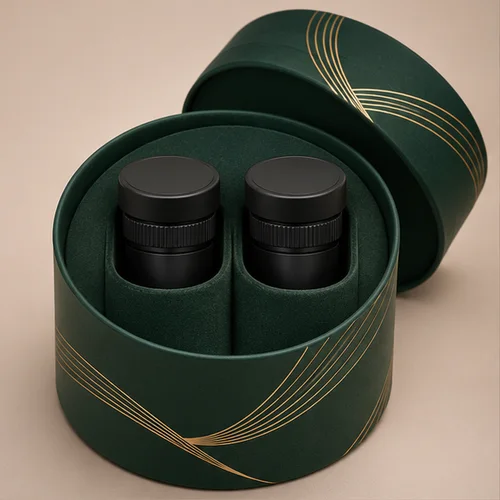
Read the guide →Plan barrel support, finger access and insert orientation for a pair of capped slit-lamp eyepieces in a round presentation box.
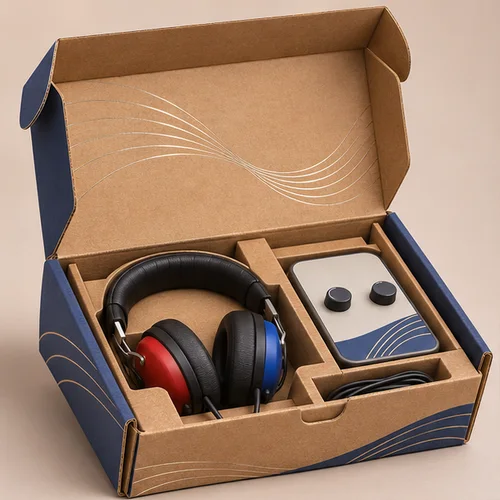
Read the guide →Size a roll-end audiometer mailer around the relaxed headset. Inspect cable clearance at the locking wings and agree the intended shipping route.
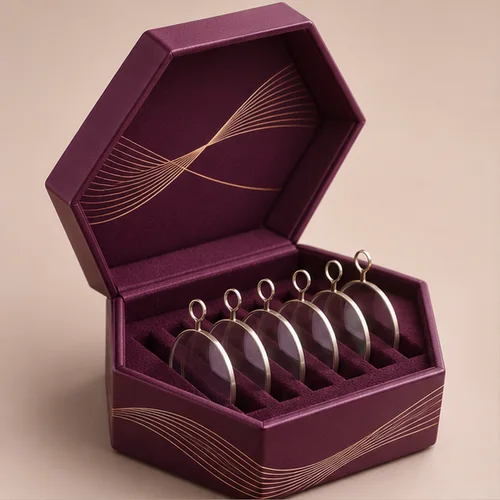
Read the guide →Lay out six mounted trial lenses inside a hexagonal base. Check slot clearance at the angled walls, label visibility and rim-only handling.
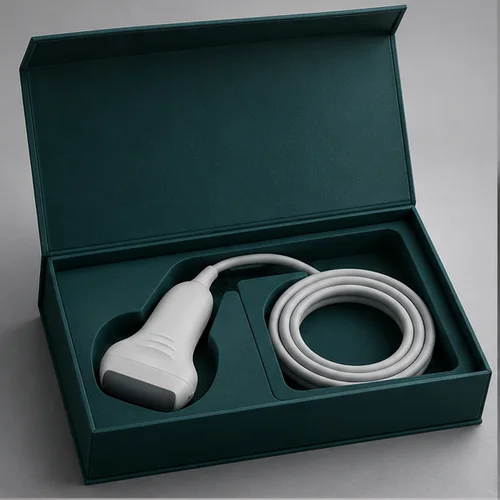
Read the guide →Lay a representative probe or supplier-approved dummy on a full-size print. Give the connector a parking place.
Read the guide →An outline viewed from above hides the height of a cap, eyepiece or adjustment knob. Test the hand path before approving the shoulder.
Read the guide →Start with the device model and accessory part numbers, then identify items supplied separately. Show the identifier while the sleeve is seated.
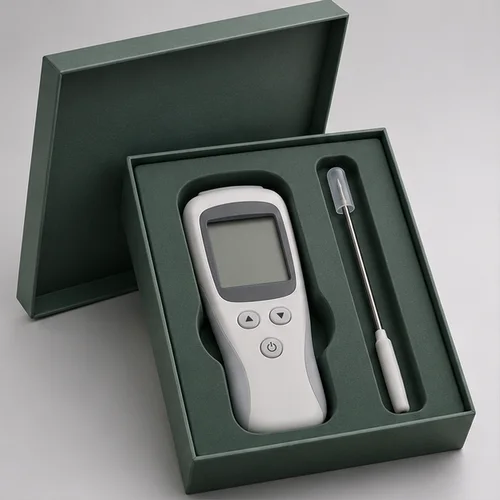
Read the guide →Separate readout mass from slender thermometer stems by recording bare and capped probe lengths and longest packed orientation.
Read the guide →Keep the supplier pouch closed wherever the device owner requires it. Choose a bay based on the pouch variation.
Read the guide →When a decorated bottle picks up a mark, identify the first operation that produces it.
Read the guide →A shared printed carton reduces artwork versions only if the packer and the customer can both identify the enclosed shade.
Read the guide →An empty jar can establish an outline, but it cannot show how far a loaded insert will deflect.
Read the guide →Compare the largest pump body, the smallest body and the heaviest filled pair before committing to one insert.
Read the guide →Before you approve the window die, move the smallest artwork motif to both limits of the carrier pocket.
Read the guide →Check the largest wrapped item against the narrow end of each radial compartment. On a loaded sample, check finger access and clearance under the hinged lid.
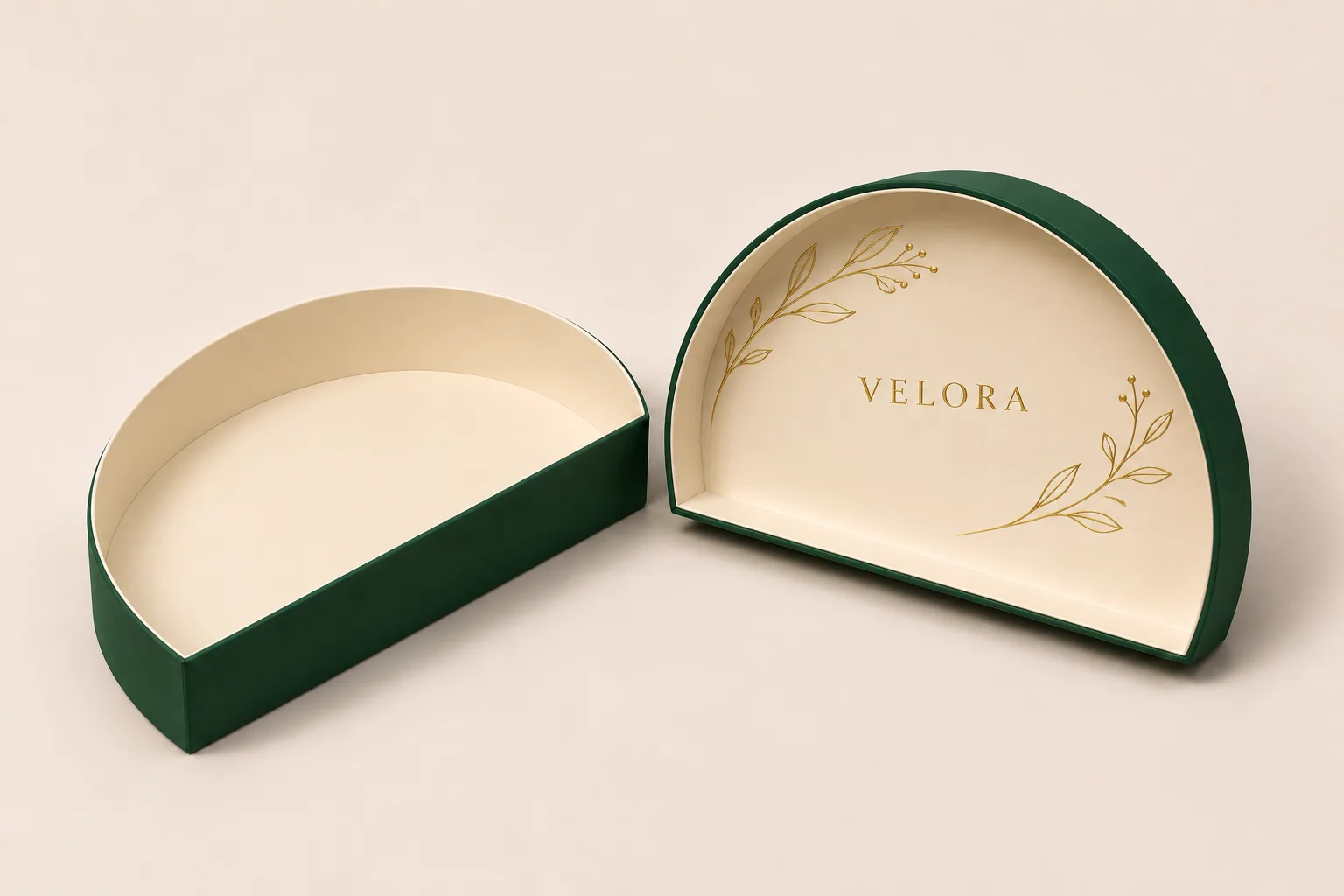
Read the guide →Check how the lift-off lid seats along both the curved wall and the straight edge. Load the intended product and check that the lid lifts without binding.
Read the guide →Compare rigid boxes, folding cartons and corrugated packaging by fit, assembly and shipping. Use a worked dimensional-weight example and a buyer checklist.
Read the guide →Compare folding carton closures by product weight, packing method and opening. Use a sample checklist to choose a workable structure before artwork approval.
Read the guide →Build a corrugated box specification for comparable quotes: structure, board, inserts, closure, print, packing and sample acceptance before production.
Read the guide →Size custom paper bags and euro totes around the finished box: W × G × H chart, mm-to-inch table, handle choices and loaded sample checks. MOQ 1,000.
Read the guide →Compare paperboard, molded pulp and EVA inserts through an MTT chocolate-box quotation: product fit, removal access and the checks needed before approval.
Read the guide →Compare kraft and coated paper for a perfume shopping bag. Review print, handle reinforcement, the base and a loaded sample before selecting the material.
Read the guide →Compare kraft and recycled paper packaging by grade, fibre content, print surface and loaded sample checks before changing your box material.
Read the guide →02 / Knowledge library
Resolve openings, support points, clearance and removal with the actual product.
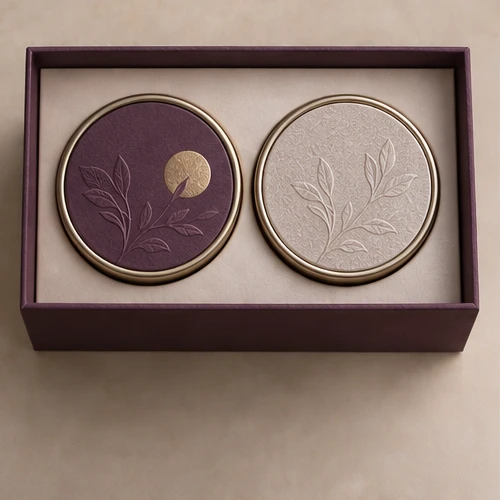
Plan a two-tin and scoop tea gift box around tin support, finger-lift access for the scoop and closed-box transit clearance.
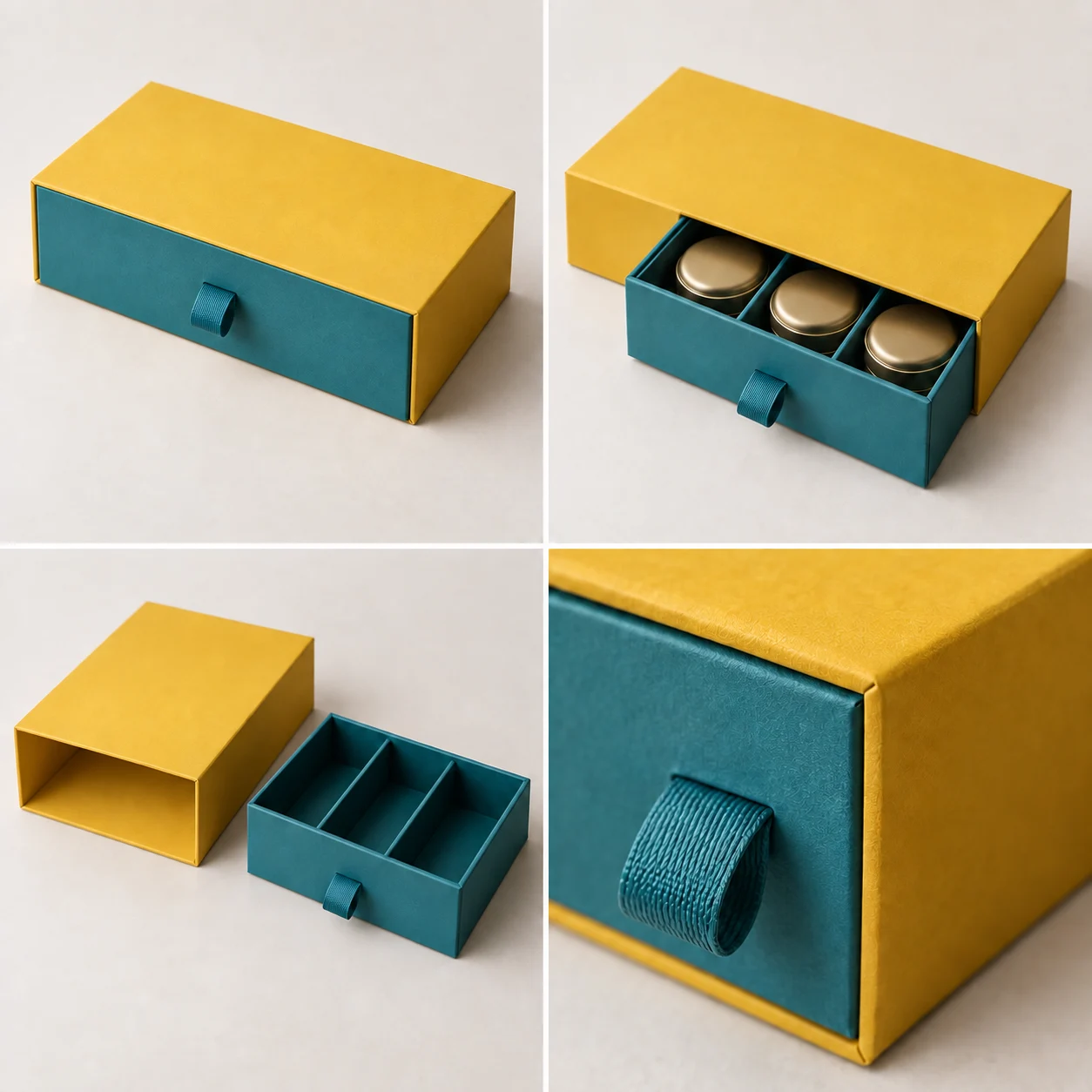
Read the guide →A divided drawer should hold the actual sealed sachets without forcing seals, allow a customer to remove one and slide smoothly when loaded.
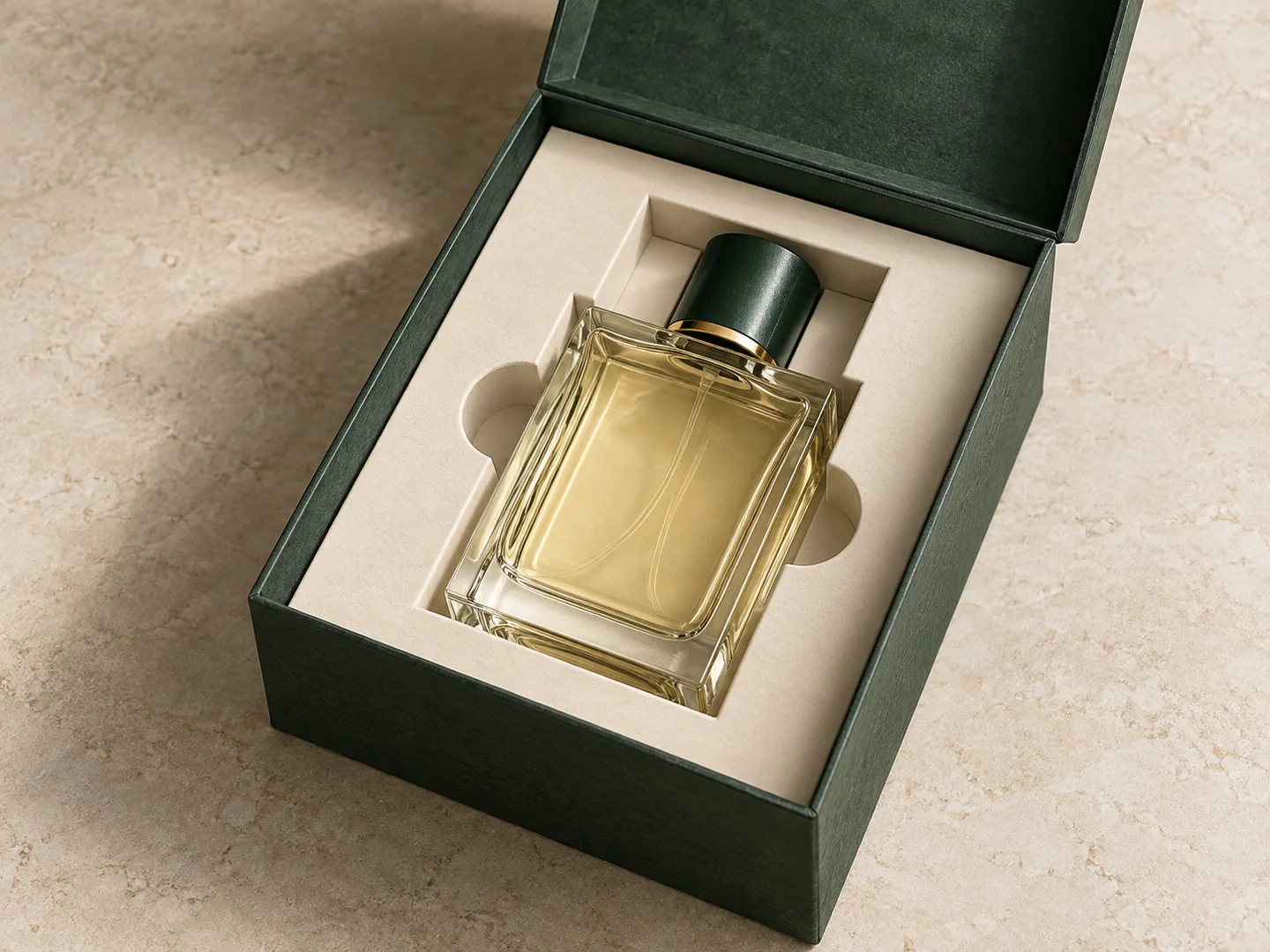
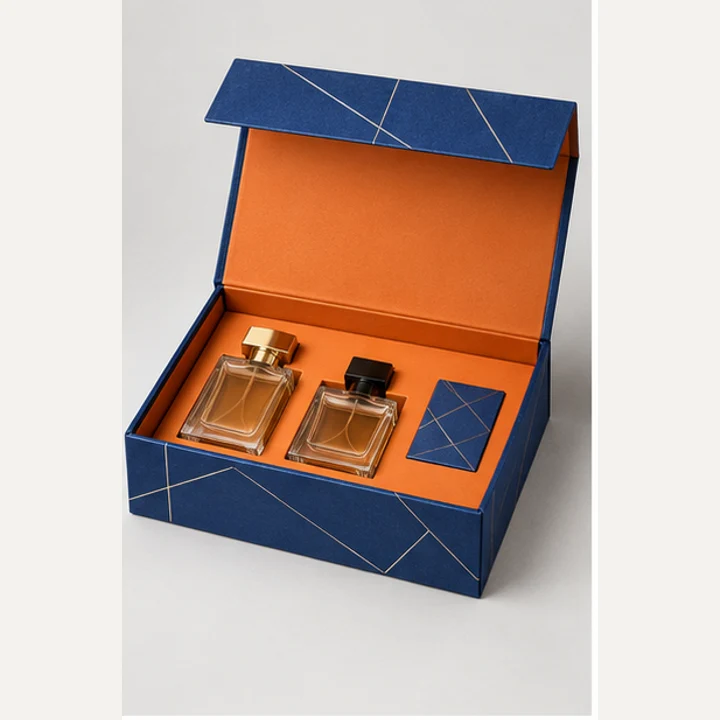
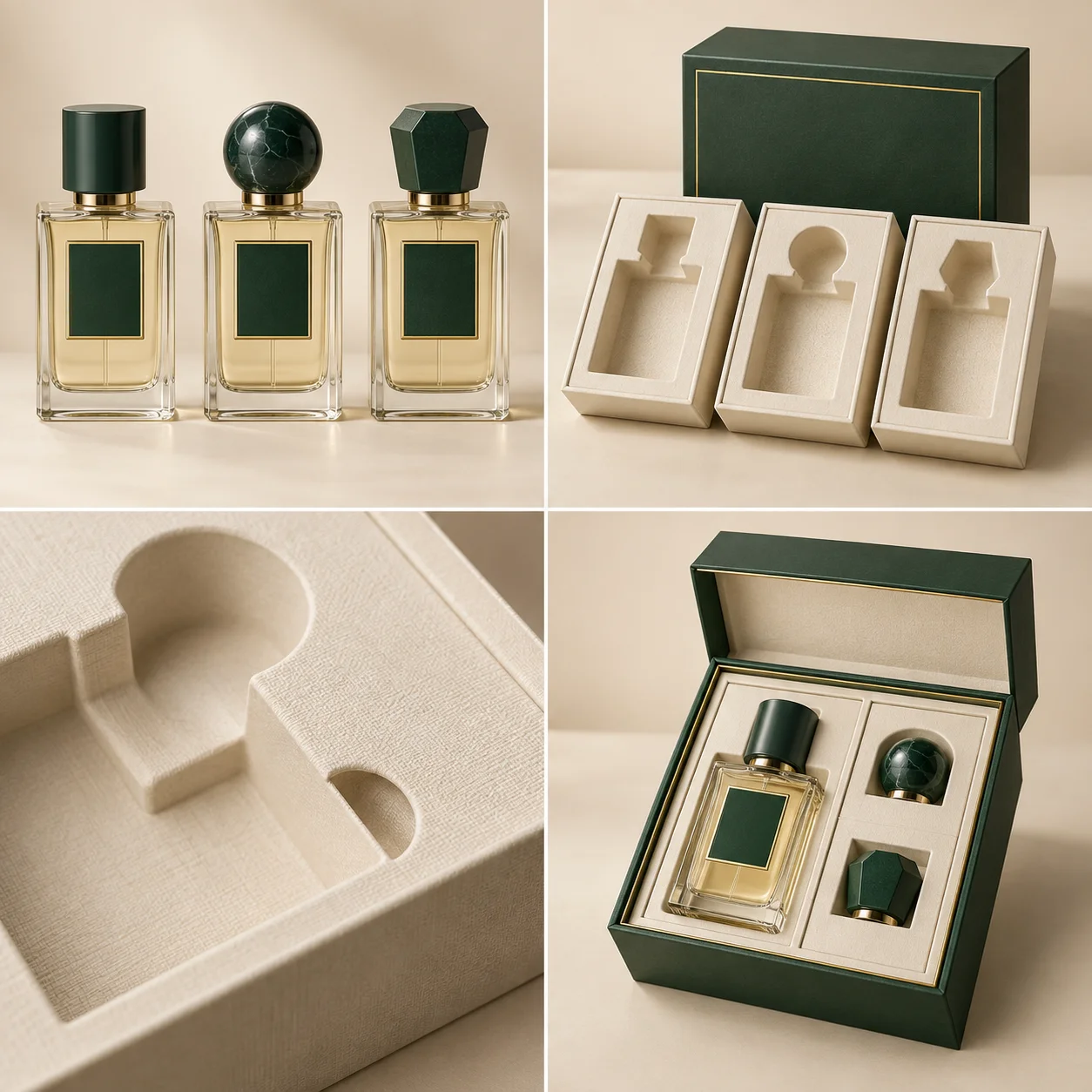
Read the guide →Plan an insert for a full-size perfume bottle and travel spray: measure filled components, protect finishes and check removal before approving the sample.
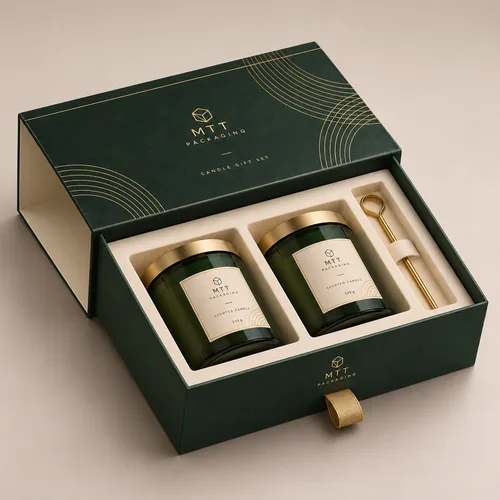
Read the guide →Compare filled candle jars, lid clearances and insert supports before specifying a two-jar drawer box with a separate accessory channel.
Read the guide →Plan a protected channel for a candle accessory, check tool clearance and agree the packing sequence before approving a gift box sample.
Read the guide →Reduce label scuff risk when a travel spray is removed from its insert by checking contact zones, finger access and representative finished components.
Read the guide →Use witness marks and a repeatable sample review to locate tight spots in a gift box before revising the structure or approving production.
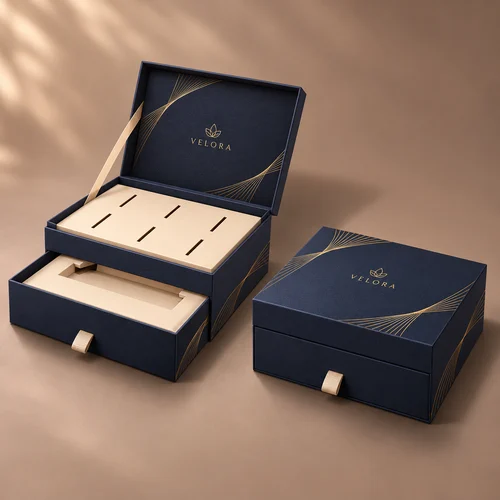
Read the guide →Review hinged-lid and bottom-drawer gift boxes as one loaded structure: check insert support, tray divider and drawer travel with contents.
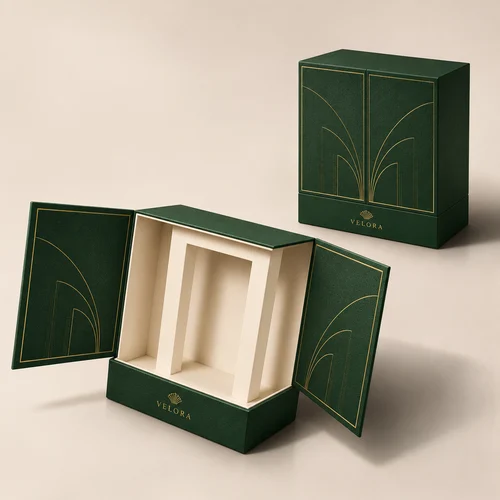
Read the guide →Design upright double-door gift box frames around product support points, removal clearance and both door swing paths using actual items.
Read the guide →Check ribbon lid stays on a loaded rigid box: confirm opening angle, attachment points, folding path and lid materials on physical samples.
Read the guide →Create a pack-out map for two-level gift boxes linking each tray, artwork revision and loading sequence before approving production.
Read the guide →Use a structured sample approval checklist for double-door boxes covering seam alignment, loaded insert removal and revision tracking.
Read the guide →Prepare a complete packaged-product test brief, distribution scenario and acceptance criteria before selecting a laboratory procedure.
Read the guide →Compare an early integrity screen and a distribution simulation before selecting a test plan.
Read the guide →Plan a viewing window in a rigid box: compare lid openings, panel attachment, product visibility and material separation before sampling.
Read the guide →Specify round rigid tube boxes around the filled product: check inner diameter, lid friction, insert access and shipping-carton layout.
Read the guide →Diagnose a magnetic rigid box lid that lifts, catches or closes unevenly using the finished loaded sample.
Read the guide →Plan book-style magnetic rigid boxes around spine hinge allowance, wrap grain, magnet closure registration and loaded insert fit.
Read the guide →Compare void fill vs custom inserts for product movement, packing time and presentation. Use a loaded sample checklist before specifying a shipping pack.
Read the guide →Check paperboard sleeve and tray fit with the finished board, folds and loaded product. Diagnose binding, compare clearances and record sample approval.
Read the guide →Approve two-piece rigid box lid fit using finished measurements, wrap details and loaded samples. Includes a clearance example and acceptance checklist.
Read the guide →Specify magnetic rigid box closures properly: understand air-gap pull loss across wrap paper, magnet-to-steel vs magnet-to-magnet pairs and flap bounce.
Read the guide →Engineer a shoulder-neck rigid box for a dropper serum bottle and refill: protect the rubber pipette bulb, add finger notches and control lid friction.
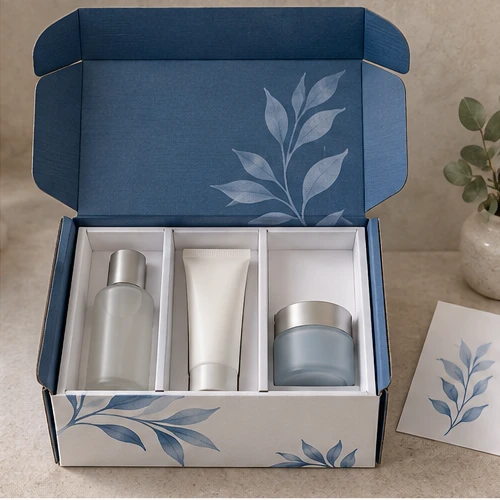
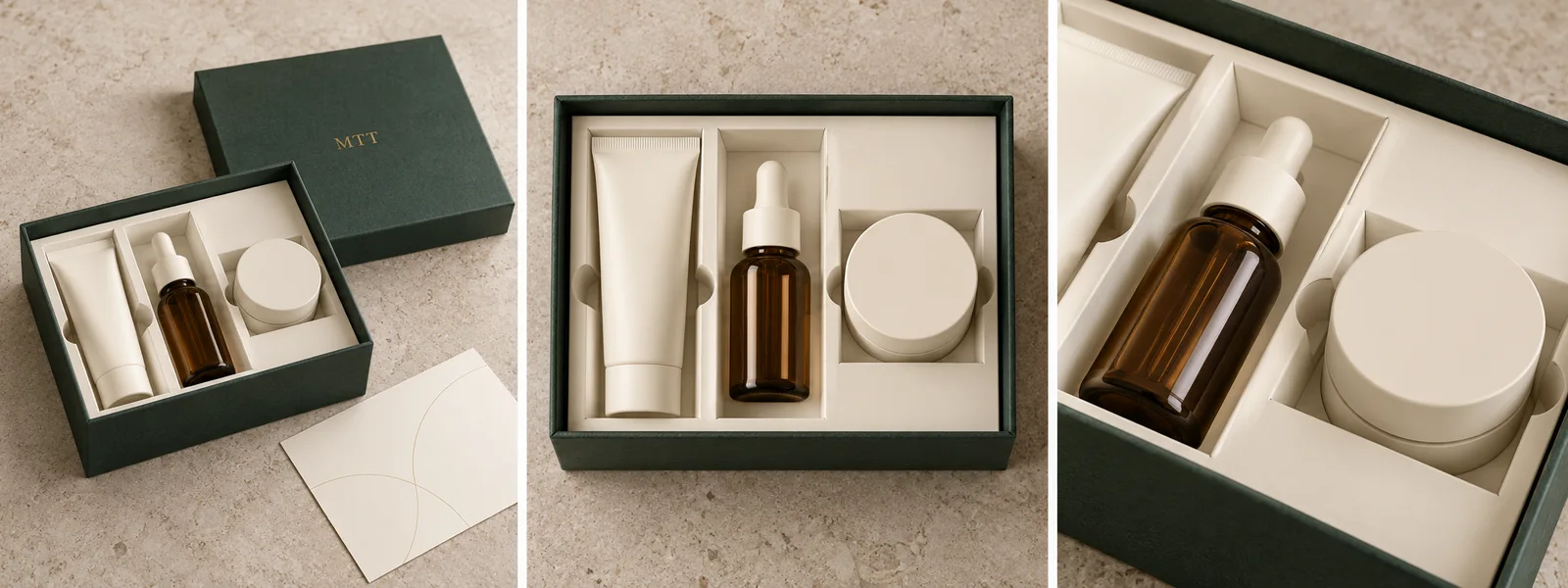
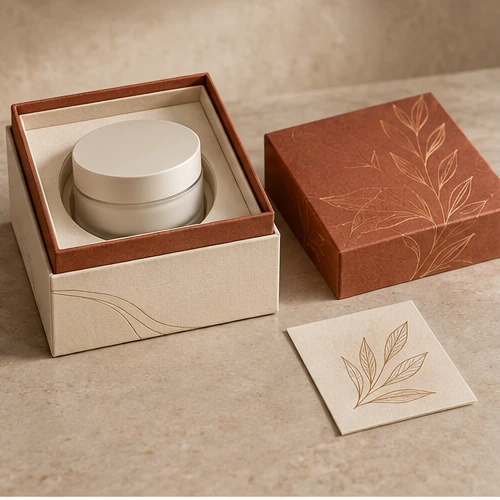
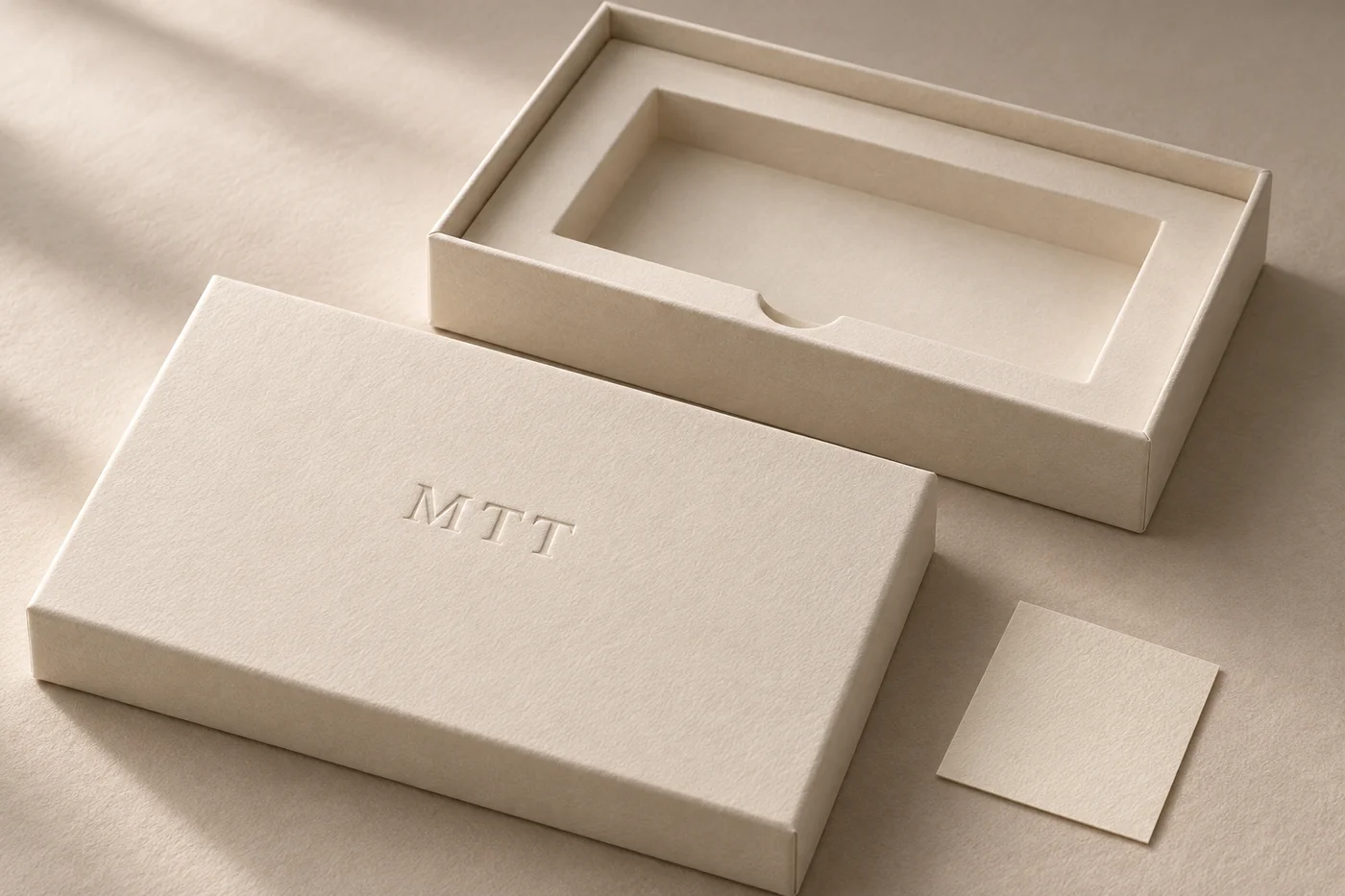
Read the guide →Explore an MTT skincare PR kit design: lift-off box, fitted paperboard insert, gold logo detail and a practical packing checklist.
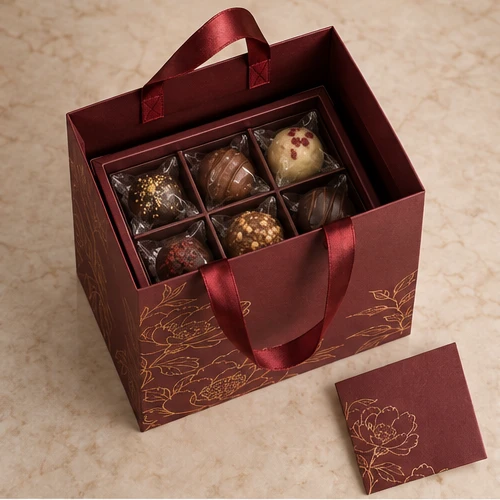
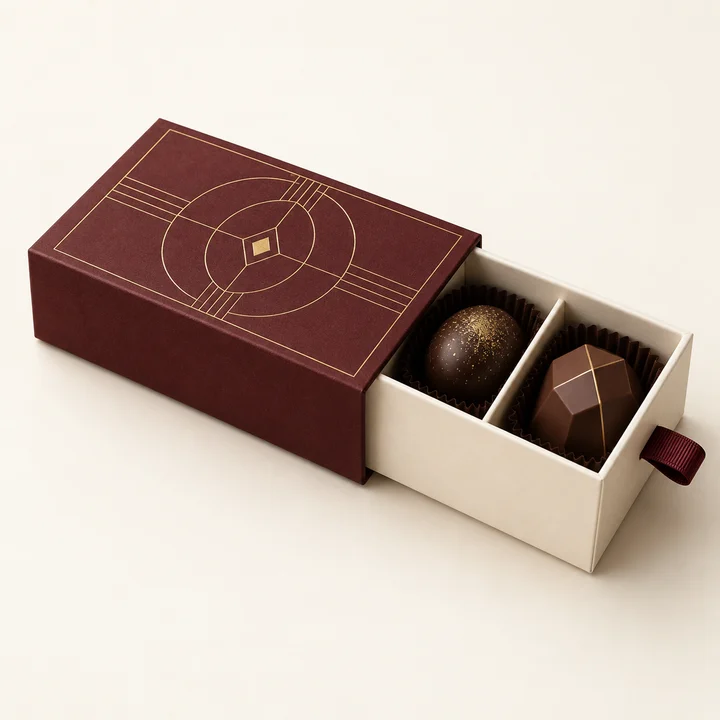
Read the guide →An MTT 24-truffle quotation shows what to check in rigid drawer box design: sleeve fit, loaded height, insert clearance and the fabric pull.
Read the guide →Plan an outer shipping carton for rigid gift boxes: measure the closed pack, reserve protective space, compare pack-outs and approve a complete shipment sample.
Read the guide →Plan discreet gift shipping packaging by separating decorated boxes from unbranded outer cartons, dispatch labels and packing steps.
Read the guide →Measure length, width and height accurately: separate product, internal box, external and shipping sizes with a worked example and free calculator.
Read the guide →A technical sourcing guide for specification managers selecting modular, replaceable flooring sample boards for distributor showroom kits.
Read the guide →Strategic procurement guidance for contract textile brands sourcing refillable fabric swatch books and modular replacement leaf bindings.
Read the guide →Sourcing guide for building product manufacturers designing portable, protective presentation cases with removable ceramic and stone samples.
Read the guide →Compare custom box opening styles for perfume, skincare and gift sets. Separate rigid, folding and corrugated structures before choosing materials and artwork.
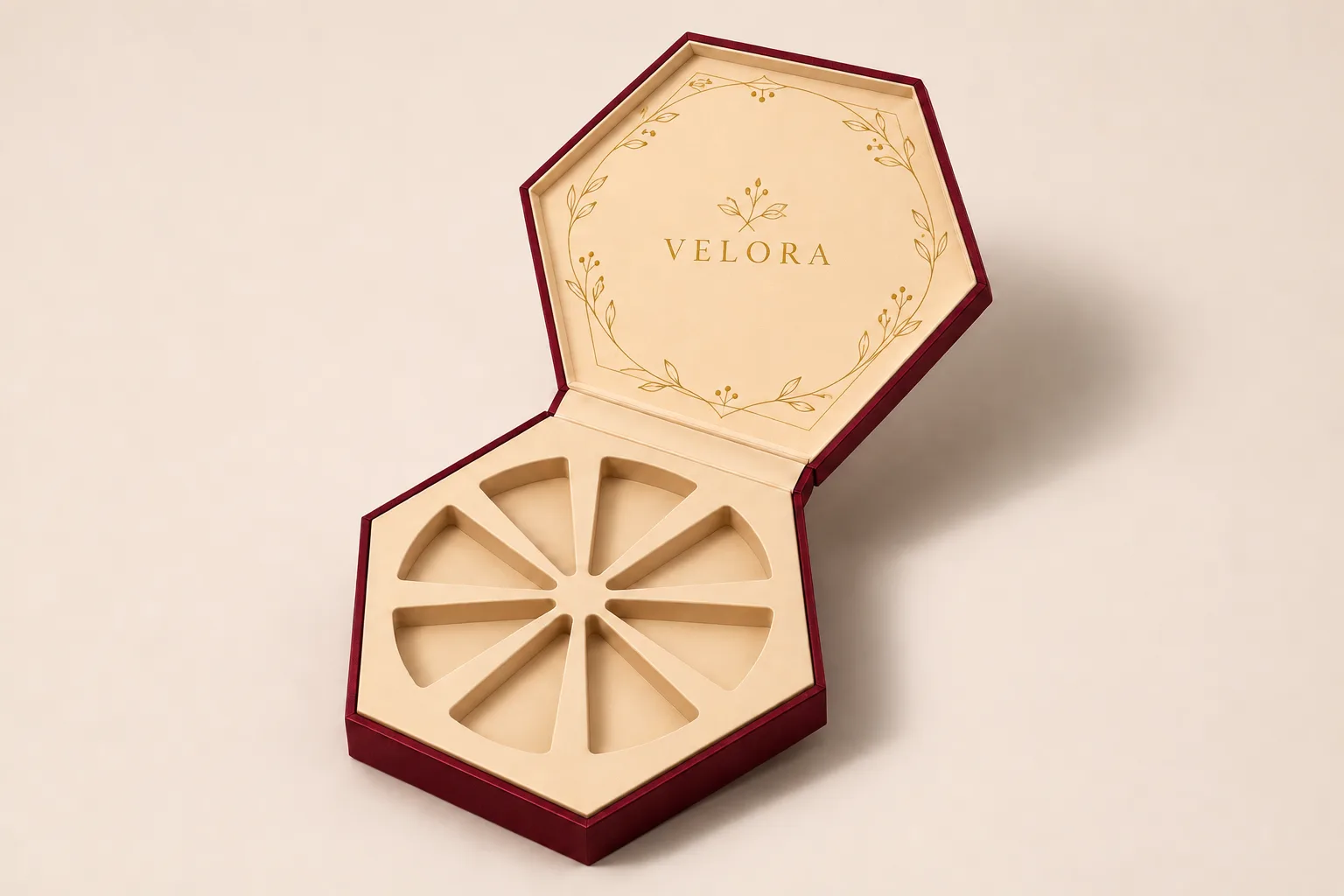
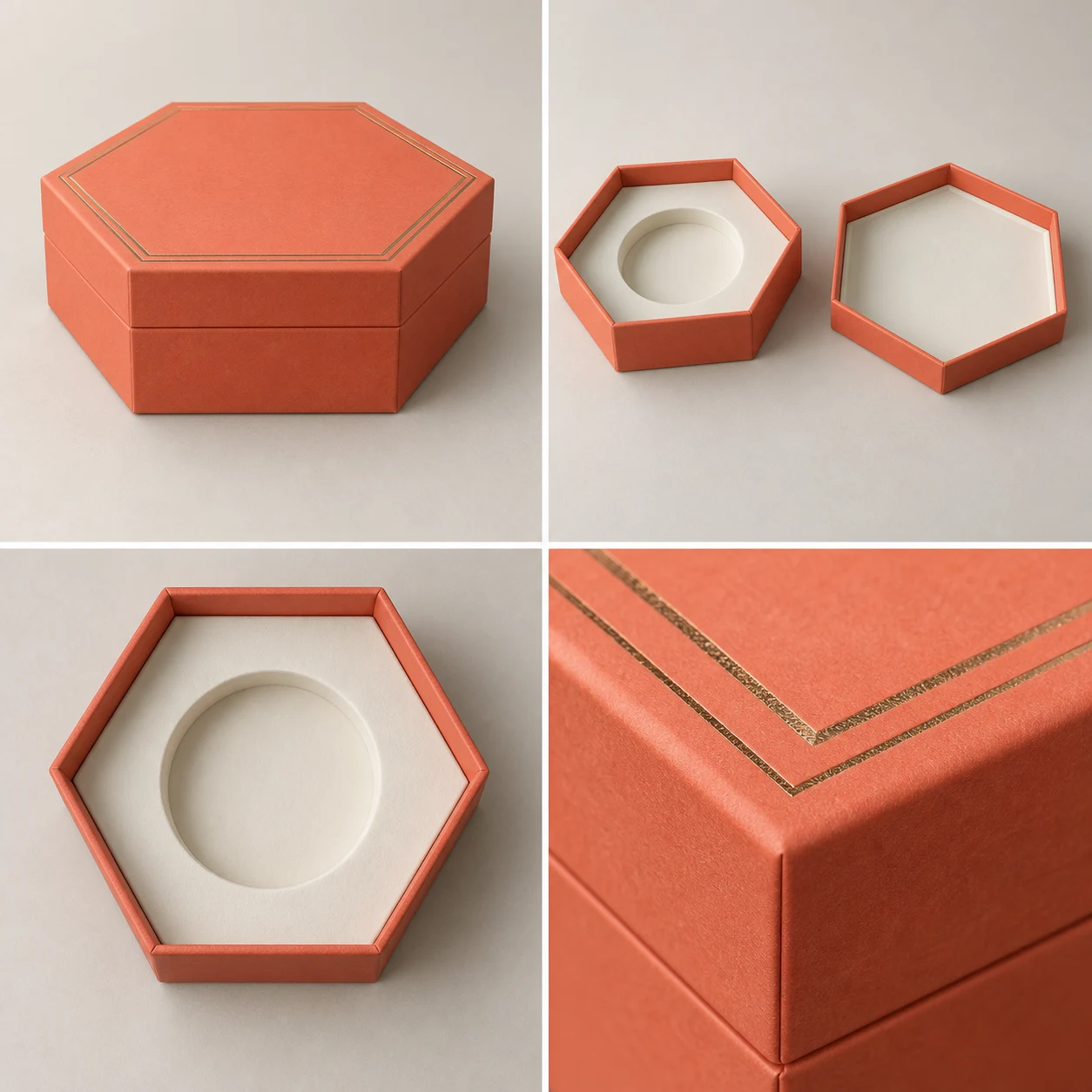
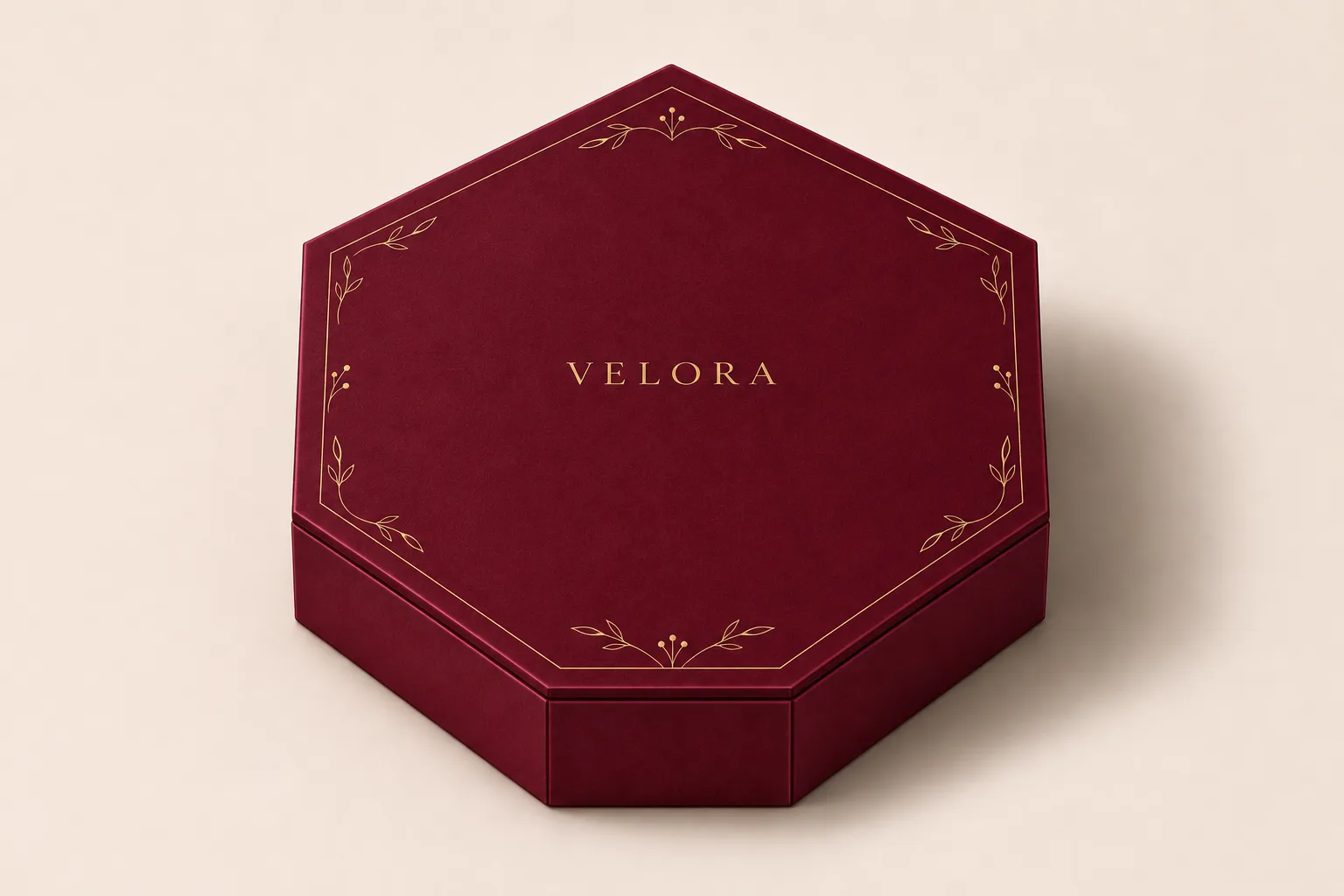
Read the guide →Make a distinctive six-sided gift box practical to open and pack. Compare the separate lid, fitted insert and wrapped corners before approving decoration.
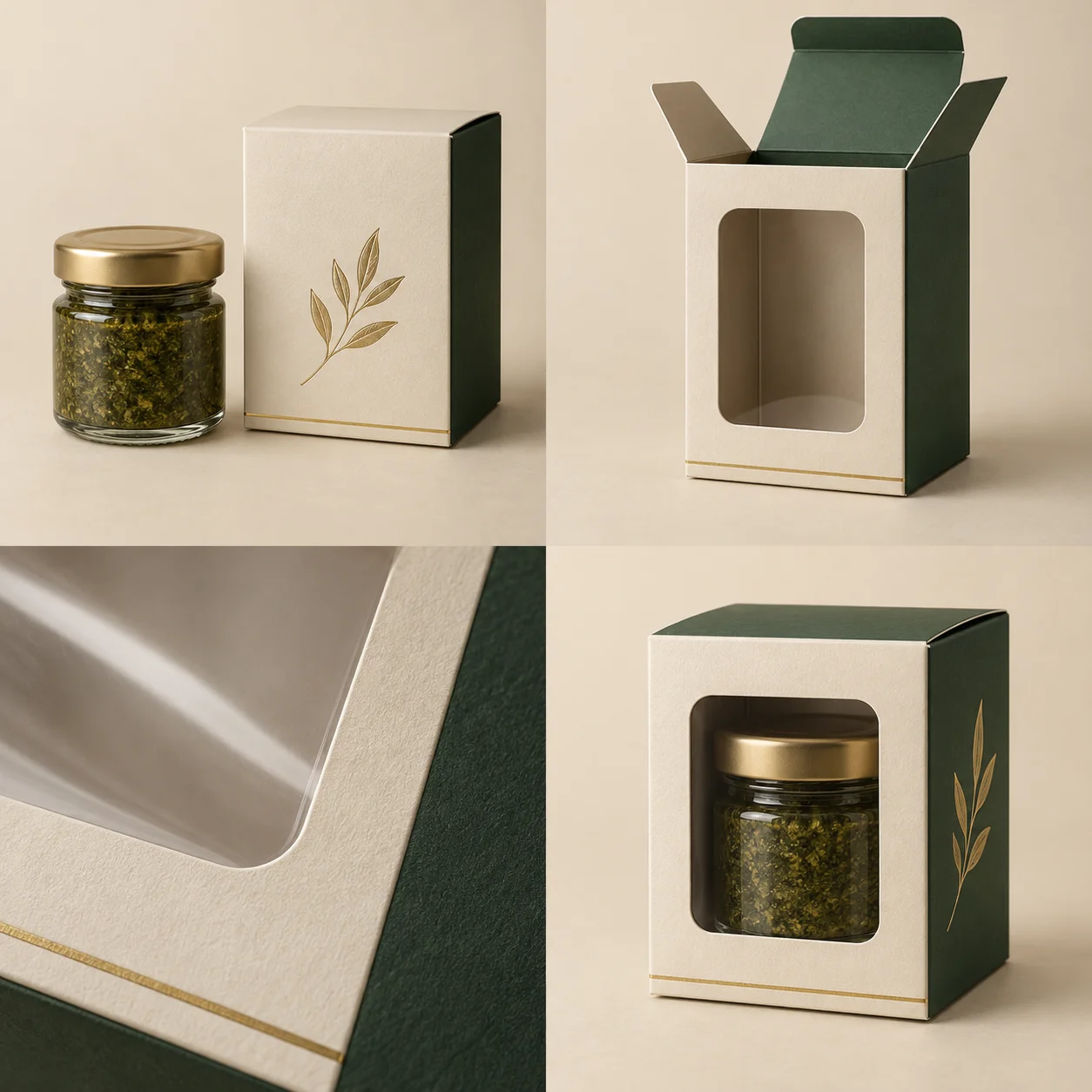
Read the guide →Review window size, film attachment, remaining carton frame and product restraint before approving a retail carton.
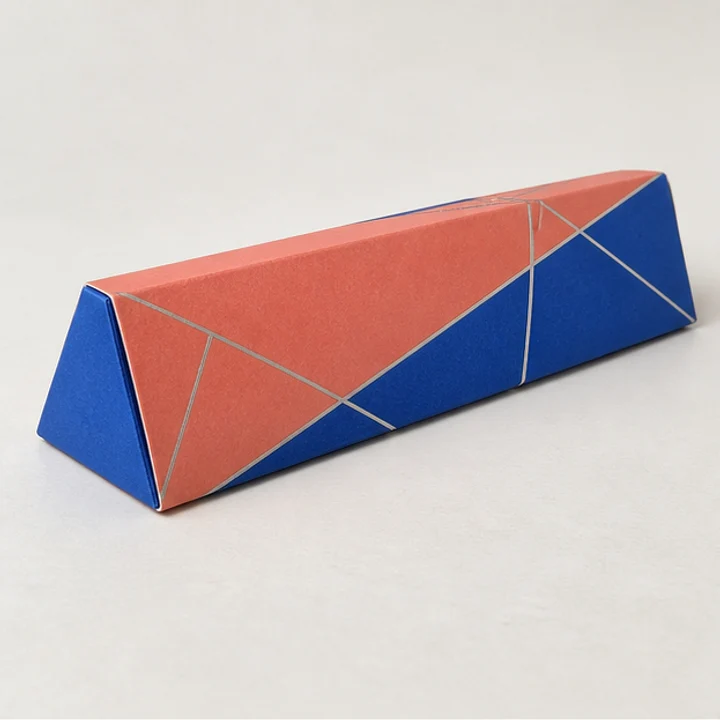
Read the guide →Assess a triangular carton’s panel layout, end closure, assembly and export packing before claiming shipping savings.
Read the guide →Diagnose bottle movement, cap pressure and difficult removal by reviewing support zones, cavity depth and representative samples.
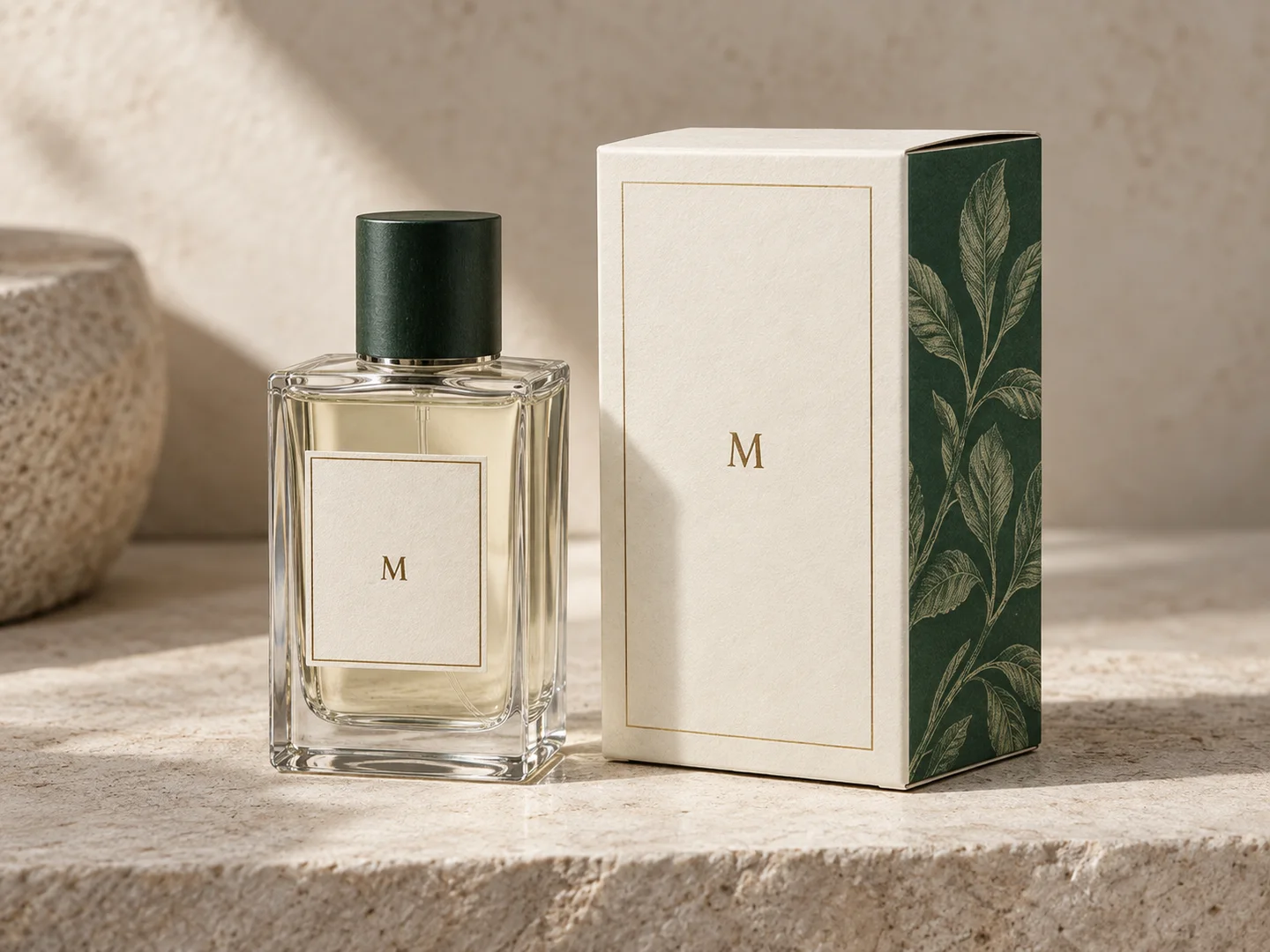
Read the guide →Compare perfume insert material routes by bottle contact, appearance, tooling and sample requirements before selecting an inner tray.
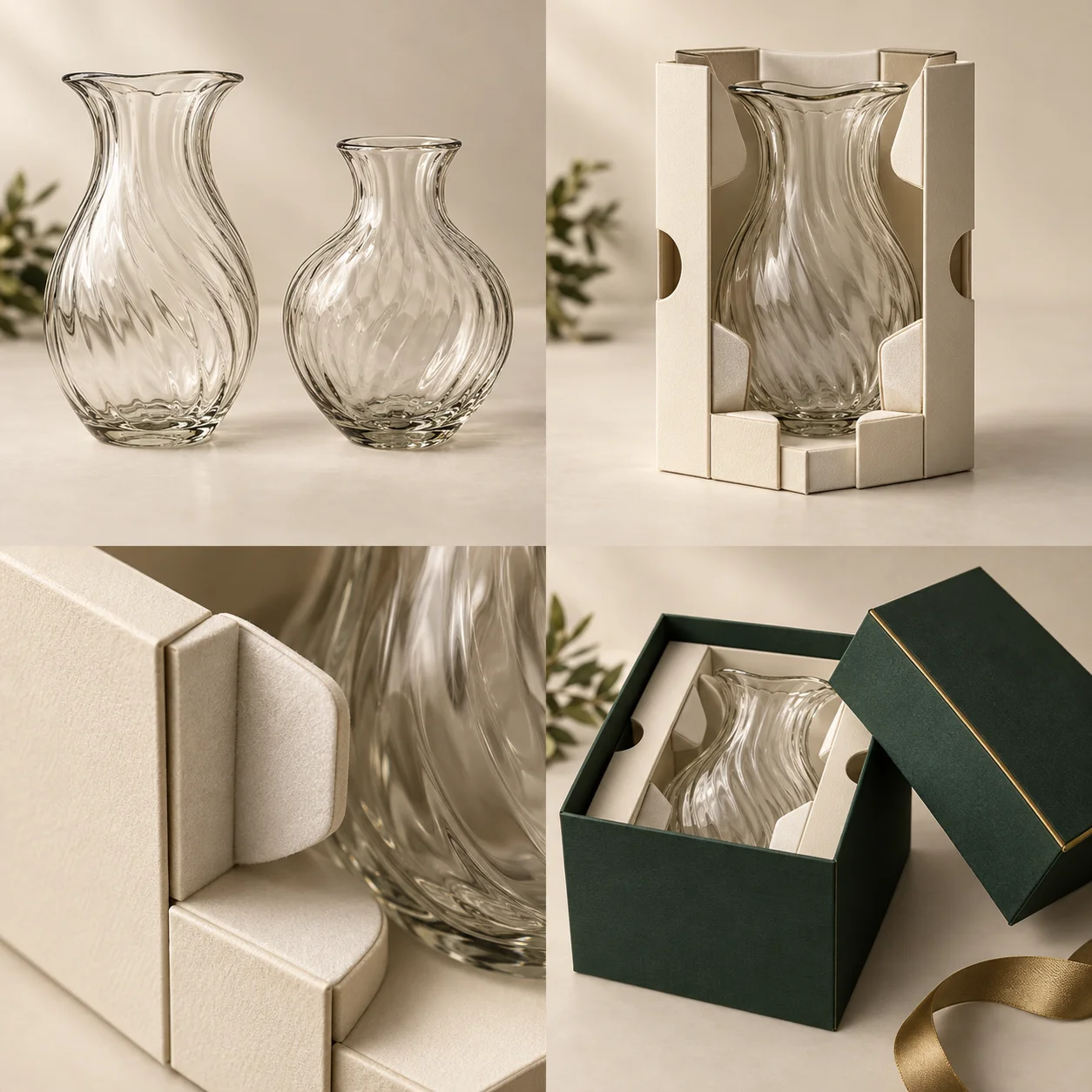
Read the guide →Design inserts for variable handmade glass using measured ranges, safe contact zones, removal access and representative sample checks.
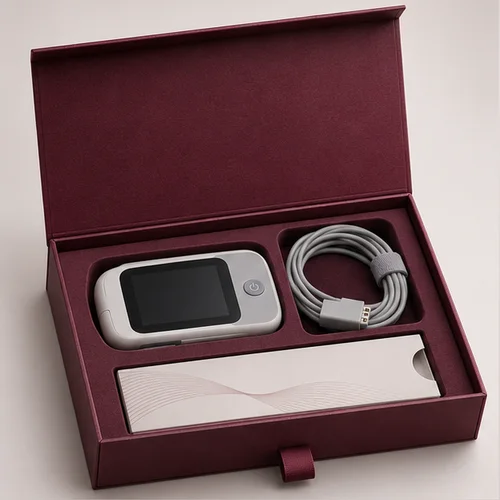
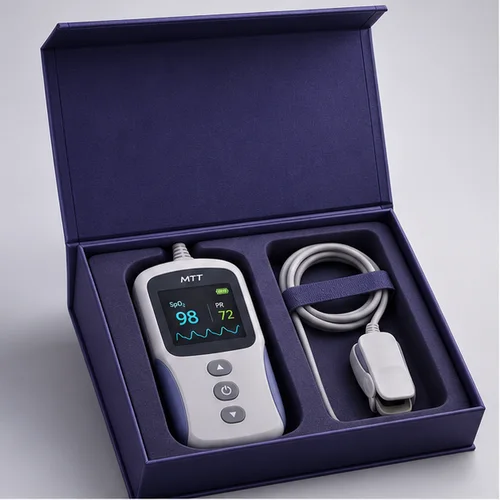
Read the guide →Separate devices, cables and booklets in a paperboard insert while reviewing sensitive surfaces, removal and complete-pack testing.
Read the guide →Plan a cosmetic gift box around the complete pump assembly. Review bottle support, lid clearance, removal access and the checks needed before approval.
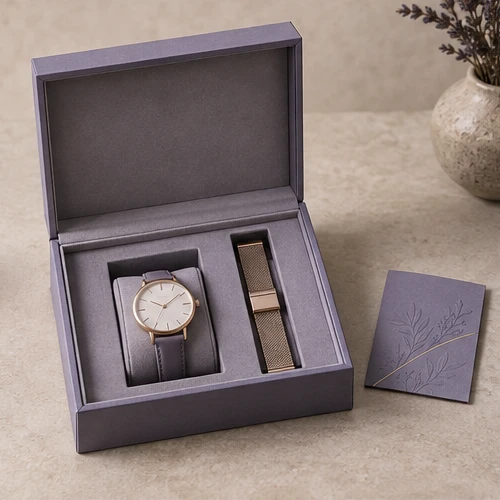
Read the guide →Specify watch box cushion sizing using the closed bracelet, case envelope and loaded height. Compare samples with a measurement and approval checklist.
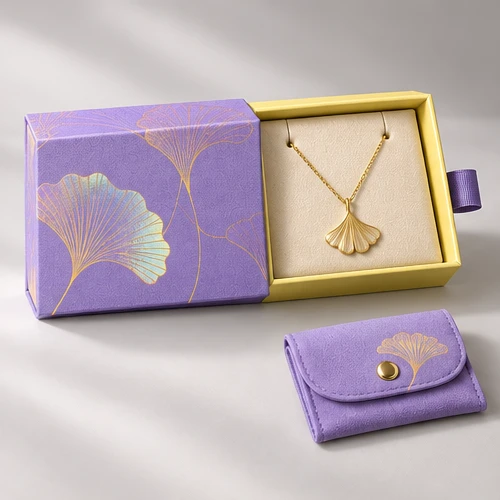
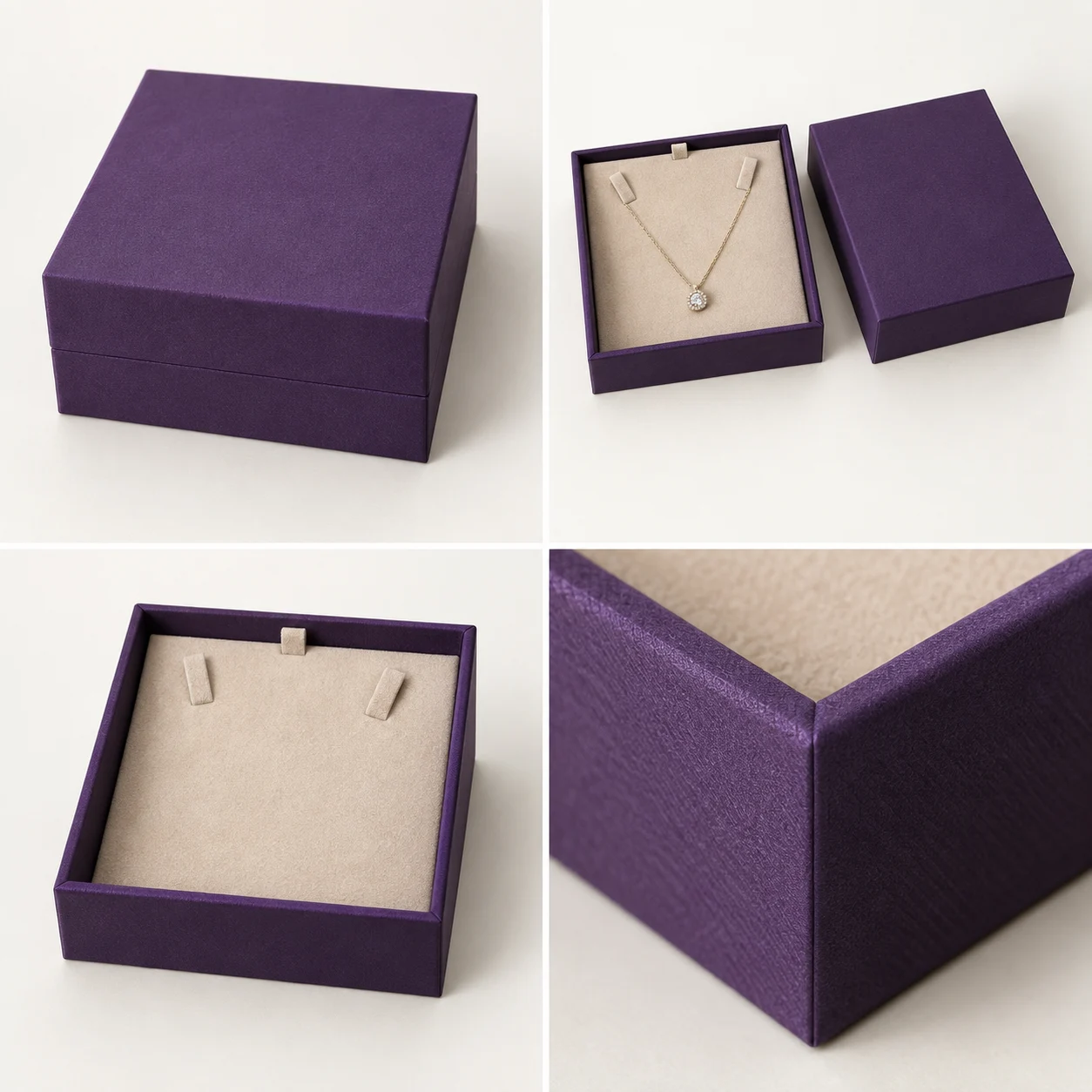
Read the guide →Specify necklace packaging around chain length, pendant support and removal. Compare insert layouts and packing checks before approving a jewelry box.
Read the guide →Plan collapsible rigid box assembly around corner fixing, insert installation and lid fit. Explore MTT’s perfume duo design and a practical sample checklist.
Read the guide →03 / Knowledge library
Plan complete sets for fragrance, skincare, jewelry, drinks and seasonal gifts.
Plan an apparel gift box and matching paper bag: measure folded garment bulk, size bag gussets around the finished box, and approve colour and foil together.
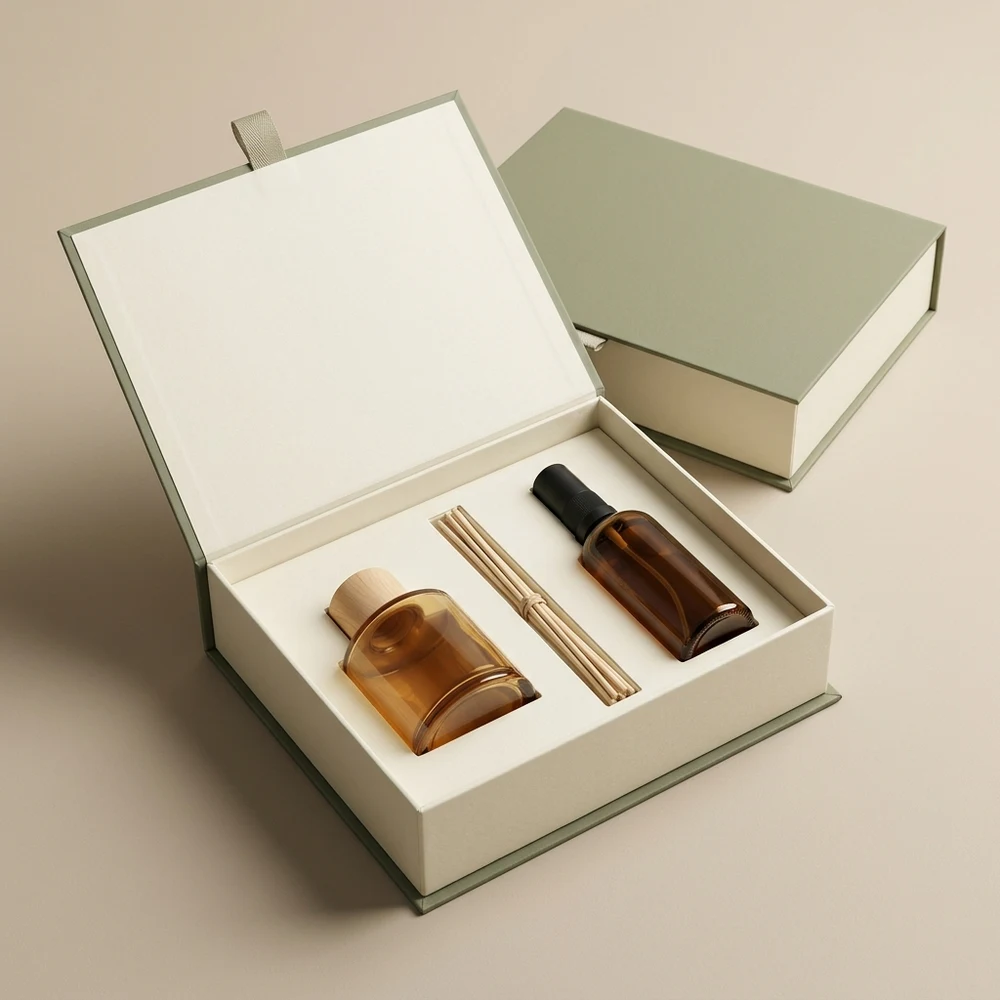
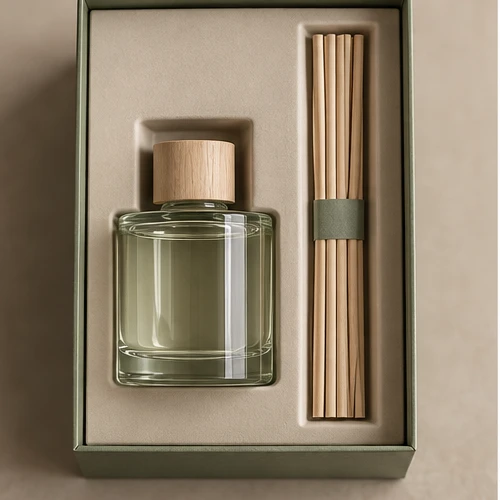
Read the guide →Plan a multi-item home fragrance gift box: separate glass diffuser and spray bottles, restrain reed sticks without bending, and check magnet closure.
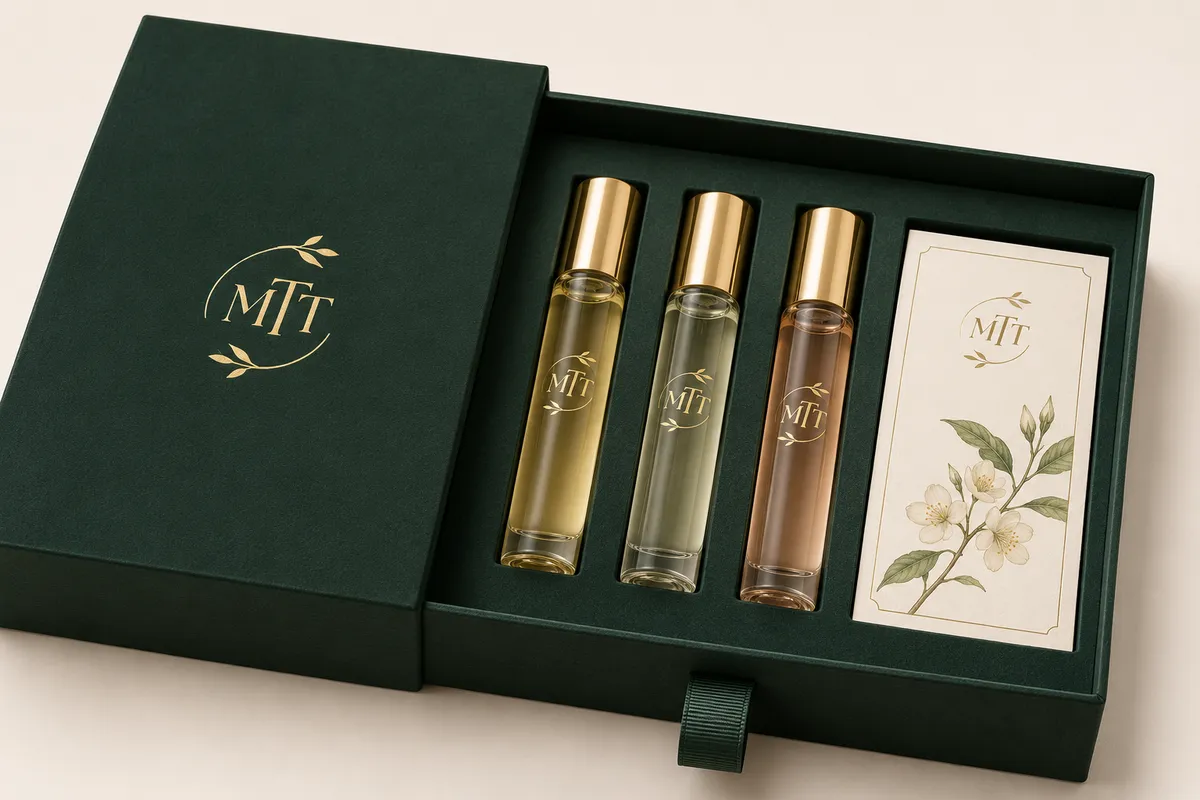
Read the guide →Plan bottle support, cap clearance and removal access for a three-roller perfume drawer box.
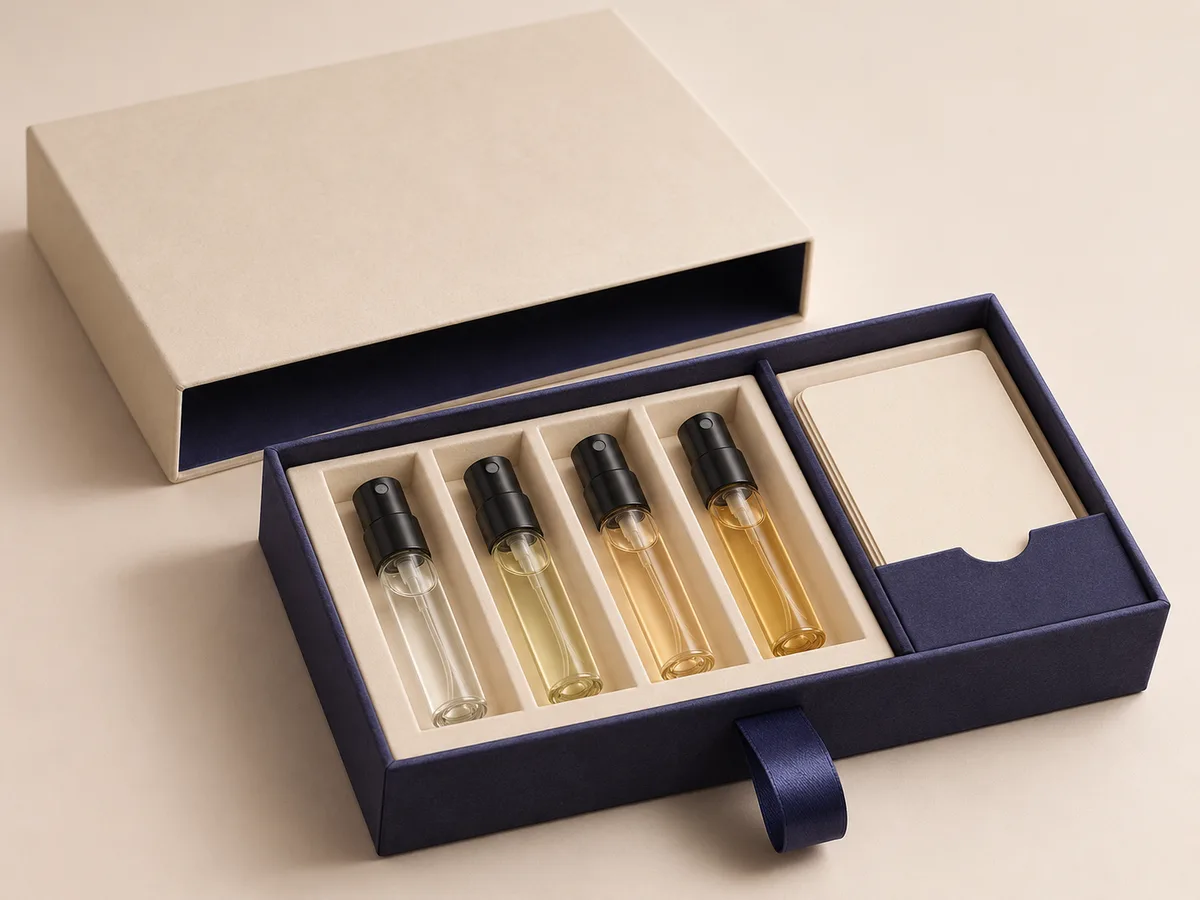
Read the guide →Keep three fragrance vials and their scent card in the intended order during drawer-box packing.
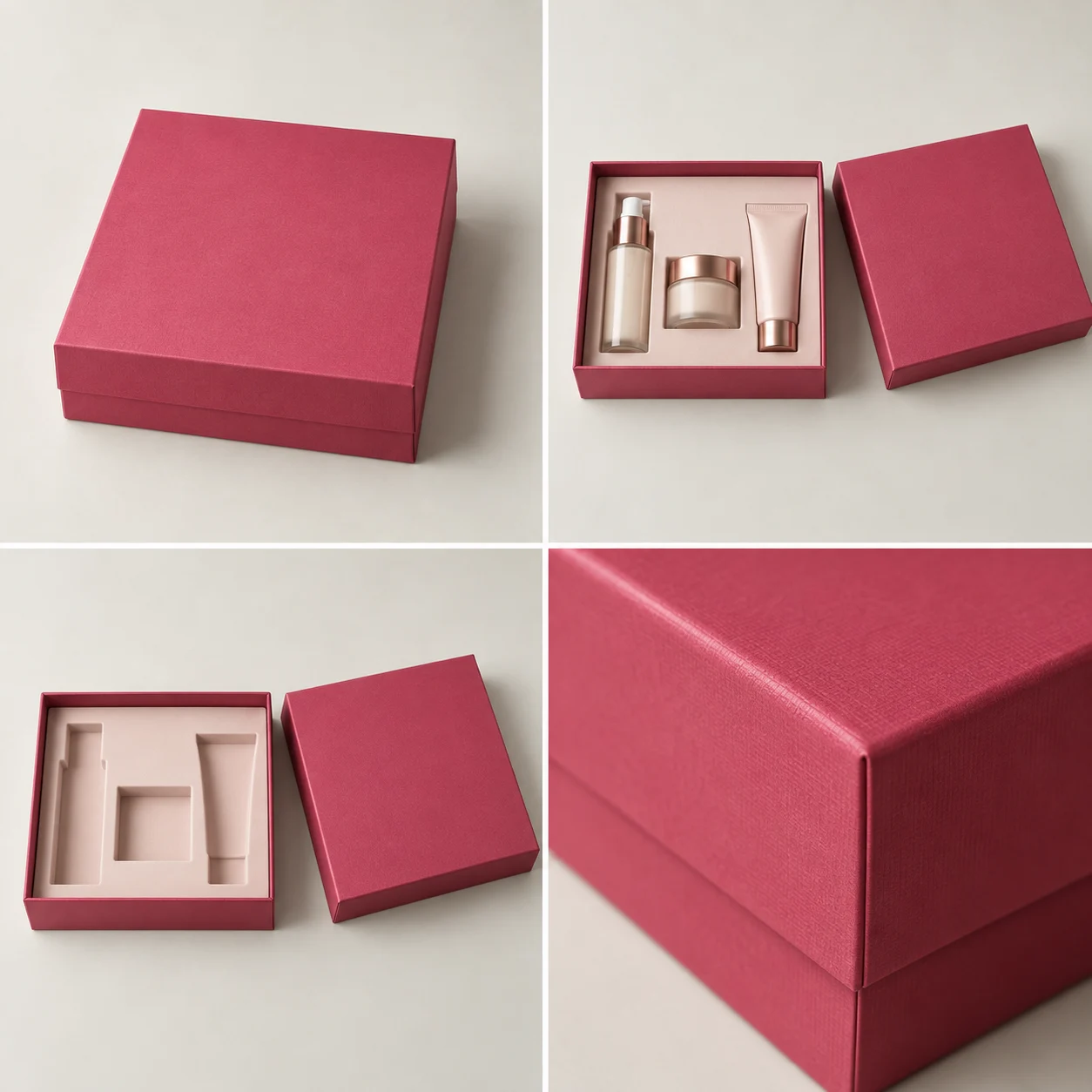
Read the guide →Plan support, lid clearance and removal for two different skincare jars in one gift box.
Read the guide →Specify spatula pocket fit, protective packaging and packing responsibilities for a skincare set.
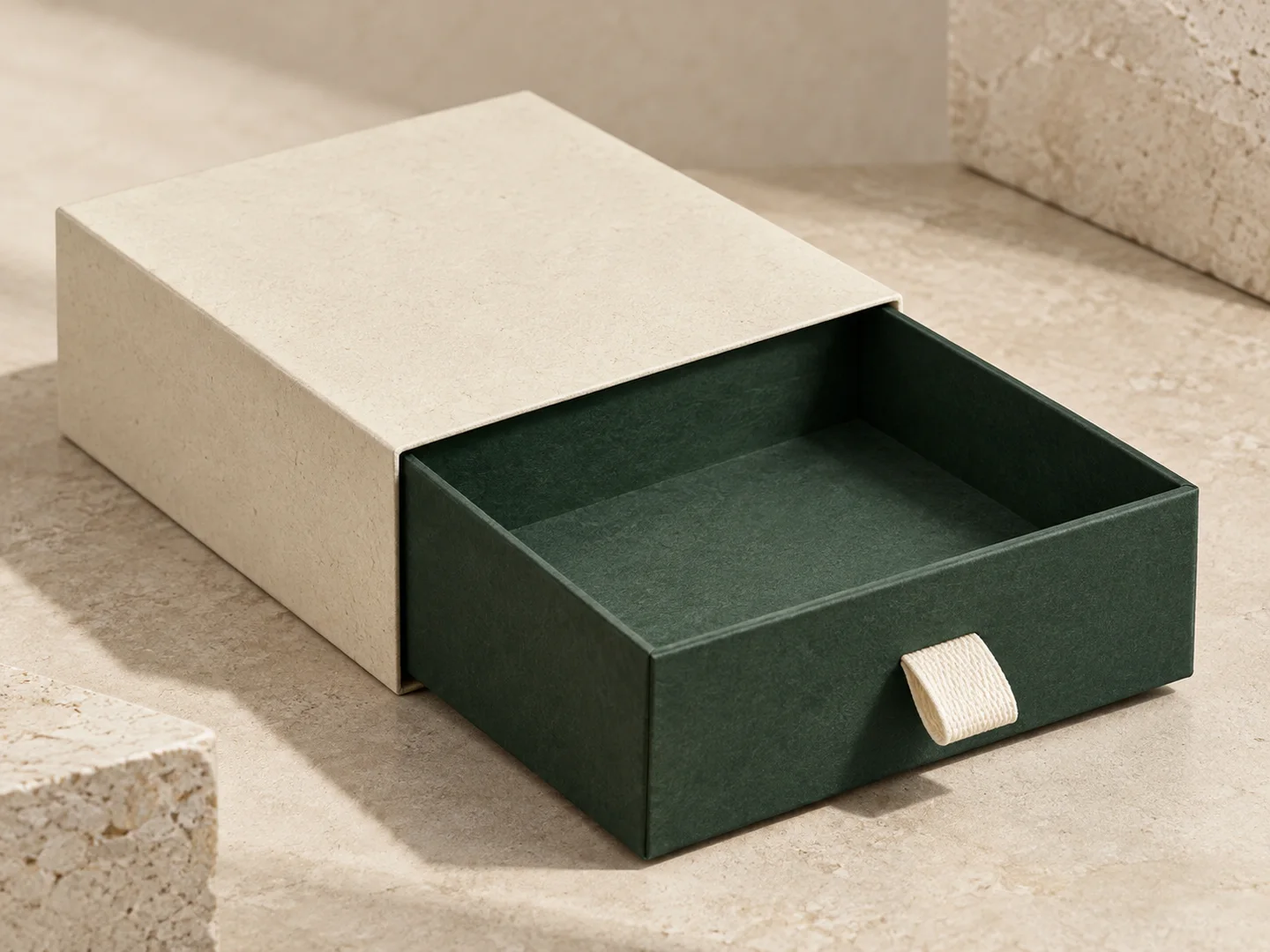
Read the guide →Review sleeve opening, loaded tray movement and ribbon pull on a drawer-box sample.
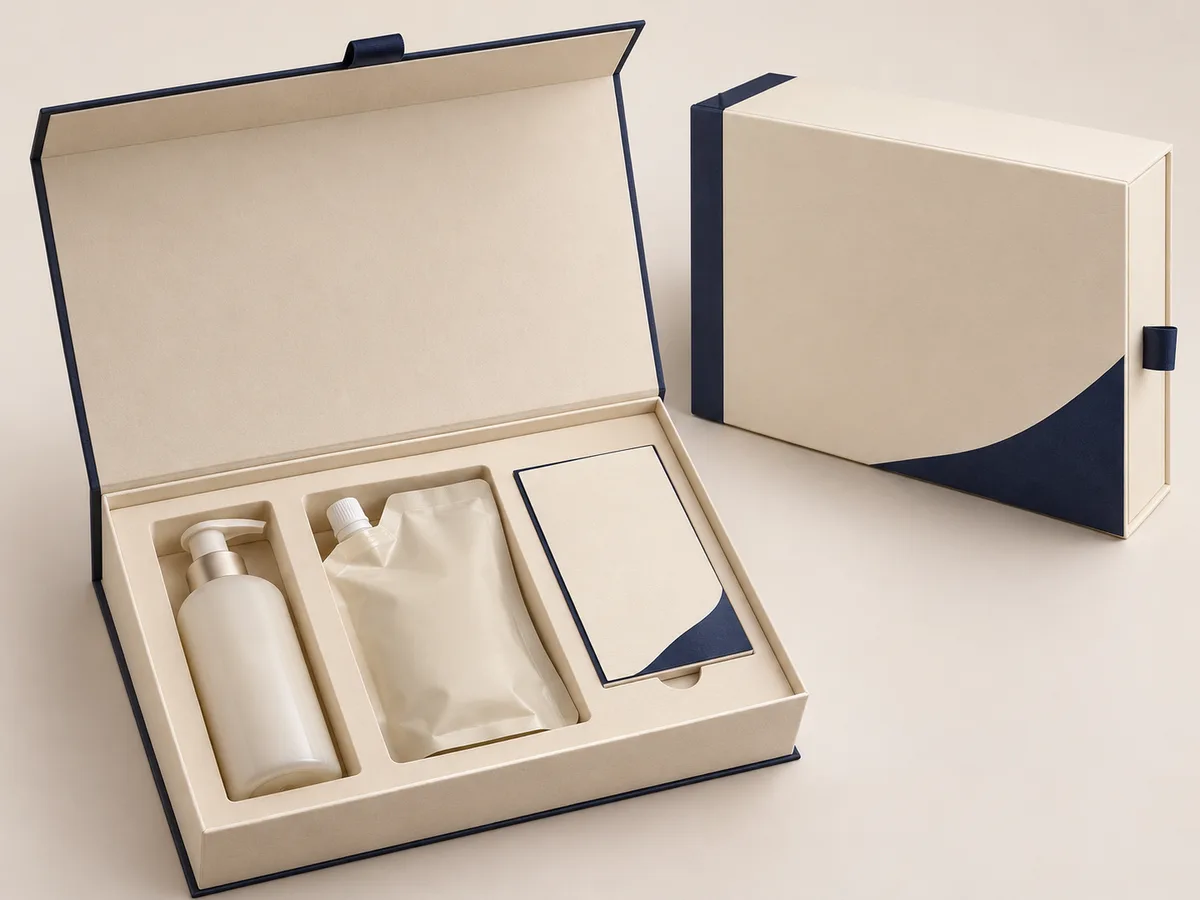
Read the guide →Plan a book-style gift box around the filled pouch, capped pump, insert and information card.
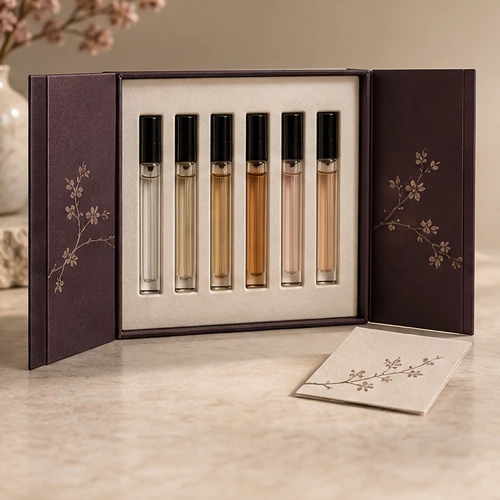
Read the guide →Plan vial channels, card thickness and drawer travel together before approving a fragrance discovery set.
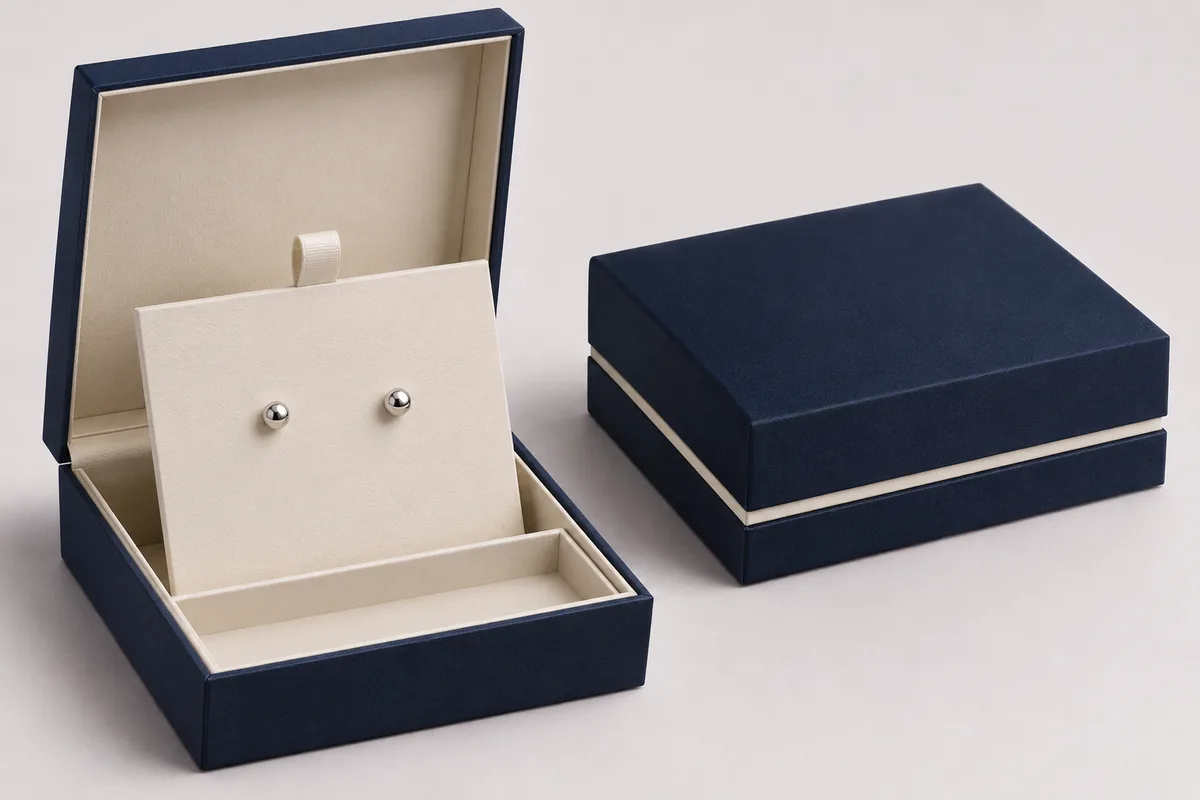
Read the guide →Plan the earring card, post clearance and customer removal before approving a presentation box.
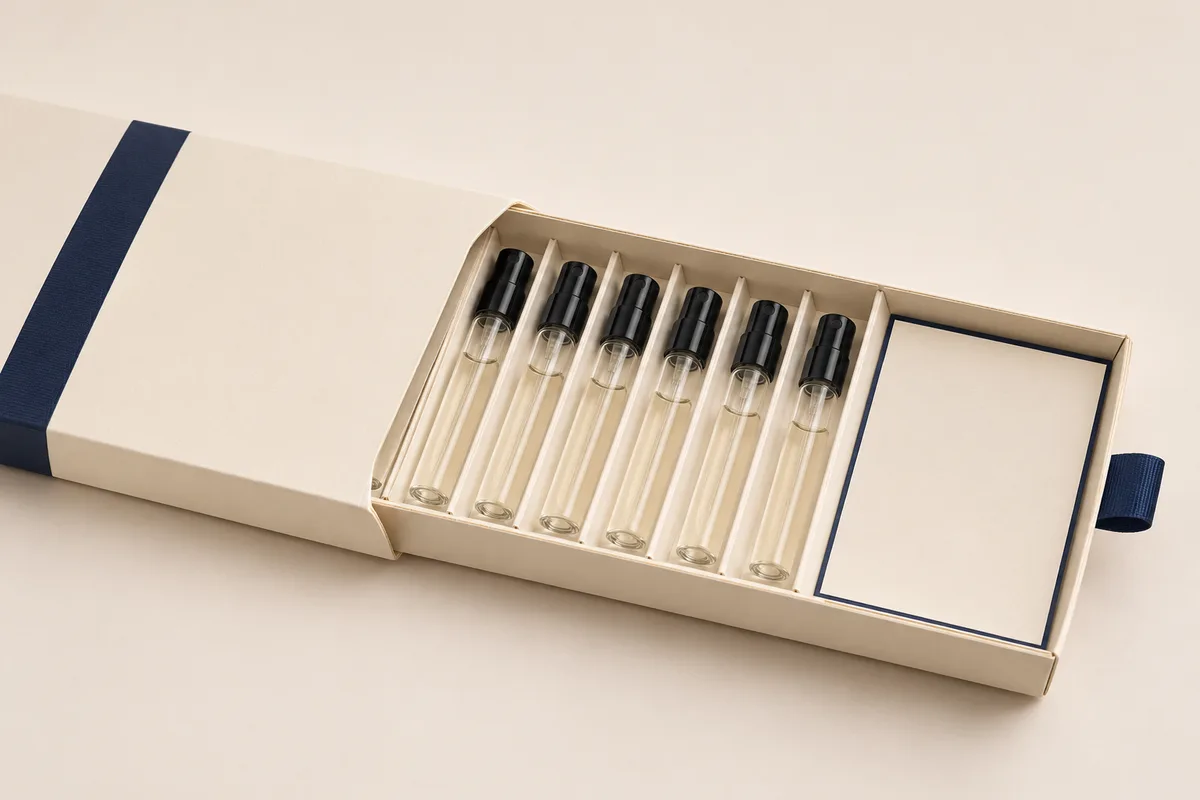
Read the guide →Design a folding paperboard sleeve, vial tray and card space around the capped samples and packing sequence.
Read the guide →Separate scent formulation, card finishing and presentation-box responsibilities before planning a scented insert.
Read the guide →Compare the complete six-vial pack, assembly and freight scope before selecting a presentation structure.
Read the guide →Plan a cream jar shoulder-neck gift box around the lid, raised neck, insert and customer removal.
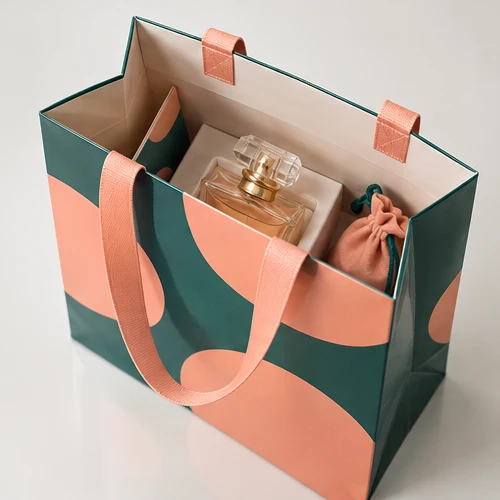
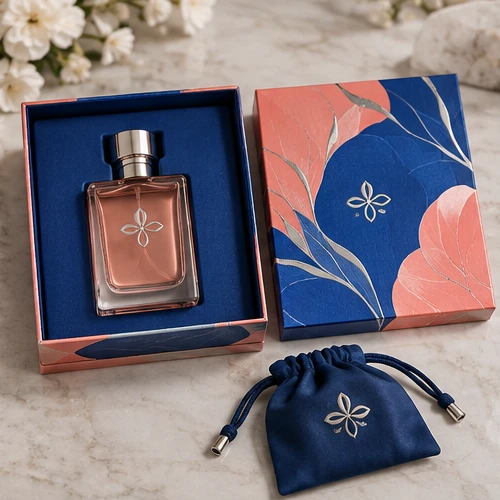
Read the guide →Specify a matching perfume gift bag around the finished box, carrying load, handle attachment and sample review.
Read the guide →Plan vial identification, insert positions and card revisions before a fragrance discovery set is packed.
Read the guide →Assess container, insert and shipping changes before reusing a skincare gift-box sample or transit test.
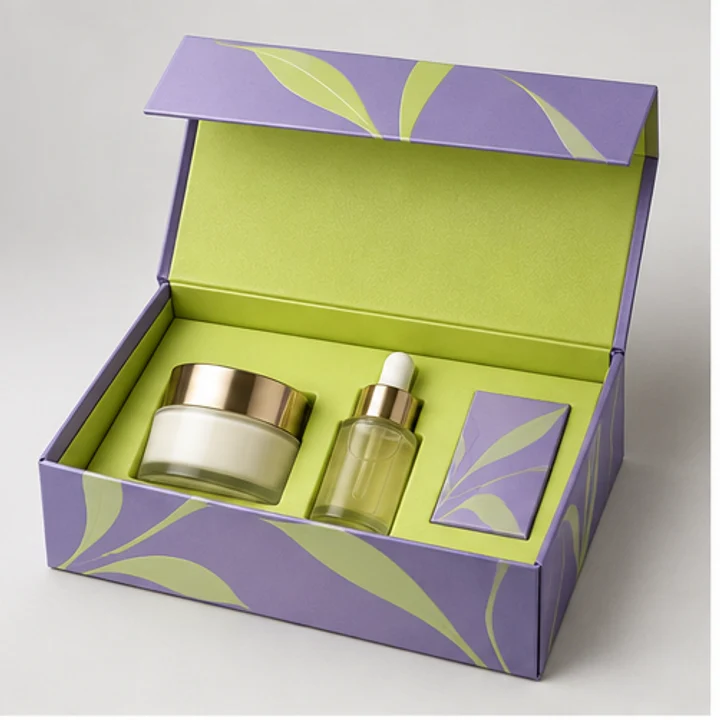
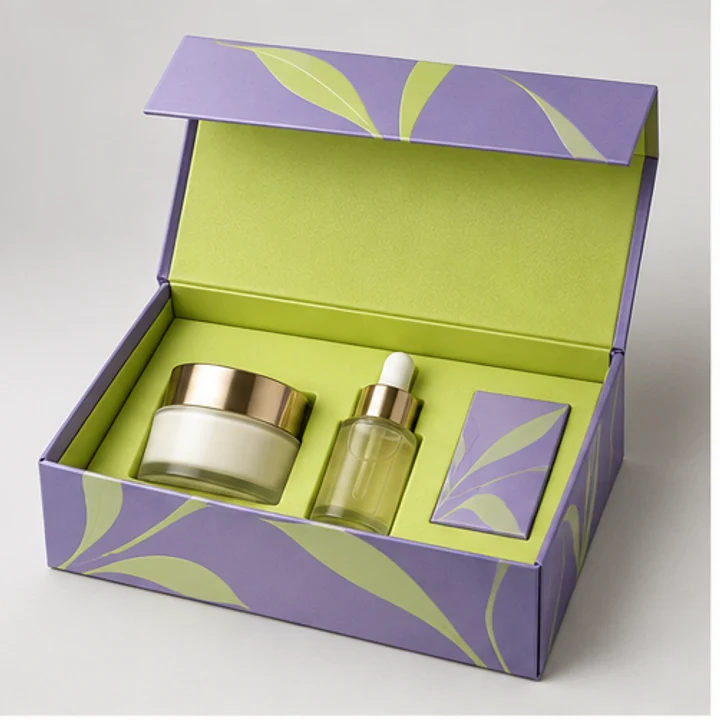
Read the guide →Plan separate jar and serum support, closure clearance, removal access and pack-out before approving a skincare gift-box sample.
Read the guide →Compare carton volume, assembly work and sample checks before choosing how 1,000 skincare gift boxes arrive.
Read the guide →Specify chocolate gift box secondary packaging: contact layers, wrapped product sizes, dividers, storage and supplier documents before sampling.
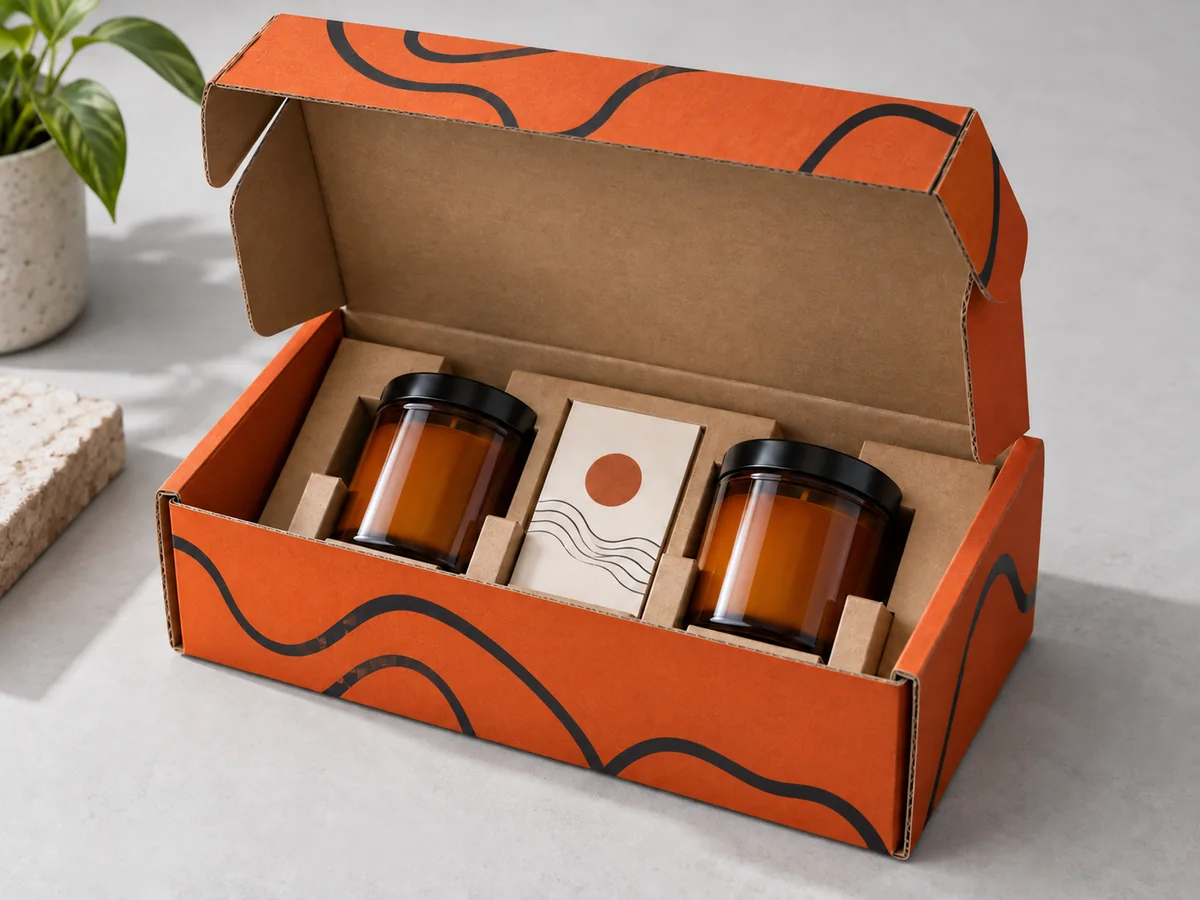
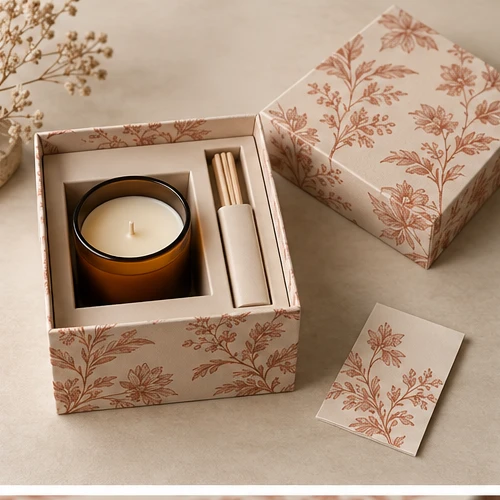
Read the guide →Explore candle jar packaging protection through an MTT gift box: glass support, paperboard inserts, lid clearance and shipping-pack checks.
Read the guide →Plan the tray, capsule clearance, opening and pack-out for a coffee capsule drawer box.
Read the guide →Plan legible small print on food gift packaging: EU x-height rules, artwork placement, finished samples and approval responsibilities.
Read the guide →Specify removable partitions for a rigid drawer gift box: board direction, slot fit, packing sequence and sample checks.
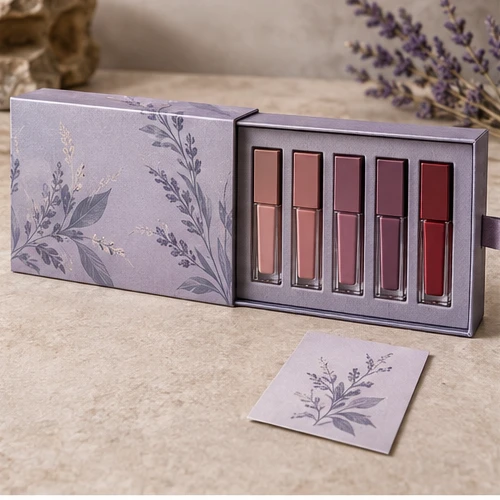
Read the guide →Plan a drawer box for a lipstick collection: measure each tube, choose insert access, review the drawer and sample the full pack.
Read the guide →Specify a magnetic presentation box for a watch and spare strap: fit, contact surfaces, loading sequence, sampling and quotation details.
Read the guide →Plan paperboard dividers for a cosmetic gift box: product measurements, cell sizes, removal access, sampling and a quote checklist.
Read the guide →Separate presentation, packed-product protection and carrier requirements when briefing a perfume gift box.
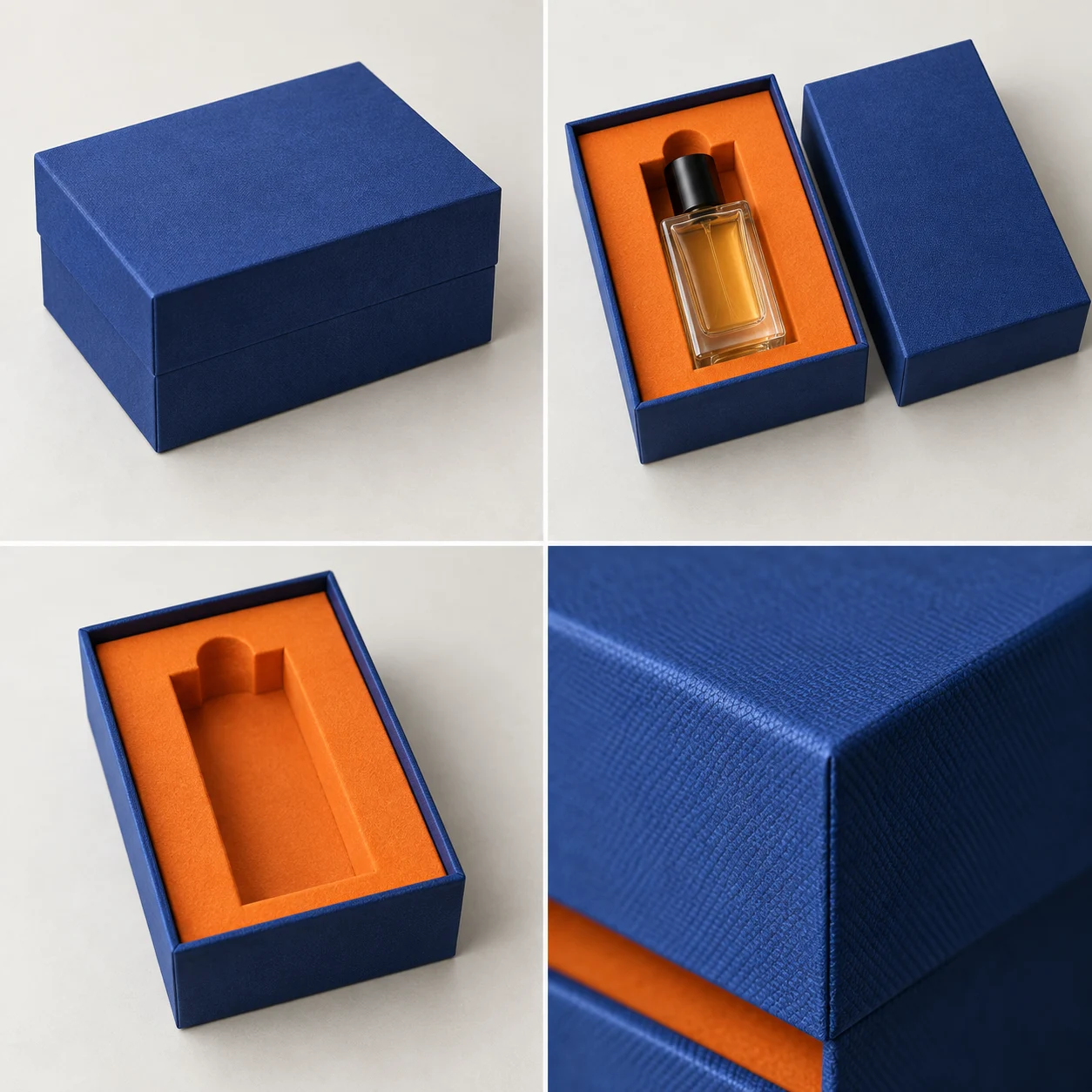
Read the guide →Plan a lift-off gift box for a perfume bottle and refill: measure the contents, compare inserts, approve samples and calculate shipping volume.
Read the guide →Plan custom tea tins for loose tea or sealed packs: compare capacity, lid fit, food-contact information, decoration and sample checks.
Read the guide →Plan a two-tier fragrance gift box for a bottle and vials: compare tray access, insert fit, sample checks and complete-set shipping.
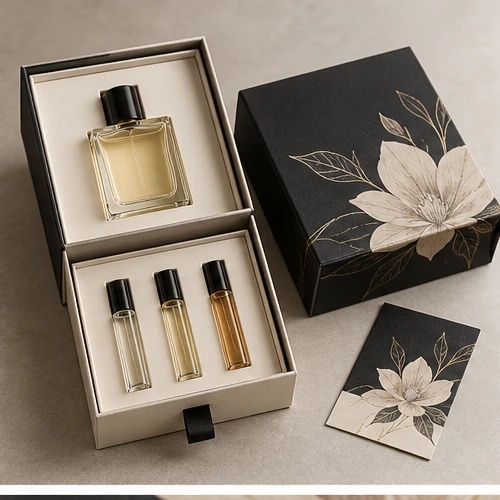
Read the guide →Plan perfume discovery set packaging around vial dimensions, removal access and fragrance identification. Compare shared boxes and approve a complete sample.
Read the guide →Coordinate a fragrance box, bottle insert and paper bag: what to decide before the bottle is final, how to size the bag and what to include in a sample brief.
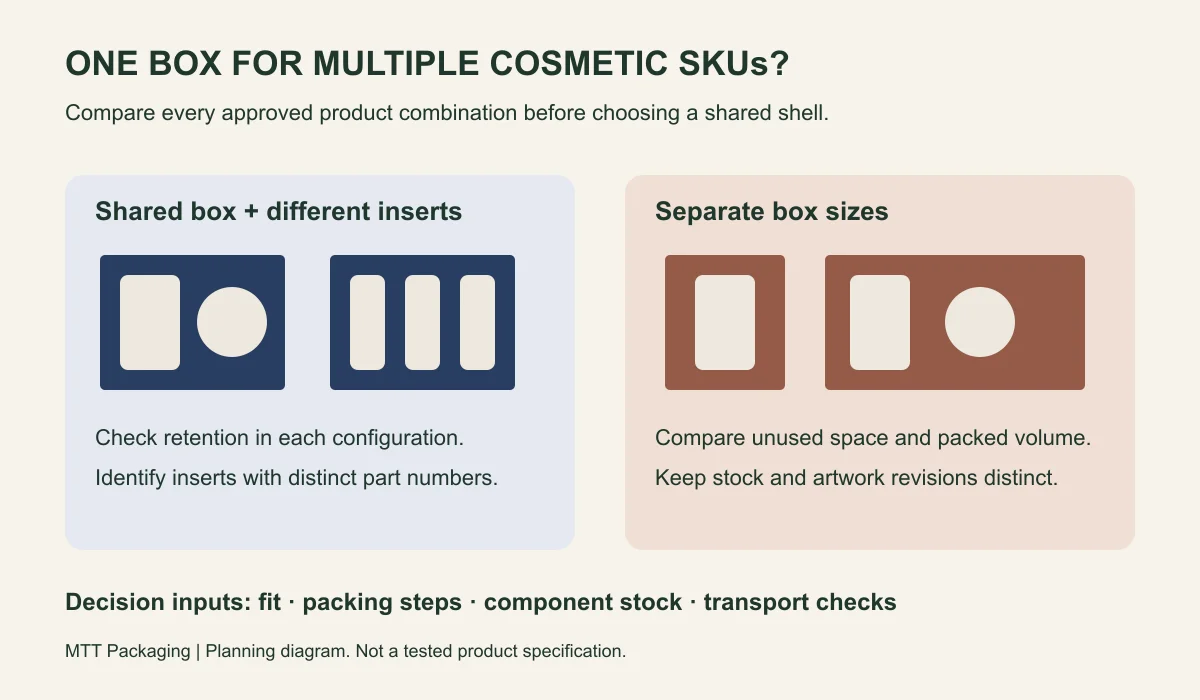
Read the guide →Compare a shared cosmetic gift box with separate sizes. Check insert changes, packing errors and unused space before approving a multi-SKU packaging range.
Read the guide →Coordinate skincare cartons and gift sets across different containers with clear SKU hierarchy, shared material references and sample checks.
Read the guide →Plan fragrance box patterns around brand hierarchy, wrapped joins and bottle access, with a credited design reference and sample checks.
Read the guide →Plan shared perfume gift boxes and variant inserts around a configuration matrix, fit checks and packing instructions.
Read the guide →Review ring slots, necklace routing, lining and repeated handling before approving jewelry presentation packaging.
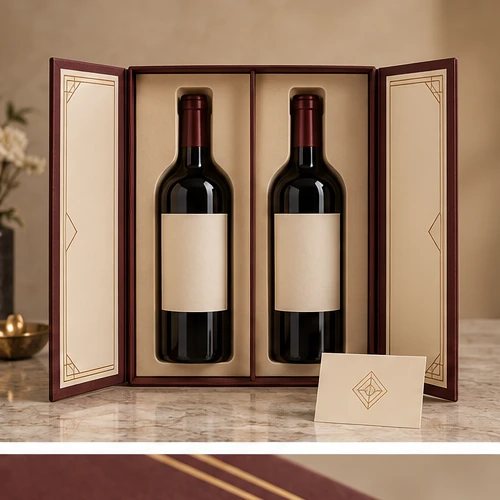
Read the guide →Twin-bottle wine gift box review: compare double-door and lift-off structures, bottle removal, matching paper bags and supplier quote inputs.
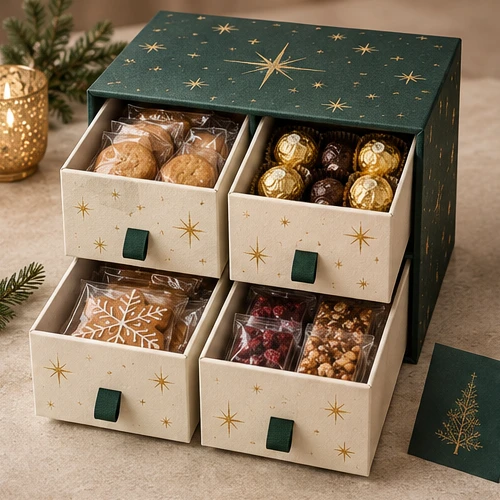
Read the guide →Review a four-drawer Christmas gift box for mixed items: compartment sizing, loading order, ribbon pulls, artwork versions and quote inputs.
Read the guide →Plan tea gift drawers around sealed packs, removal access, ribbon pulls and assortment information before approving decoration.
Read the guide →Choose collector packaging materials around an authorised story, documented sourcing and repeatable finishing.
Read the guide →04 / Knowledge library
Compare board, inserts and decoration, then define the evidence behind environmental claims.
Choose a barcode position and verify the finished curved pack for the intended scanner and retailer.
Read the guide →Coordinate artwork, material and proof approval for a jewellery box and its removable display card.
Read the guide →Diagnose cracking at folding carton creases through board, grain, artwork and sample checks.
Read the guide →Plan a scannable retail barcode on a finished gift box, with clear space, suitable contrast and verification of the printed pack.
Read the guide →Calculate QR code space including its quiet zone, choose a carton panel and approve scanning on the finished printed pack.
Read the guide →Specify paper stock, final logo scale and board backing before approving blind debossed boxes, with a sample checklist for depth and clarity.
Read the guide →Compare EVA foam vs paperboard inserts for a diffuser gift set: support, removal, surface contact, assembly and the evidence to request before approval.
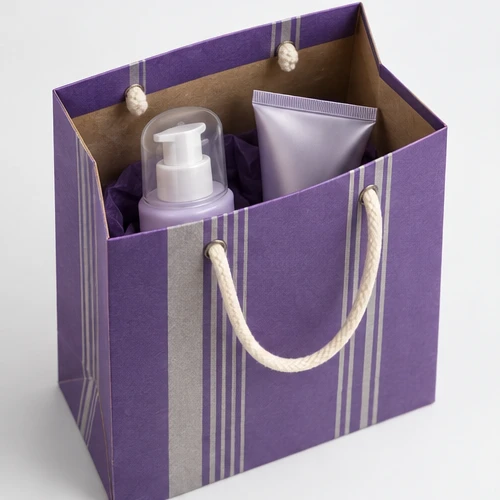
Read the guide →Choose CMYK or spot colour for packaging using an MTT violet retail bag. Review artwork separations, paper, pale details and finished sample approval.
Read the guide →Compare E flute and B flute for fragile products: board grade, print, insert fit and tooling, plus the sample evidence to request before choosing a box.
Read the guide →Understand which material details belong in a packaging quote, including structural board, face paper, liners and insert specifications.
Read the guide →Choose rigid-box board and wrapping paper by span, fit, finish and sample performance instead of thickness or price alone.
Read the guide →Compare matte and gloss surfaces, foil, embossing and spot UV for custom packaging. Learn what to specify and check on the actual paper sample.
Read the guide →Check small packaging text before tooling: positive vs knockout type sizes, foil stroke spread, textured paper bleed and wet-proof readability checks.
Read the guide →Compare matte and gloss packaging finishes using an MTT quotation: specify the film, review colour and foil, and agree scuff checks before approval.
Read the guide →Use this packaging artwork file checklist to separate print, foil and emboss instructions, check the exported PDF and approve the right proof.
Read the guide →Gold foil looks different on a perfume box and paper bag? Compare substrates, foil references and finished samples before approving a coordinated packaging set.
Read the guide →Plan molded fibre inserts around container variation, tooling access, surface quality and complete-pack sample checks.
Read the guide →Compare recycled content and recyclability in custom packaging boxes. Define claim boundaries, supplier evidence and finished-box approval requirements.
Read the guide →Specify packaging boxes without plastic lamination. Review surface treatments, scuffing, wrapped edges, sample acceptance and environmental claim limits.
Read the guide →Review materials, inserts, finishes and sourcing evidence before approving sustainable luxury packaging boxes. A practical checklist for B2B buyers.
Read the guide →Prepare component and material records for EU-bound packaging. Separate PPWR application dates, supplier evidence and project-specific assessment.
Read the guide →Check FSC claims for custom boxes and paper bags: label types, supplier certificates, component scope and the documents to confirm before artwork approval.
Read the guide →Verify GMI printing requirements, press-site identity, physical colour masters and substrate approval across rigid boxes, cartons and bags.
Read the guide →An MTT chocolate-box quotation shows why paper GSM cannot establish board thickness, divider fit or usable space. See what to confirm before sampling.
Read the guide →05 / Knowledge library
Prepare the brief, compare costs, approve samples and keep repeat orders consistent.
Compare shaped gift box quotes using the same insert layout, artwork, sample scope and delivery terms. Ask each supplier to itemise tooling and packing costs.
Read the guide →Normalize two China packaging quotes line by line: board density vs thickness, tooling amortization, sample fee crediting, Incoterms and export carton specs.
Read the guide →Plan a holiday packaging order backwards from warehouse receipt. Decide when to freeze the insert, sign the foil sample and release each seasonal component.
Read the guide →Compare stock and custom packaging using setup, inserts, assembly, freight and usable quantity—not the empty-box price alone.
Read the guide →Verify a packaging supplier in China: match the business identity, production scope, sample route and quotation before committing to custom packaging.
Read the guide →Plan a custom packaging inspection: approved samples, defect classes, AQL inputs, functional checks and shipment release records for boxes and paper bags.
Read the guide →Write a packaging brief with dimensions, quantity, materials, artwork, inserts and delivery scope, plus a copyable checklist for boxes and bags.
Read the guide →Resolve product fit, packing route, appearance, quantity and sample approval before committing to a custom packaging order.
Read the guide →Compare box quotations by materials, inserts, tooling, quantity and delivery scope. Identify missing charges before choosing a packaging supplier.
Read the guide →Seven practical ways to review structure, size, board, finishing, inserts, SKU quantity and logistics when a custom packaging quote exceeds the target budget.
Read the guide →Use a real MTT 24-truffle box quotation to build a packaging sample approval checklist for fit, liners, artwork and written production release.
Read the guide →Pre-sample checklist for settling product dimensions, structure, materials, inserts, artwork, finishes and shipping scope before sampling.
Read the guide →An MTT chocolate-box quotation shows how carton volume, gross weight and freight assumptions affect rigid box shipping costs before production approval.
Read the guide →Plan storage and staged delivery for custom boxes, inserts and bags. Understand stock records, release instructions, storage terms and dispatch preparation.
Read the guide →Coordinate box structure, inserts, bags, cards and artwork from brief to physical sample and production approval, with a clear specification for each component.
Read the guide →Prepare a packaging reorder with approved samples, material versions and change records. Separate repeat production from changes that need renewed evaluation.
Read the guide →Verify a packaging supplier's ISO 9001 standard, site address and scope via IAF CertSearch, then link certificates to samples and lot inspections.
Read the guide →Understand when CE marking belongs on product packaging, who supplies approved compliance artwork and what to check before printing cartons or gift boxes.
Read the guide →Verify Sedex membership, SMETA audit scope, manufacturing site identity and corrective actions when shortlisting packaging partners.
Read the guide →Payment Options
Available for confirmed production orders.
Available for eligible payments.
Available payment methods may depend on order value, project stage and transaction arrangements confirmed with MTT Packaging.
















 Bank Transfer
 PayPal