Jewelry Boxes: Design the Interior for Repeated Handling
Quick answer
Choose jewelry-box interiors around the way each piece is held and removed. Ring slots, pendant supports and necklace routing are different tasks. Evaluate the final lining with representative sizes and repeated handling, checking edges and polished surfaces. A luxurious fabric does not by itself establish retention, durability or tarnish protection for the jewelry inside.
Compare the box, opening, insert and material details. AI-generated visualizations; final construction and finish are confirmed through physical sampling.
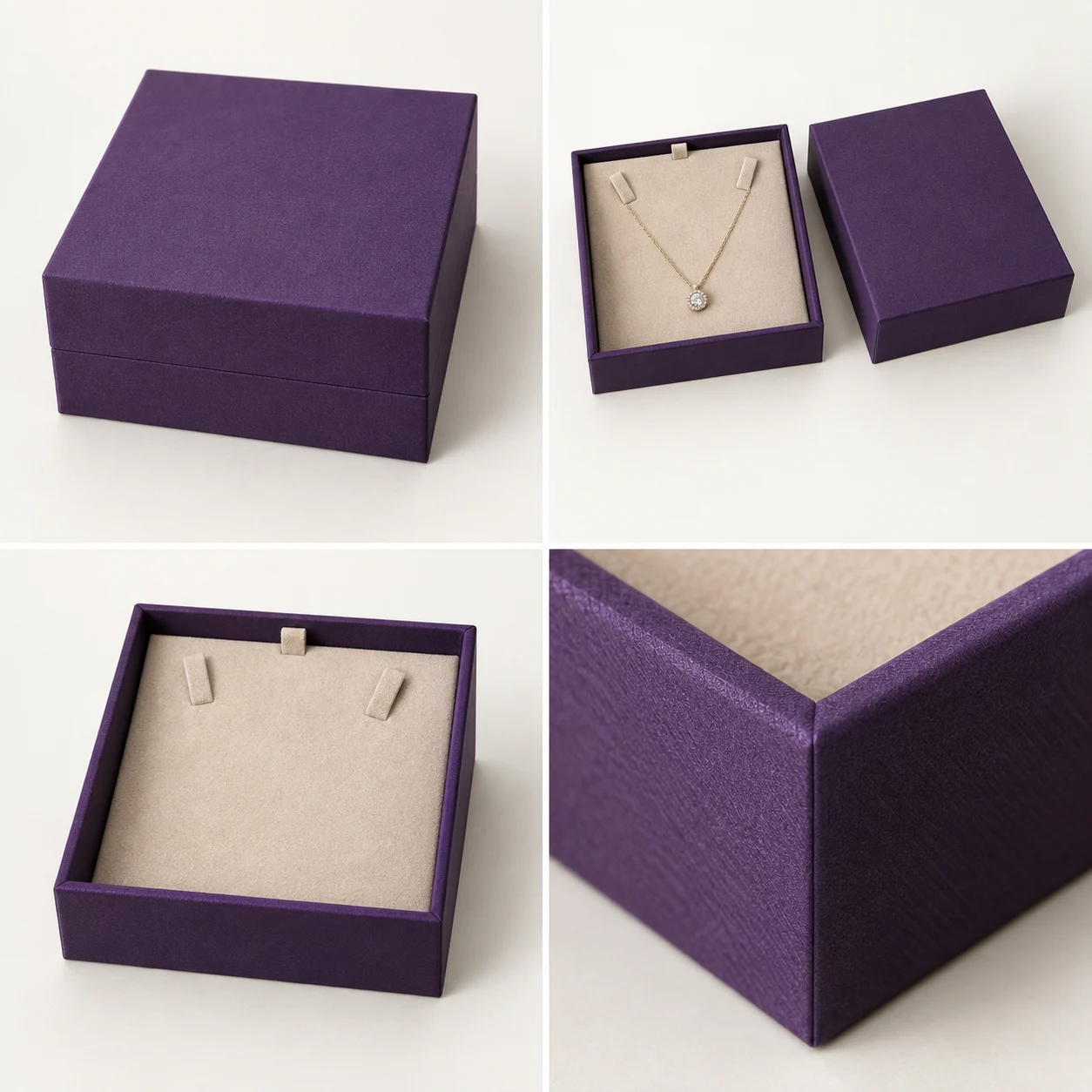
01 · Closed packaging
A two-piece rigid necklace box; lid and base separate for opening.
02 · Opening & fit
A small necklace illustrates the retention tabs and removable lined insert.
03 · Insert & construction
The empty insert makes the retention points and usable space visible.
04 · Material detail
Check the purple wrapping paper and suede-lined corner together.
01
Published reference
Alejandra Frakes documents jewelry and watch presentation packaging for Chippenhook, including wrapped board and lined interiors. The portfolio highlights repeat handling and product-specific interior geometry. These are third-party examples, not MTT delivery claims. Read the Alejandra Frakes: Jewelry & Presentation Packaging.
02
The buyer’s challenge
A ring, pendant and necklace need different retention. A universal foam opening may display one item well while allowing another to shift. Decide how the piece is presented, how staff remove it and whether the package is also intended for travel.
03
Structure and material direction: our analysis
For a ring, review the slot grip with representative shank sizes. For a necklace, consider attachment points, chain routing and space behind the display pad. A fabric-covered insert changes the final cavity dimensions; confirm the assembled lining rather than only the bare foam shape.
04
What to check in sampling
Agree a repeated-opening check with the supplier and inspect lining edges, loose fibres, hinge behaviour and contact with polished surfaces. Do not infer durability or tarnish protection from a luxurious fabric appearance. Material compatibility needs review with the actual jewelry finish.
05
Test the smallest piece as well as the largest
A slot that holds the widest ring shank may release a narrower one. A chain route that suits a short pendant can leave a longer chain loose behind the pad. Identify the approved size range, then inspect removal, snagging and return to position with the final lined insert.
06
Prepare a comparable quotation
Provide the jewelry range, size variation, intended retail handling, preferred lining and quantity by format. Request a sample with the final lining and attachment method, not just a colour swatch. Compare insert constructions.
07
Image and project credits
The four-stage images were generated specifically for this analysis. They illustrate a proposed direction and do not show the referenced brand’s packaging. Original project credit belongs to the creators linked above. No affiliation, manufacturing relationship or production performance is implied.
From guide to product
Compare packaging for your brief
Explore the opening, material and insert details for each design. These are options to review, not proof of a tested fit for your product.
 Bank Transfer
 PayPal