Window Cartons: Balance Product Visibility and Box Support
Quick answer
A carton window should reveal the detail a customer needs to see while leaving enough structure around it. Decide whether the opening is covered, then review folds, film attachment and product restraint together. A large cut-out may look attractive but weaken handling. Validate the assembled carton with its contents before approving the window artwork.
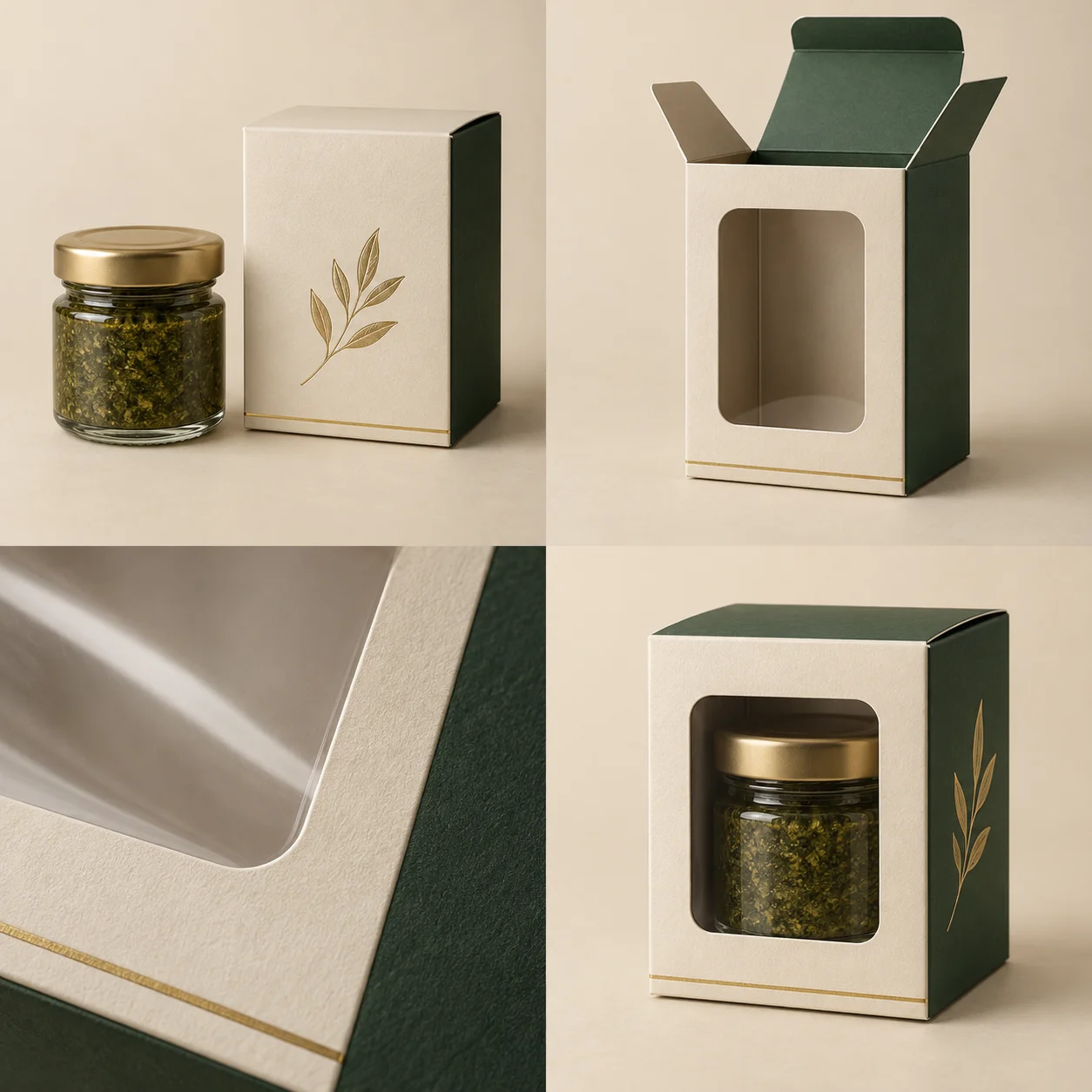
Four stages explain the product requirements, structure and finishing choices. AI-generated visualizations; final construction and finish are confirmed through physical sampling.
01 · Product requirements
Choose what the customer needs to see through the window.
02 · Structure direction
Keep a practical frame around the opening and review closure support.
03 · Materials & finishing
Where film is used, check its attachment and compatibility with the board.
04 · Complete packaging presentation
Review visibility and carton shape with the intended product inside.
01
Published reference
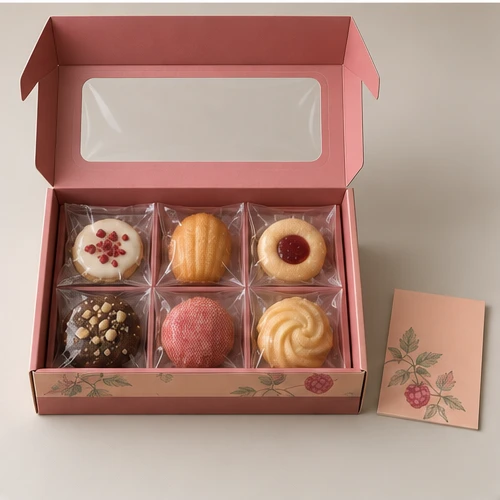
Metsä Board’s bakery packaging case presents a windowed carton application. It is a useful reference for the relationship between display and a paperboard structure. The illustrated example on this page is an independent carton concept, not a reproduction of that project. Read the Metsä Board: Case bakery packaging.
02
The buyer’s challenge
A larger window reveals more product but removes material from the panel. Choose what the customer needs to see, then review the remaining frame, folds and closure. A window should have a functional reason rather than simply filling the largest possible area.
03
Structure and material direction: our analysis
Compare an open cut-out with a covered window according to the product and handling route. Define the intended window position and any film attachment before artwork approval. Keep graphics and essential information away from the cut edge. A presentation carton does not automatically provide a moisture or grease barrier.
04
What to check in sampling
Inspect the assembled sample for distortion, window adhesion where applicable and product movement. For food use, obtain suitability documentation for the actual board, inks, adhesives and direct-contact components; visual similarity to another pack is not evidence of suitability.
05
Check the pack from the shelf distance
Choose the visible product feature first, then check whether it remains in the opening when the pack is handled. If the product rotates, a larger window may not solve the problem; the internal support needs attention. Keep the remaining frame clear of a fold that already carries handling load.
06
Prepare a comparable quotation
Provide product dimensions, contact conditions, shelf or delivery use, quantity and preferred viewing area. Ask the supplier to identify window material and assembly charges separately. Compare packaging families.
07
Image and project credits
The four-stage images were generated specifically for this analysis. They illustrate a proposed direction and do not show the referenced brand’s packaging. Original project credit belongs to the creators linked above. No affiliation, manufacturing relationship or production performance is implied.
From guide to product
Compare packaging for your brief
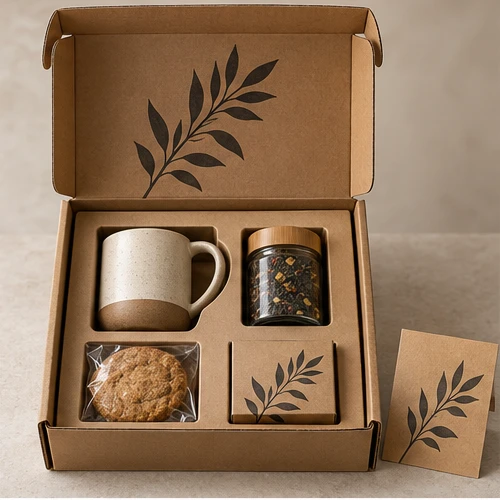
Explore the opening, material and insert details for each design. These are options to review, not proof of a tested fit for your product.

 Bank Transfer
 PayPal