Dropper Serum Bottles in Shoulder-Neck Rigid Boxes: Fit and Bulb Clearance
Quick answer
A glass dropper serum bottle is rarely uniform along its height: the glass shoulder narrows into a metallic collar and a compressible rubber pipette bulb. If an insert grips the bulb instead of the glass body, or if the lid presses down on the dropper tip, the bottle shifts or leaks in transit. Support the glass cylinder, leave clearance above the bulb and calibrate shoulder-neck friction on a loaded sample.
By Hugo He · Custom Packaging Consultant, MTT Packaging · Updated 2026-11-25
Packaging design reference. Final fit, materials and finish are confirmed on an approved sample.
At a glance
Engineer a shoulder-neck rigid box for a dropper serum bottle and refill: protect the rubber pipette bulb, add finger notches and control lid friction.
Why dropper bottles behave differently from standard pump bottles
Unlike a snap-on actuator pump or flat screw jar, a glass serum dropper combines three distinct materials along one axis: rigid glass at the base, a threaded metallic or plastic collar in the middle, and a soft elastomer bulb at the top. Because the bulb is flexible, clamping it inside a tight cutout feels secure on a desk yet transfers lateral vibration directly to the screw threads during export transit.
Engineer bulb clearance, base support and finger-lift notches
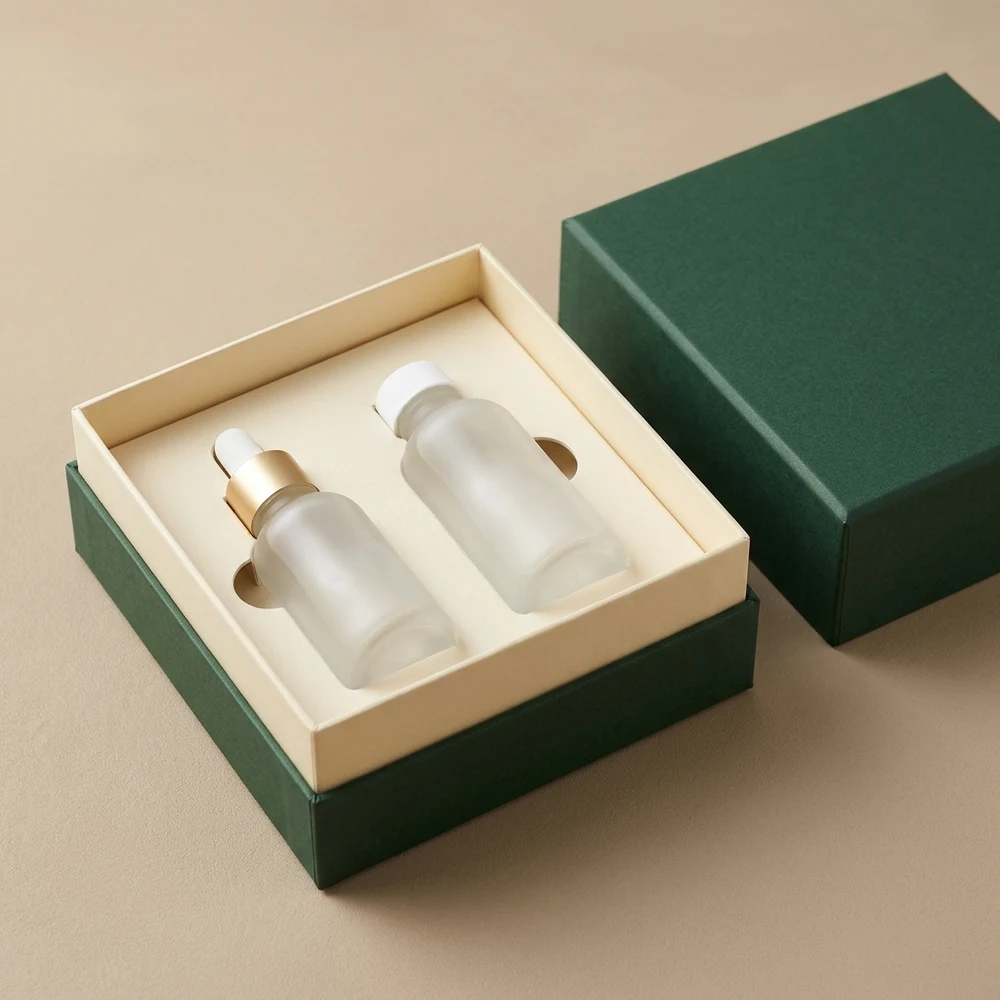
When a serum bottle and matching screw-cap refill sit side by side in a flat cradle, buyers often overlook how the customer lifts a smooth frosted cylinder out of a deep cavity. Without semi-circular finger notches on opposite sides—or an angled bevel beneath the bottle waist—end users instinctively tug the soft rubber pipette bulb to pull the bottle free.
Illustrative section view of a dropper serum shoulder-neck box. Confirm lid overlap, shoulder friction and bulb clearance with the filled glass bottle and cap.
For upright presentation boxes, the shoulder neck must extend high enough above the cradle floor to guard the dropper tip from side impact while still leaving finger space to grip the collar. Check our two-piece rigid box lid fit guide and shoulder-neck box fit checklist for tolerances around wrapped neck seams.
03
Compare shoulder-neck reveal, lid friction and alternative structures
Choose the rigid structure and cradle material around retail shelf handling, shipping volume and multi-SKU kits:
As Holmen Iggesund's converting manual explains, paperboard grain direction and creasing geometry directly affect panel flatness and fold spring-back—which is critical when a die-cut paperboard cradle carries two glass bottles without bowing.
04
Sample sign-off tests with the actual filled dropper assembly
Never approve a serum shoulder box using an empty glass shell or an uncapped bottle. Load the production-weight filled bottle and refill with their actual closures and labels, then check: (1) lifting the box by the outer lid alone to confirm balanced shoulder friction, (2) removing and reinserting both bottles via the finger notches five times to check for label or frosted-glass scuffing, and (3) verifying that changing bottle vendor or dropper bulb mould triggers an immediate recheck per component change retesting practices and ISTA retesting principles.
Full-height drawing or measured length of the assembled dropper bottle (including bulb) and refill bottle
Glass cylinder diameter, shoulder angle and filled weights
Preferred insert style (wrapped paperboard cradle, EVA or molded pulp) and finger-notch layout
Shoulder reveal height preference and outer/neck paper contrast colours
Quantity per SKU (minimum 1,000 pieces per design), target destination and sample timeline
Where should a serum insert grip a glass dropper bottle?
Support the cylindrical glass body and the base shoulder where the wall is thickest. Leave a relieved cavity or gentle neck clearance around the metallic collar and soft rubber bulb so vertical shock or lid closure does not flex the pipette seal.
How high should the exposed inner shoulder neck be on a luxury serum box?
Common visual reveals range from roughly 4 mm to 10 mm depending on box height and lid travel, but the functional rule is lid overlap: the outer lid must still engage enough vertical wall below the lid crease to stay closed smoothly without binding or dropping off when picked up.
From guide to product
Compare packaging for your brief
Explore the opening, material and insert details for each design. These are options to review, not proof of a tested fit for your product.

 Bank Transfer
 PayPal