In this guide · 7 sections
- Measure the largest finished outline
- Allocate a grip for each position
- Compare complete insert structures
- Close and inspect
- Make the quotation comparable
- Use two jars to define the worst case
- Discuss the packaging brief
124 / Skincare set packaging
Quick answer
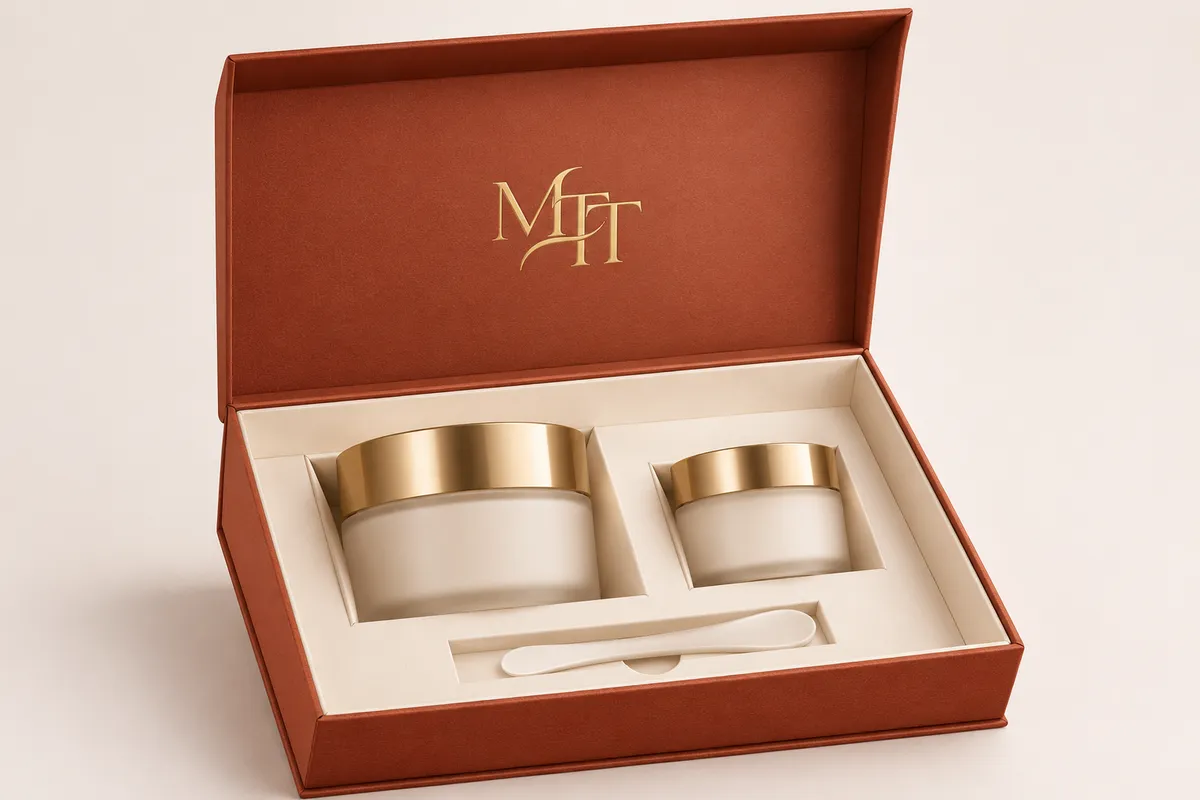
A two-jar presentation needs more than two matching circles. Measure each closed, filled jar, plan where the user grips it and check the neighbouring jar remains seated during removal. Review actual lid clearance, contact surfaces and full shipping configuration on a sample.
 By Hugo He · Custom Packaging Consultant, MTT Packaging · Updated 2026-11-20
At a glance
Plan support, lid clearance and removal for two different skincare jars in one gift box.
Measure the closed jars including lids, label overlaps and any tamper component supplied by the brand. Record maximum diameter, assembled height, base profile and filled weight for each jar. Ask which decorated surfaces can touch the insert. A larger lid can control pocket width even when the jar body is narrower.
Place the heavier jar where the underlying support can carry the filled load. Provide a practical grip that does not require lifting by the lid unless the product owner permits it. Remove the larger jar while the smaller remains seated, then reverse the sequence. Check if a finger recess weakens the narrow partition between pockets.
A folded paperboard support, shaped pulp or foam option needs a defined grade and support beneath the product. Compare the actual samples under the same loaded removal sequence, finish and outer-box dimensions. A paper-look surface alone does not establish what is underneath. Review the insert material comparison when requesting alternative constructions. Record the material grade and storage conditions with the sample. Iggesund’s handling guidance explains how conditions affect paperboard.
With both jars and all accessories present, close the lid without forcing it. Look for contact at the highest lid, rubbing on labels and movement in the pockets. Confirm which closure is actually proposed instead of assuming the illustration contains magnets. If the set is shipped, agree the outer shipper and assessment separately.
Provide a filled jar set, artwork files, quantity per design and destination. Ask for the box, insert, accessory slot, sampling, tooling and freight to be listed separately. A change in jar lid or packaging orientation may require a revised insert and fresh physical review.
Illustrative scenario. The larger jar has a broad lid while the smaller jar is taller. The larger lid may control the width of one pocket, while the taller jar controls the closed height of the set. Place both finished jars in the insert simultaneously and check the lid above each. If an insert is raised to improve access to the small jar, recheck closed height before approving the change. Document the result against the jar and insert revisions used.
See the illustrative packaging concept and send the actual components for a project-specific review. Share dimensions, filled weights, artwork, quantity per design and destination with MTT. We can review a sampling brief for orders from 1,000 pieces per design.
From guide to product
Explore the opening, material and insert details for each design. These are options to review, not proof of a tested fit for your product.
Rigid gift boxes · Book-style rigid box
Custom wrapping paper, colour and texture by sample
View structure & details →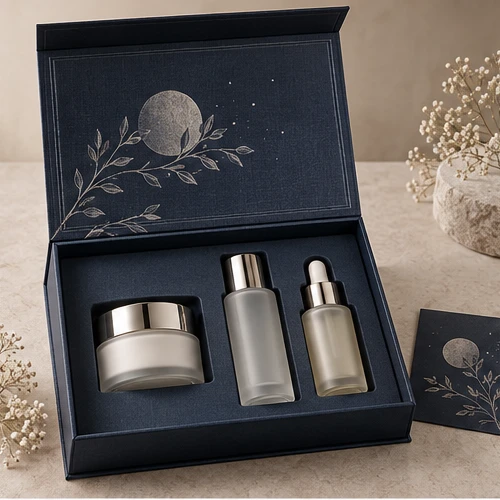
Rigid gift boxes · Magnetic book box
Fine linen-textured wrapping paper
View structure & details →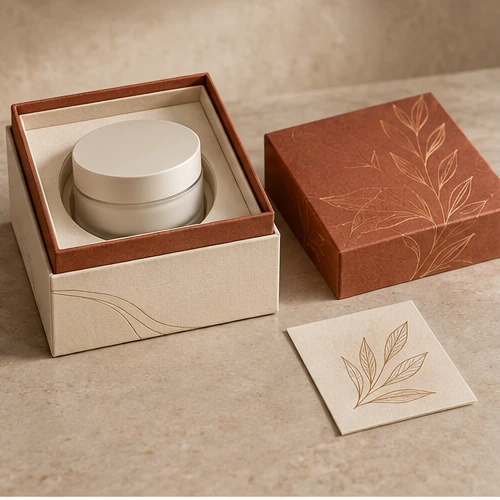
Rigid gift boxes · Shoulder-neck box
Textured uncoated wrapping paper
View structure & details →Payment Options
Available for confirmed production orders.
Available for eligible payments.
Available payment methods may depend on order value, project stage and transaction arrangements confirmed with MTT Packaging.
 Bank Transfer
 PayPal