In this guide · 7 sections
- Define the supplied accessory
- Design retention and a grip
- Set the order of packing
- Inspect the loaded sample
- Coordinate the brief
- Decide what changes when the accessory changes
- Discuss the packaging brief
125 / Accessory packing
Quick answer
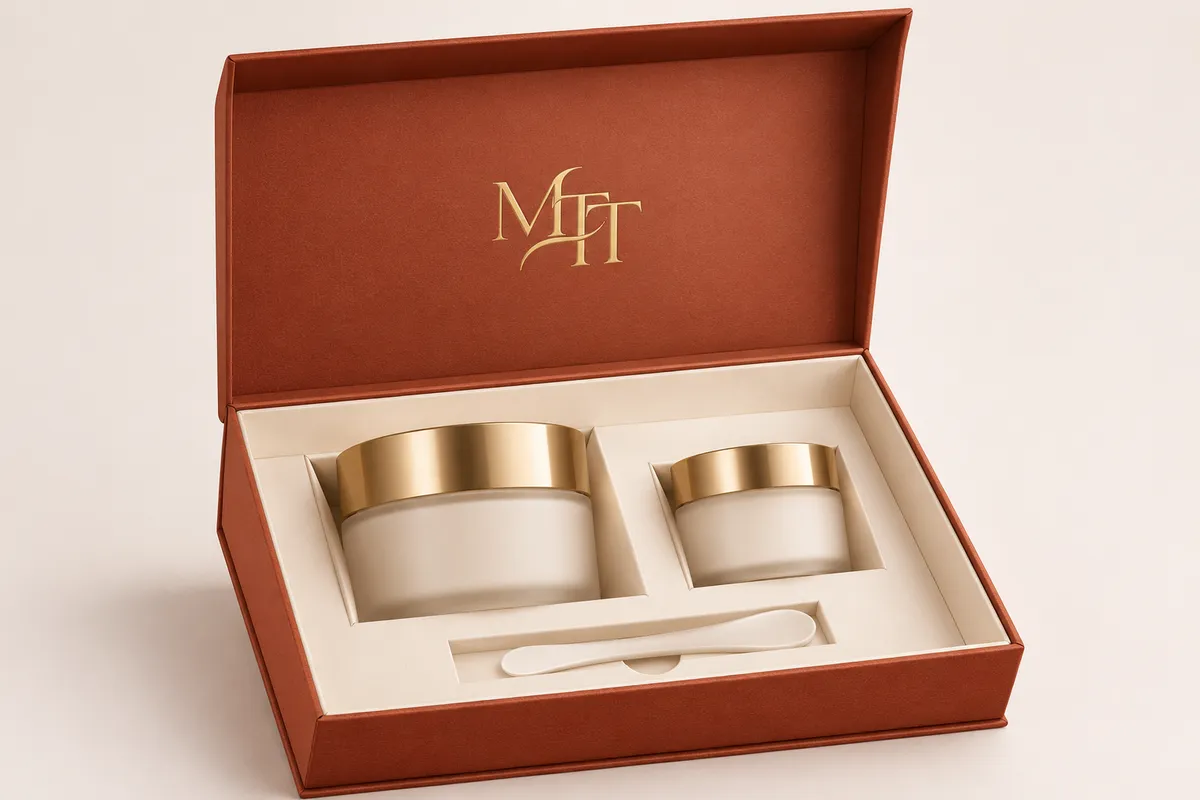
A spatula recess needs to retain the actual accessory and let the customer remove it without disturbing the jars. Provide the wrapped accessory, its contact requirements and loading orientation. Check the finished set in a sample and agree which supplier owns hygiene and product-contact decisions.
 By Hugo He · Custom Packaging Consultant, MTT Packaging · Updated 2026-11-20
At a glance
Specify spatula pocket fit, protective packaging and packing responsibilities for a skincare set.
Ask whether the spatula is supplied loose, in a sleeve or in another protective pack. Measure its full length, widest point, thickness and wrapper. Identify which surfaces may touch the packaging. Packaging geometry alone does not establish cleanliness, product compatibility or regulatory compliance.
A recess that shows the spatula may look neat but make it difficult to lift. Provide a finger relief or another agreed removal method and test it with the exact accessory. Keep the spatula from crossing a jar rim when the box closes. If a wrapper is required, allow for the complete wrapped envelope rather than the bare spatula.
Write who supplies and loads the spatula, whether it arrives wrapped, and which version belongs to each set. Rehearse loading with both jars already in position. Check if the packer can see that the accessory is present without removing it. Use clear version labels for the insert and packing instruction.
Close and reopen the complete set. Record whether the accessory shifts, touches a decorated lid or catches on the liner. If a pocket changes, check the space underneath and any adjacent support. Sample photographs should show the complete assembly and revision, not imply a confirmed production run. If the complete set will enter distribution, agree a test scope with the responsible shipper; ISTA lists test procedures for different distribution situations.
The brand or responsible product supplier should specify hygiene and product-contact requirements. Share those requirements, the physical accessory and intended packing environment before requesting a sample. Itemize the box, insert, accessory and assembly responsibility in the quotation.
Illustrative scenario. A brand changes from an unwrapped spatula to a sleeve after a box sample has been approved. The wrapped piece may need a wider opening or a different finger recess even if its rigid length is unchanged. Place the complete supplied accessory into the sample, check the sleeve edge does not catch and close the box with both jars present. Record who approves the wrapper and contact surfaces, then issue a revised packing instruction if needed.
See the illustrative packaging concept and send the actual components for a project-specific review. Share dimensions, filled weights, artwork, quantity per design and destination with MTT. We can review a sampling brief for orders from 1,000 pieces per design.
From guide to product
Explore the opening, material and insert details for each design. These are options to review, not proof of a tested fit for your product.
Rigid gift boxes · Book-style rigid box
Custom wrapping paper, colour and texture by sample
View structure & details →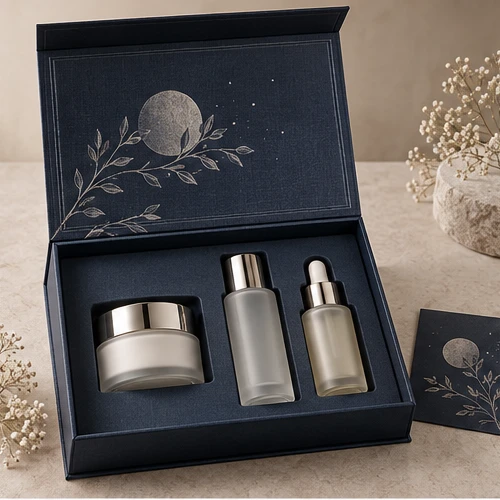
Rigid gift boxes · Magnetic book box
Fine linen-textured wrapping paper
View structure & details →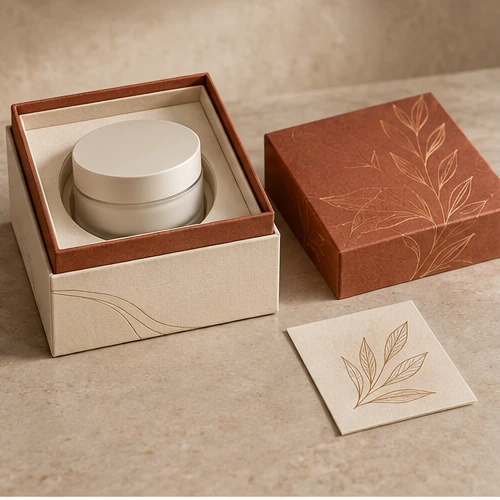
Rigid gift boxes · Shoulder-neck box
Textured uncoated wrapping paper
View structure & details →Payment Options
Available for confirmed production orders.
Available for eligible payments.
Available payment methods may depend on order value, project stage and transaction arrangements confirmed with MTT Packaging.
 Bank Transfer
 PayPal