In this guide · 4 sections
- Measure the accessory as received
- Choose a bay based on the pouch variation
- Make receiving inspection possible
- What to include in the supplier brief
138 / Medical instrument packaging procurement
Quick answer
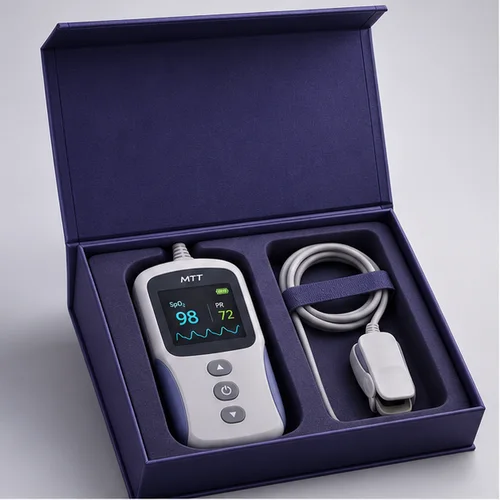
A finger sensor measured loose on a desk can fit a much smaller opening than the same sensor in its supplied pouch. For a handheld oximeter kit, sample the reader and the intact accessory pack together. Preserve access to the sensor identifier and give the cable connector a resting position away from the display.
 By Hugo He · Custom Packaging Consultant, MTT Packaging · Updated 2026-11-23
At a glance
Keep the supplier pouch closed wherever the device owner requires it. Choose a bay based on the pouch variation.
Keep the supplier pouch closed wherever the device owner requires it. Measure the seal lip, widest cable loop and highest connector through the pack without flattening it. Record the label face. Two suppliers can deliver a compatible accessory in different pouch footprints, so list the permitted variants before freezing the cutting tool.
A close recess gives a tidy display for one stable pouch size. A broader compartment with a removable retaining card can accommodate approved alternatives, provided it does not pinch a seal or obscure identification. Put the bulkiest version into a prototype, add the leaflet and close it. Repeat with the smallest version to check migration toward the reader screen.
Ask a person unfamiliar with the packing layout to identify the sensor model and remove the bag without tugging the lead. Examine the packaging and ask the device owner to define any functional checks. Nonin describes unpacking and inspection for its own sensor; that example does not establish requirements for another model. Obtain its current instructions before signing off.
Mark the approved contact areas and the surfaces that must remain clear on a drawing of the packed instrument. Identify who supplies protective covers, who packs the device and who signs off the loaded sample. Compare the handheld pulse oximeter and sensor kit box concept with the device owner’s approved transport packaging. Request separate prices for the presentation box, insert, sample and shipping outer.
Technical reference: Nonin sensor unpacking instructions. Model-specific instructions take precedence. This article addresses secondary packaging for new equipment and makes no sterile-barrier or clinical-use claim.
From guide to product
Explore the opening, material and insert details for each design. These are options to review, not proof of a tested fit for your product.
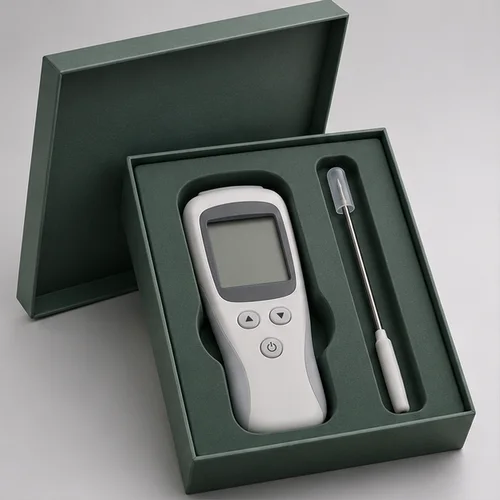
Rigid gift boxes · Lift-off lid
Custom wrapping paper, colour and texture by sample
View structure & details →Rigid gift boxes · Hinged book box
Custom wrapping paper, colour and texture by sample
View structure & details →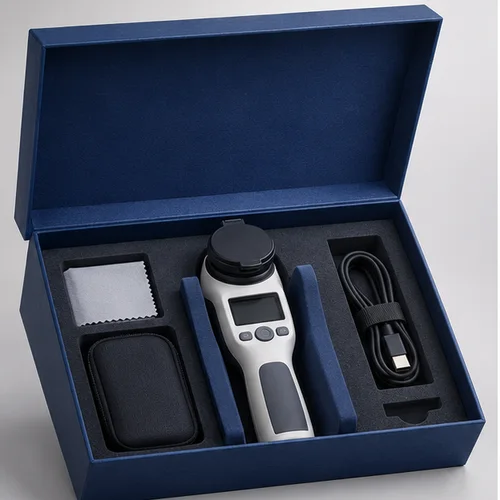
Rigid gift boxes · Lift-off lid
Custom wrapping paper, colour and texture by sample
View structure & details →Payment Options
Available for confirmed production orders.
Available for eligible payments.
Available payment methods may depend on order value, project stage and transaction arrangements confirmed with MTT Packaging.
 Bank Transfer
 PayPal