In this guide · 6 sections
- Measure the finished set, including accessories
- Follow the load from hand to base
- Compare two handle routes on the finished bag
- Write a carrying check both sides can repeat
- Keep the quote comparable
- Sources
98 / Fragrance Procurement
Quick answer
We begin a matching perfume bag with the complete filled gift box, not just the bottle. The box must slide into the bag, sit on its base and leave the customer enough room to hold the handles. We would review the handle attachment, top reinforcement and bottom construction as a complete loaded sample before agreeing a project-specific carrying check.
 By Hugo He · Custom Packaging Consultant, MTT Packaging · Updated 2026-11-16
At a glance
Specify a matching perfume gift bag around the finished box, carrying load, handle attachment and sample review.
List the external box length, width and height after wrapping and assembly. Identify the orientation in which it enters the bag and include any ribbon, card, tissue or second item. Record the complete intended carrying weight with the filled bottle and primary packaging. A nominal perfume volume is not a bag load or an external box size.
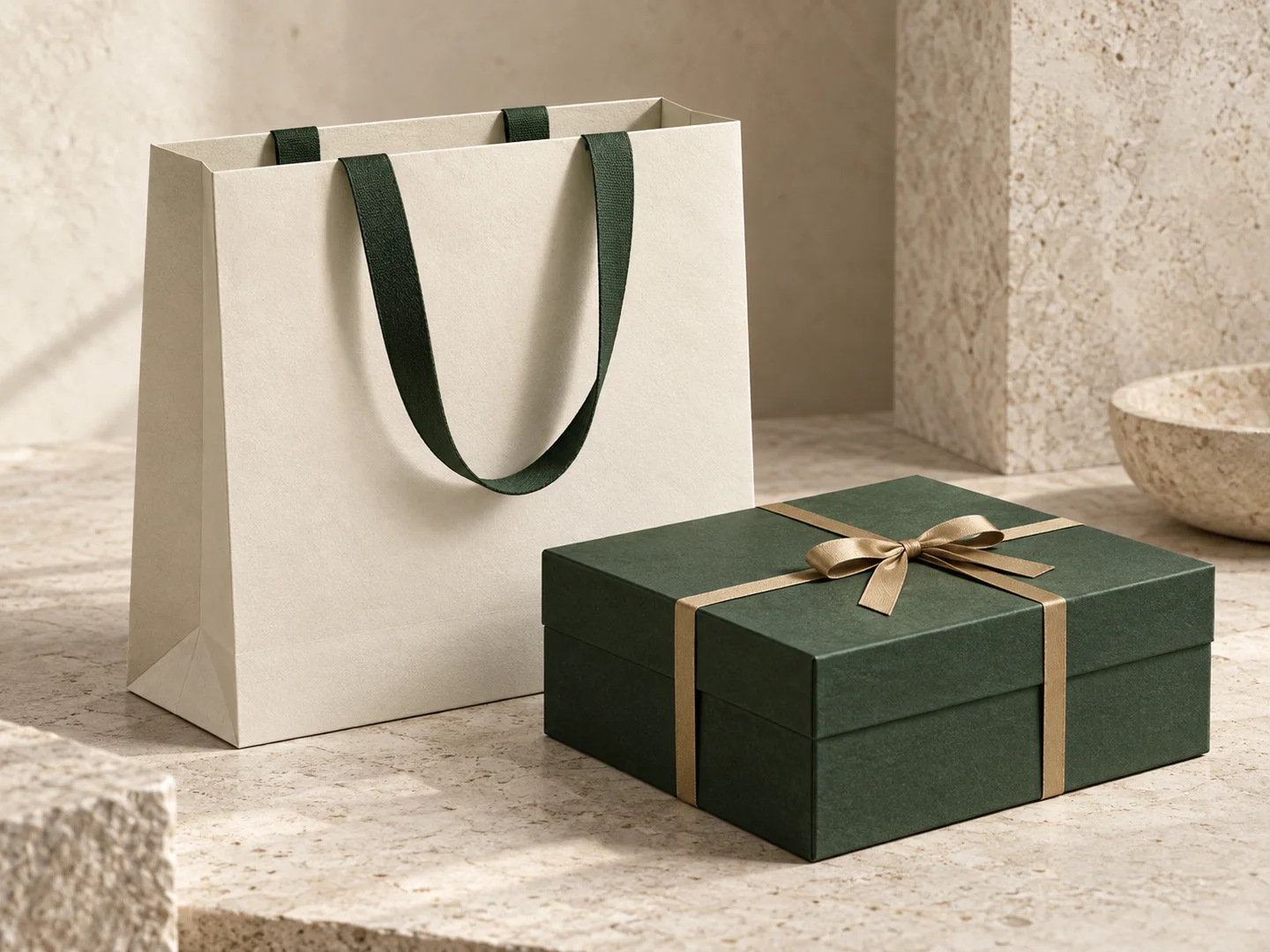
The accompanying image is a handle concept, not a load-tested sample. Compare the box and bag together using the matching perfume box and bag guide; this article concentrates on carrying loads and the sample acceptance record.
When a customer lifts the set, the handle transfers the load through its attachment into the bag body and bottom. Identify the handle material, length, attachment method, top fold or reinforcement, side seams and base construction. A paper specification alone cannot describe the whole finished assembly. Industry paper-bag guidance discusses handle attachment and reinforcement as parts of bag construction.[1]
Request a finished sample with the actual handle and bottom components. Check where knots, tabs or reinforcement sit relative to the box, and whether the filled box rests evenly on the base. If a knot protrudes into the bag, review whether it catches or marks the wrapped box during insertion.
| Part | Ask the converter | Check with the actual set |
|---|---|---|
| Cord or ribbon handles | How are they attached and reinforced? | Grip comfort, attachment and contact with box |
| Paper handles | What is the handle and reinforcement construction? | Folding, grip and attachment under the agreed load |
| Top and side seams | Which surfaces are folded or bonded? | Any separation, distortion or box snagging |
| Base | Is an insert or reinforcement included? | Box sits flat; base remains supported during handling |
These are questions for comparison, not a statement that every handle type suits the same weight or that a specific construction has passed a test.
Before examining samples, agree the representative load, bag orientation, conditioning, lifting and carrying method, number of repetitions, and acceptable changes to the handles, seams and base. Photograph and identify the sample before and after the agreed handling. If a formal standard is required, agree its exact edition and method with the testing provider; an informal lift is screening, not a certified load rating.
Illustrative example: a brand changes from one perfume box to a box plus a refill. The bag artwork stays the same, but the combined size and carrying weight change. Recheck insertion, the loaded base and the agreed handle evaluation on the new complete set. This is a hypothetical procurement scenario, not an MTT test result.
Specify finished bag width, gusset and height, the box insertion orientation, intended load, paper and finish, handle and reinforcement, and quantities per artwork. Ask for the box, bag, sample, tooling and freight as separate lines. Confirm who supplies and packs the contents and whether the bag is used for retail carrying or forms part of a separate shipping arrangement. Review custom paper bag options and prepare a sample brief for at least 1,000 pieces per design.
From guide to product
Explore the opening, material and insert details for each design. These are options to review, not proof of a tested fit for your product.
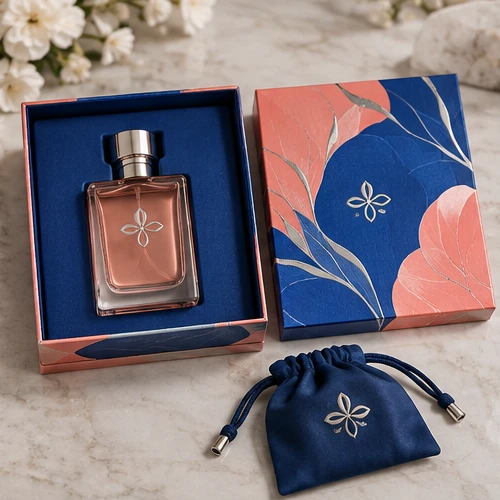
Rigid gift boxes · Lift-off lid
Gloss-laminated printed wrapping paper
View structure & details →
Custom paper bags · Cord-handle paper bag
Fine-textured shopping-bag paper
View structure & details →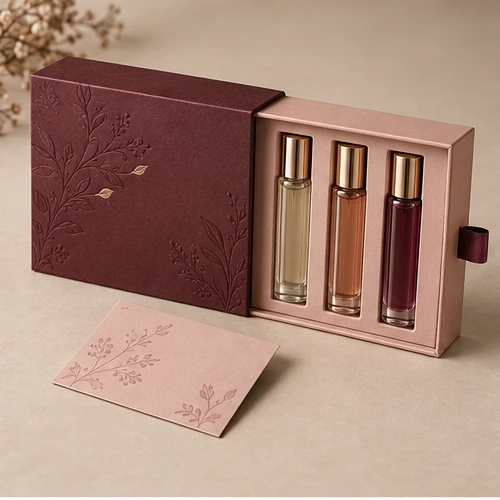
Rigid gift boxes · Drawer box
Smooth matte printed wrapping paper
View structure & details →Payment Options
Available for confirmed production orders.
Available for eligible payments.
Available payment methods may depend on order value, project stage and transaction arrangements confirmed with MTT Packaging.
 Bank Transfer
 PayPal