Watch Box Cushion Sizing: Fit the Bracelet and the Case
Quick answer
Watch box cushion sizing needs two separate checks: the closed strap or bracelet must fit around the cushion, and the mounted watch must fit inside the box. Measure the actual watch, including its crown, lugs and clasp. Then approve the cushion with its final covering and filling. Case diameter alone cannot establish bracelet tension, removal access or clearance under the lid.
By Hugo He · Custom Packaging Consultant, MTT Packaging · Updated 2026-11-06
Packaging design reference. Final fit, materials and finish are confirmed on an approved sample.
At a glance
Specify watch box cushion sizing using the closed bracelet, case envelope and loaded height. Compare samples with a measurement and approval checklist.
A metal bracelet adjusted for a small wrist does not become larger because the watch has a wide dial. Conversely, a small watch on a loose strap can turn around a cushion that looks right in a product photograph. Treat the bracelet loop and the case envelope as separate inputs.
Record the bracelet in the setting in which it will be packed. For an adjustable strap, agree which hole or clasp position is used at packout and what other settings the packaging should accommodate. Do not force a clasp shut to make a sample fit. If the range is broad, compare two cushion sizes or a different support construction before increasing the outer box.
Check
Record
Decision
Closed strap or bracelet
Actual packed setting and required size range
Whether the cushion can be fitted without forced closure
Case envelope
Width including crown; lug-to-lug length; thickness
Compartment width, depth and mounted height
Clasp and caseback
Shape and position against the cushion
Where seams or hard edges must be avoided
Accessories
Spare strap, links, tool and card dimensions
Separate support and removal space
02
Use the watch-and-strap layout to define the sample
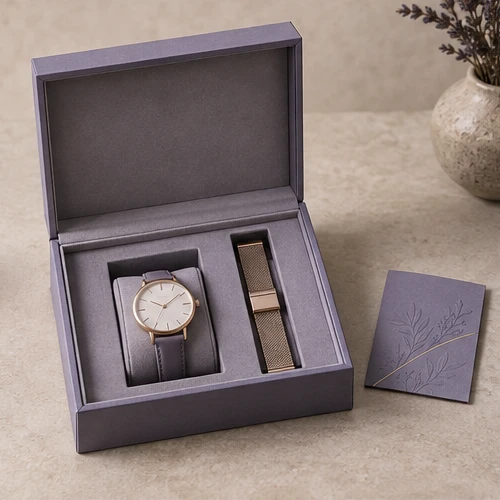
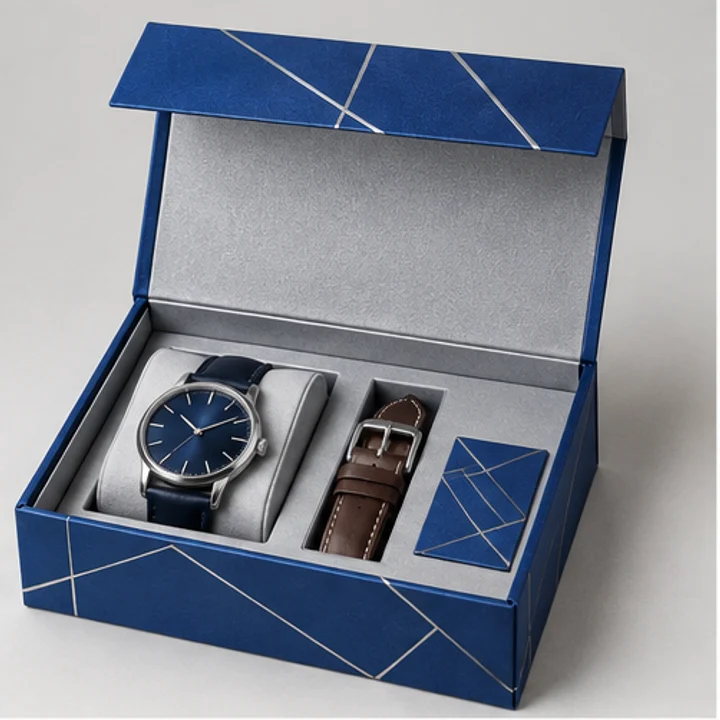
The MTT watch-and-strap collection book box shows one cushion position and a separate long accessory slot. The pictured watch sits on the left; a spare metal bracelet sits on the right. This is a useful starting layout for a gift set, with each component presented separately.
For a buyer brief, we would first check the mounted watch height and whether the accessory can move into the watch compartment. The image cannot supply cushion dimensions or prove compatibility with a particular watch. Specify the case, bracelet and accessory together, then check the assembled sample.
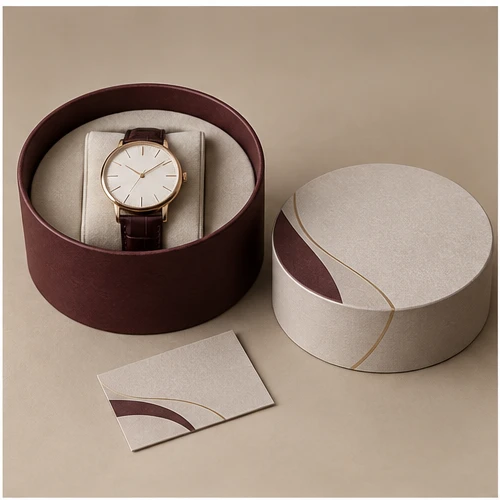
The single-watch round case provides a different presentation. Its curved surrounding space still needs checking against the crown and removal path. A double-door watch box changes the opening sequence and card position; it does not remove the need to size the support.
03
Read published fit numbers within their product scope
WOLF lists a wrist-size range of 5.5–9.75 inches for its Dynamic Lock-In Cuff. That is approximately 140–248 mm using 25.4 mm per inch. It is a specification for that named watch-winder accessory, not a universal range for a soft presentation cushion. WOLF Dynamic Lock-In Cuff.
On its Blake five-piece watch box, WOLF separately states accommodation for a case up to 52 mm. The distinction is useful: wrist-size accommodation and case-size accommodation answer different questions. Neither figure establishes an MTT product limit. WOLF Blake watch box.
Ask any supplier to identify whether a stated size means the cushion outside dimensions, the closed bracelet range or the watch compartment. A number without that definition is difficult to compare across quotations.
04
Calculate loaded height before approving the lid
Measure from the finished compartment floor to the highest point of the mounted watch. Compare it with the lowest inside surface of the closed lid, including lining or a card pocket. Use a common reference plane for both measurements.
In an illustrative sample, 62 mm of available height minus a 56 mm mounted assembly leaves 6 mm of nominal headroom. Adding a 2 mm inward-projecting lid feature reduces that to 4 mm. These are example calculations, not recommended clearances or measurements of the pictured MTT box.
Check
Record
Decision
Available internal height
62 mm in the example
Measure with the final lid lining
Mounted watch height
56 mm in the example
Includes cushion and watch in the packed position
Nominal headroom
62 − 56 = 6 mm
Does not account for movement or manufacturing variation
Added inward lid feature
6 − 2 = 4 mm remaining
Recheck the complete sample after a design change
A cushion that sits at an angle changes the envelope. Check the actual assembly rather than adding nominal watch thickness to an unloaded cushion measurement. The internal versus external dimensions guide explains the wider drawing conventions.
05
Approve feel and retention as separate observations
Specify the cushion covering, filling and seams as well as its outside size. Two samples with the same unloaded measurements can behave differently when a bracelet is closed around them. Compare the finished components with the actual watch, keeping the packed bracelet setting consistent.
Check
Record
Decision
Bracelet closure
Does the clasp close normally?
Change the support if closure needs force
Cushion retention
Does the mounted watch stay in its intended position?
Review cushion shape and cavity support
Surface contact
Check crown, clasp, caseback and seams
Move hard edges away from sensitive contact points
Removal
Can the customer lift the assembly without pulling the watch?
Provide access suited to the compartment
Lid closure
Watch and accessories fitted together
No unintended contact with the lid
Repeat sample
Compare the agreed watch/bracelet range
Record which combinations passed and which need another size
Keep the approved sample with its material and drawing revisions. Do not describe a visual fit check as a transport test: the shipping pack needs its own assessment with the full contents. Use the sampling approval record to keep appearance, fit and transport decisions distinct.
From guide to product
Compare packaging for your brief
Explore the opening, material and insert details for each design. These are options to review, not proof of a tested fit for your product.

 Bank Transfer
 PayPal