Fragrance Packaging: Give the Brand Pattern a Clear Role
Quick answer
For patterned fragrance packaging, assign one surface the main recognition role and let the remaining surfaces support it. Review where the pattern crosses wrapped edges and where the brand mark needs uninterrupted space. Compare the box and label on their actual substrates. A visually coordinated pattern still needs a separate bottle-fit and opening check.
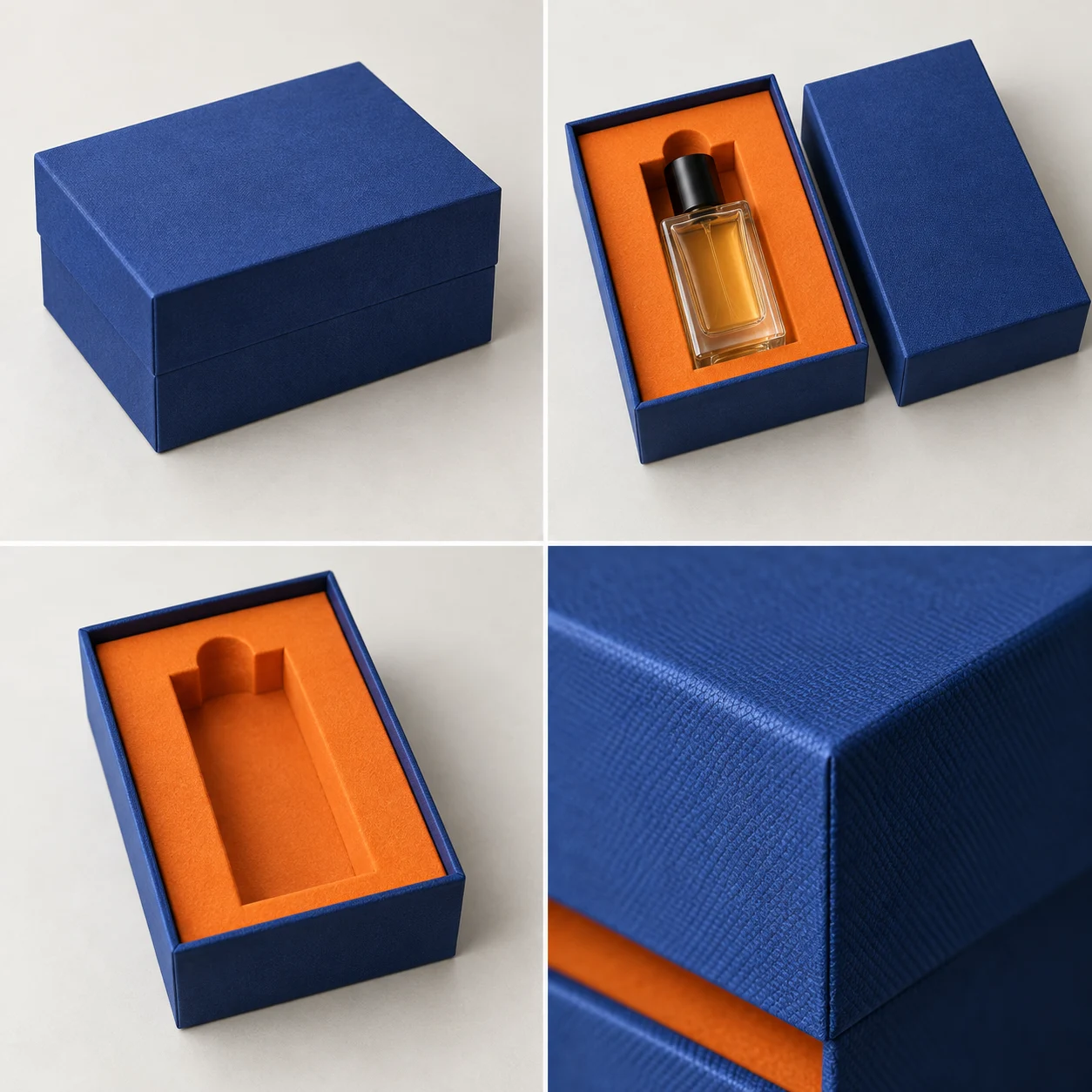
Compare the box, opening, insert and material details. AI-generated visualizations; final construction and finish are confirmed through physical sampling.
01 · Closed packaging
A two-piece rigid perfume box with a separate lift-off lid.
02 · Opening & fit
The detached lid sits beside the base; the bottle is supported by one fitted cavity.
03 · Insert & construction
The same empty insert shows the cavity and finger access without the bottle obscuring them.
04 · Material detail
Review the wrapped corner, paper texture and lining on a physical sample.
01
Published reference
Communication Arts describes Pentagram’s LBTY fragrance identity as a development of Liberty’s visual archive. A patterned oversized lid and restrained bottle label have different visual roles. This is a published third-party project, not an MTT order. Read the Communication Arts: LBTY packaging.
02
The buyer’s challenge
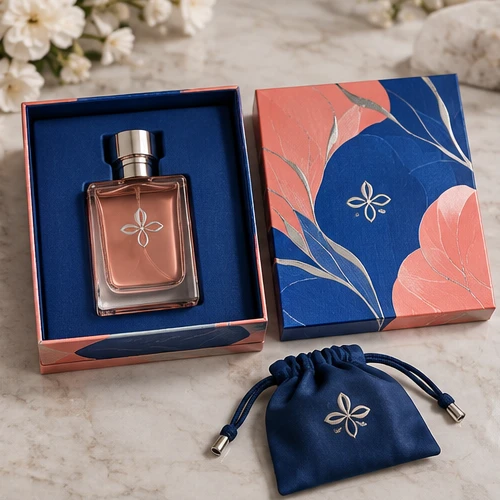
A fragrance pack can lose its hierarchy when every surface carries a pattern, foil, texture and large lettering. Define the recognition point first: the lid, the bottle label or the opening reveal. The outer packaging should support that decision rather than compete with it.
03
Structure and material direction: our analysis
Compare a lift-off rigid box with a book-style presentation box using the actual capped bottle. Reserve uninterrupted space for the brand mark. If a pattern continues around wrapped edges, decide where joins can sit before approving the artwork. A printed wrap and a bottle label are different substrates; review their colour together.
04
What to check in sampling
Prepare separate print and foil artwork. Check small type, pattern joins, rub resistance and bottle removal on the sample. An attractive render does not establish cap clearance or transport protection. State the required insert and shipping carton separately.
05
Decide which surface owns the pattern
Lid: recognition at first sight; review the border around the seam.
Side wrap: continuity; choose a deliberate joining location.
Interior: reveal after opening; keep removal instructions legible.
Label: identify the fragrance; avoid competing with the box pattern.
Choose one leading role before asking for matching decoration on every component.
06
Prepare a comparable quotation
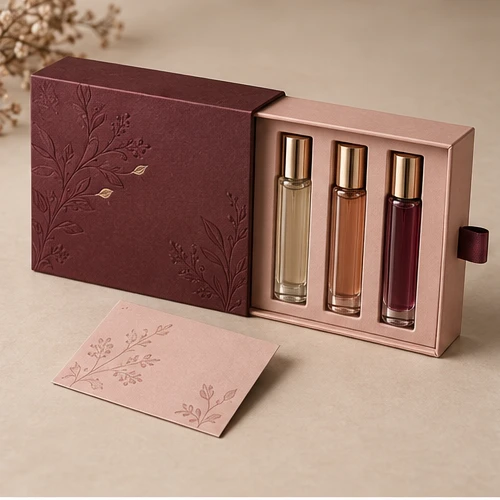
Provide the capped bottle dimensions, filled weight, artwork files, preferred opening, quantity by fragrance and destination. Ask for separate costs for the box, insert, finishing tools and samples. Compare finishing and substrate checks.
07
Image and project credits
The four-stage images were generated specifically for this analysis. They illustrate a proposed direction and do not show the referenced brand’s packaging. Original project credit belongs to the creators linked above. No affiliation, manufacturing relationship or production performance is implied.
From guide to product
Compare packaging for your brief
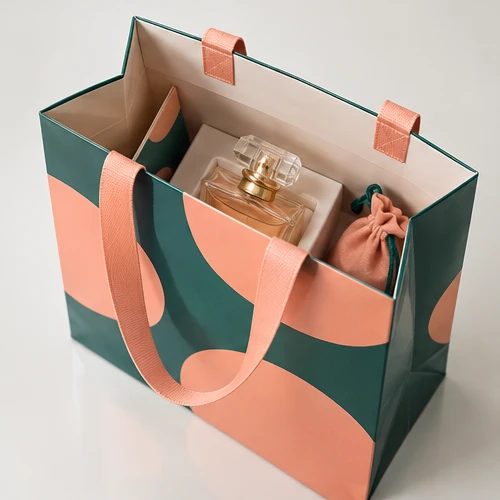
Explore the opening, material and insert details for each design. These are options to review, not proof of a tested fit for your product.
 Bank Transfer
 PayPal