Scented Cards in Cosmetic Gift Boxes: A Supplier Coordination Brief
Quick answer
A scented card is a separate component from the structural insert that holds a cosmetic product. Before including it in a gift set, identify who supplies the fragrance and card, who assesses the intended use and who checks contact with packaging. Confirm suitability and any requirements with the relevant suppliers; availability is project-specific.
By Hugo He · Custom Packaging Consultant, MTT Packaging · Updated 2026-11-18
Packaging design reference. Final fit, materials and finish are confirmed on an approved sample.
At a glance
Separate scent formulation, card finishing and presentation-box responsibilities before planning a scented insert.
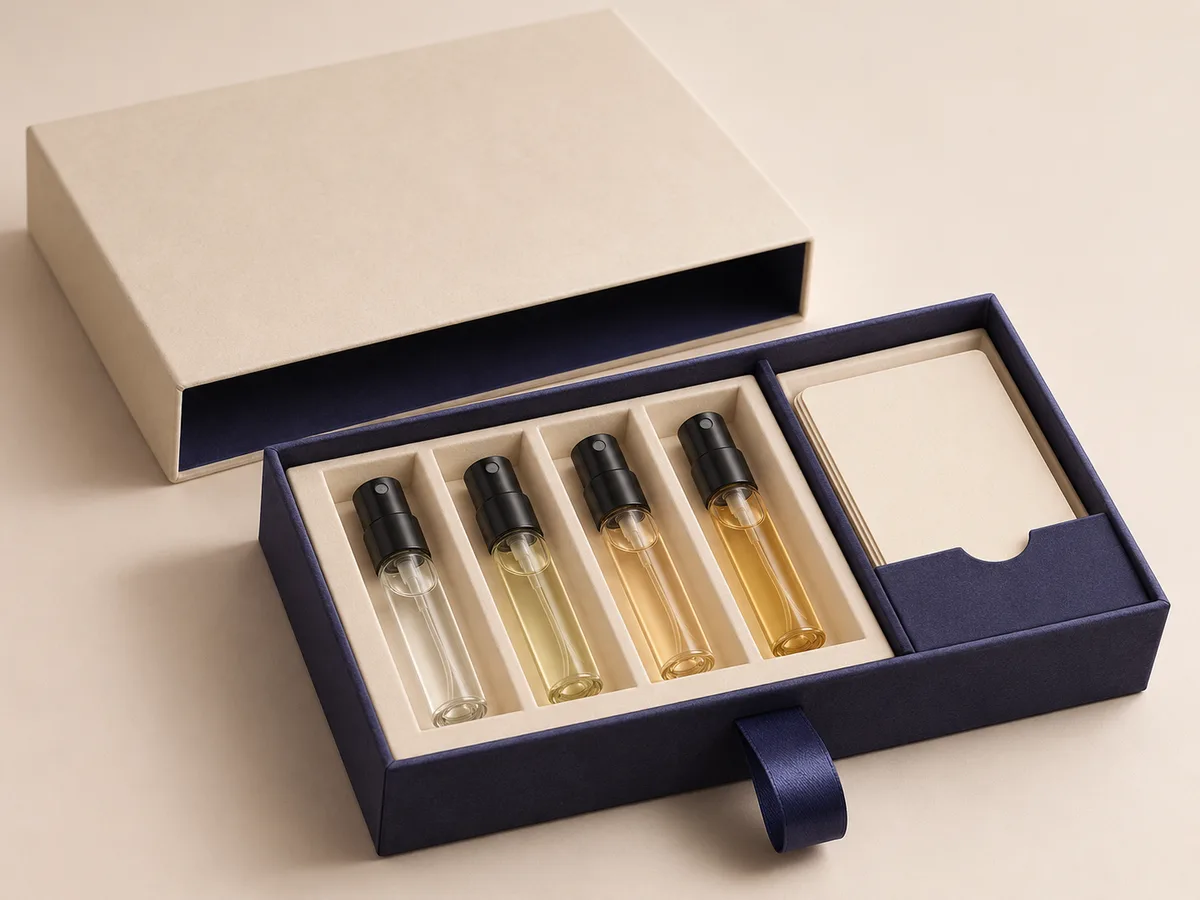
A buyer might refer to a loose scent strip, a pre-scented card in a sleeve, or a paper insert printed with instructions. These are different components. Record who formulates and applies the fragrance, who provides the paper and who packs the finished card. The packaging illustration is not evidence that MTT supplies scented-card manufacture or fragrance treatment.
02
Ask the fragrance supplier the right question
Provide the intended finished use, destination markets, fragrance mixture, application method and expected contact with the consumer. Ask the fragrance supplier and responsible product team which documents and assessments apply. IFRA says its certificate concerns a fragrance mixture for a specified intended use and does not replace a safety assessment or applicable law.[1] Do not describe a whole box as “IFRA certified” merely because a document exists for a fragrance mixture.
03
Review contact and segregation
Agree whether the scented card will touch a product label, pouch, printed finish or another fragrance sample. Ask the relevant suppliers what contact, transfer, staining, odour migration or storage checks they recommend for the actual materials. An unscented control and a representative finished pack help the team identify differences, but any formal test method and acceptance criteria should be agreed by qualified parties.
Illustrative scenario: a loose card is placed directly against an uncoated paper insert. The brand wants the paper surface to remain unmarked. Before approving production, the brand and card supplier agree the contact arrangement, observation period and acceptability criteria. This is not an MTT case or test result.
04
Keep packing versions identifiable
If one campaign uses several scents, link the fragrance reference, card artwork, sleeve and box version in a pack-out list. Keep a physical approved reference and explain which side faces the product. The discovery-set identification guide offers a related control for matching components.
05
Ask for an itemised packaging brief
Send card dimensions, whether a separate sleeve is supplied, packing sequence, artwork, intended market, quantity and the responsible scent supplier. MTT can review box and paper-packaging requirements for projects from 1,000 boxes per design. Confirm availability of any scented component and its assessment separately; no blanket scent-service claim is made here.
06
Separate the approval records
Keep the packaging artwork revision, card material reference, fragrance mixture document and actual packing instruction as separate records. The party responsible for the finished consumer product determines which assessments and market-specific rules apply; a packaging supplier should not replace that assessment with a general claim.
Questions to assign before sampling
Item
Question
Fragrance
Who supplies the mixture and confirms intended use?
Card
Who applies, sleeves and labels it?
Box
Which surfaces can touch the card?
Packing
How are scent and artwork versions identified?
Only the relevant supplier can confirm its own component; availability and charges remain subject to quotation.
 Bank Transfer
 PayPal