Discreet Shipping for Luxury Gifts: Cartons, Labels and Packout
Quick answer
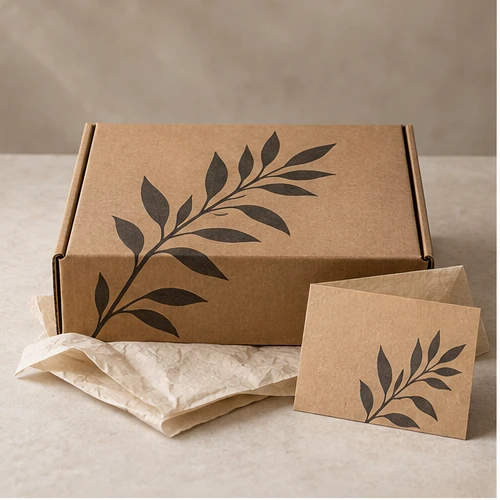
For discreet shipping, keep decorative gift packaging inside an outer carton and reserve the outside for the information needed to deliver it. Agree the exterior print, label positions and opening sequence with the fulfilment team before approving the pack. A plain carton does not establish anonymity, theft resistance or transit protection. Those are separate questions. MTT’s illustrated kraft tea-gift mailer shows why even a natural brown box can still be a visibly decorated presentation pack.
By Hugo He · Custom Packaging Consultant, MTT Packaging · Updated 2026-11-02
Packaging design reference. Final fit, materials and finish are confirmed on an approved sample.
At a glance
Plan discreet shipping packaging for luxury gifts: separate decorated presentation from the outer carton, check dispatch labels and document the packing sequence.
A brown gift box is not automatically a discreet shipper
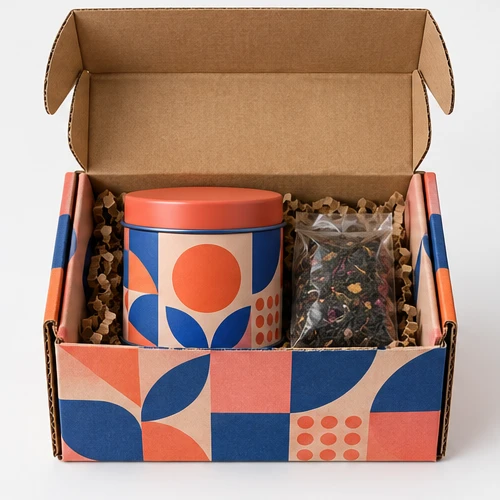
The MTT kraft product mailer has a printed leaf motif, matching card and separate positions for the gift contents. The open view shows how the presentation is organised. The closed view below makes the exterior decoration visible. Neither image establishes an unprinted shipping specification.
The exterior motif belongs to the presentation design. If the brief calls for no visible decoration during delivery, review a separate outer carton or a revised exterior artwork specification.
Start by defining what “discreet” means to the buyer: no logo, no product description, no decorative print, or a gift message hidden until opening. These are different instructions. Write the agreed exterior rule into the artwork brief instead of relying on the word “plain”.
02
Choose where the presentation begins
There are two routes to evaluate. A single carton can carry minimal exterior artwork and reveal decoration inside. Alternatively, a decorated presentation pack can sit inside a separate shipping carton. The first route changes the presentation-pack artwork; the second adds a component and another packing step.
With a separate shipper, place carrier labels and closure tape on that outer layer. Keep the gift card, ribbon and decorative sleeve inside. Check that opening the outer carton does not require cutting against the gift-box lid or pulling tape from its finish. Ask the packing team to demonstrate the intended opening method on an assembled sample.
Use the gift-box outer-carton guide for dimensions, cushioning and protection. This decision is about the visible surfaces and the dispatch process; it does not replace that structural assessment.
03
Approve the actual dispatch label, not an empty rectangle
Ask the fulfilment team for a representative label from the system it will use. Review its actual size, orientation and printed fields on the assembled carton. A label placeholder in an artwork file cannot show whether the real label crosses a seam, obscures an opening instruction or leaves a barcode across a fold.
The UPS packaging guidance recommends removing or covering previous shipment markings, attaching the current shipping label securely and placing a duplicate address label inside the parcel. Apply the relevant carrier’s current instructions to the chosen service. Required delivery and shipment information takes priority over the visual preference for a clean exterior.
Agree which sender details the fulfilment system will print. Do not substitute an invented sender identity to make the parcel look neutral. The packaging designer should flag the visible fields for the buyer and logistics team to resolve, rather than silently removing them.
04
Keep a short exterior-and-interior approval record
Decision
Record before release
Check on the packed sample
Outer appearance
Approved print file or explicit no-decoration instruction
All exposed panels, tape and supplier markings
Shipping label
Actual label format and agreed position
Readable, flat placement without interfering with opening
Gift message
Card version and intended position
Correct card remains inside and appears at the intended moment
Opening sequence
Closure method and unpacking order
Customer can reach the gift without damaging its finish
Pack identity
SKU, components and packing-instruction revision
Correct product, presentation pack and outer carton used together
Photograph the approved closed parcel, opened outer carton and gift presentation. The purpose is a repeatable packing instruction, not evidence that every future parcel will perform identically. Record changes to the label format, carton or packing location using specification change control.
05
Run the handoff through the warehouse before ordering
Give the packer the component list and instructions, then observe one complete assembly. Check whether labels and cards are applied at the correct stage, whether the outer carton can close without forcing the presentation box, and whether the finished parcel matches the approved exterior rule. If two similar gift sets use different cards, show that distinction in the packing record.
Then reverse the process: open the parcel using the intended method and inspect the presentation. This can expose a practical problem that a closed-box photograph misses, such as a gift card trapped under protective material or a ribbon caught in a closure.
These are packing and presentation checks. For transport validation, select a procedure appropriate to the product and distribution route with the responsible test provider. ISTA’s procedure overview distinguishes early screening tests from simulations of distribution hazards. An unprinted exterior and a neat sample do not establish that the complete pack has passed either.
06
Turn the decision into a quotation brief
Separate the presentation pack, outer carton, protective components and packing labour in the brief. State quantities for each component and identify who supplies the labels and gift cards. This makes it possible to compare a single-carton proposal with a two-layer proposal without hiding the extra packing step.
Begin with the illustrated kraft mailer if you want to discuss the presentation layout, or review corrugated shipping packaging for the outer-pack brief. Confirm the actual product dimensions, weight and route before selecting a protective configuration.
Reference scope: UPS provides carrier packing guidance; ISTA describes testing approaches. Neither source certifies the MTT design shown here. Sources reviewed on 2 November 2026.
From guide to product
Compare packaging for your brief
Explore the opening, material and insert details for each design. These are options to review, not proof of a tested fit for your product.



 Bank Transfer
 PayPal