In this guide · 5 sections
- Measure the filled and sealed pack
- Balance presentation and removal
- Place the information card outside the crush path
- Test the drawer when it is loaded
- Clarify food-contact and quote scope
133 / Tea and coffee packaging procurement
Quick answer
A divided drawer should hold the actual sealed sachets without forcing seals, allow a customer to remove one and slide smoothly when loaded. Measure the filled sachets across their full width, seal margins and thickness range, not just the flat artwork. Compare divider layout, card position and packout order with real components before approving the sample.
 By Hugo He · Custom Packaging Consultant, MTT Packaging · Updated 2026-11-23
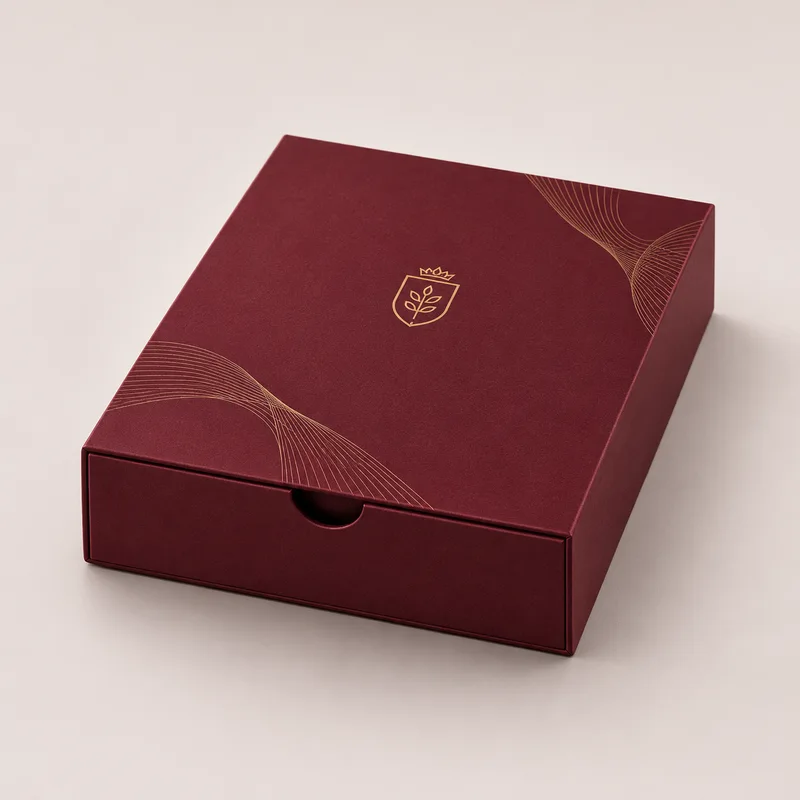
At a glance
A divided drawer should hold the actual sealed sachets without forcing seals, allow a customer to remove one and slide smoothly when loaded.
A flat dieline misses the thickness created by the coffee and filter inside. Collect representative filled sachets across the product range, including the widest seal and any tear notch. Measure the height, overall width and thickness in the intended orientation. Record how many sachets go in each compartment, since a stack behaves differently from one packet. Do not assume an unfilled artwork proof demonstrates fit.
A separate paperboard divider can hold flavors in order, but dividers consume internal width and can lean or catch flexible seals. Check the narrowest and widest sealed packets in each compartment. A finger recess or open top may help access, but must not expose fragile seals to lid pressure. Agree the selection order and check that removing one sachet does not displace the rest. Compare the single-layer divided drawer concept with the existing two-drawer arrangement.
Measure the card or folded leaflet as supplied, including any envelope. A dedicated end slot keeps it visible, but it should not push the adjacent sachet or prevent the drawer closing. Mark the front orientation and whether the packer inserts the card before or after the sachets. If several languages or editions are in use, the packing instruction needs a version check; the illustration is not evidence of a finished customer project.
The empty tray may slide well while the filled set catches at the sleeve entrance or bows at the base. Load the specified number and heaviest sachet combination, check the opening force by hand, and look for snagged seals, bowed dividers and contact between tray contents and sleeve. Repeat with actual samples and the intended outer shipping pack; agree acceptance criteria for displacement and damage rather than claiming a universal clearance.
The concept holds individually sealed coffee packs; the decorative outer box is not claimed to provide a food barrier. Where any component directly contacts food, request suitable evidence for its use and destination. See the FDA overview of food-contact substances. Give MTT finished sachet samples, quantity and flavor mix, card dimensions, artwork, packing site and destination. Ask for box, divider, optional accessories, sampling and freight separately. Custom projects start at 1,000 pieces per design and US$2,000 product value per order, excluding freight, samples and other fees. Review the transport approach with reference to ISTA guidance on changes and retesting.
From guide to product
Explore the opening, material and insert details for each design. These are options to review, not proof of a tested fit for your product.
Rigid gift boxes · Drawer box
Custom wrapping paper, colour and texture by sample
View structure & details →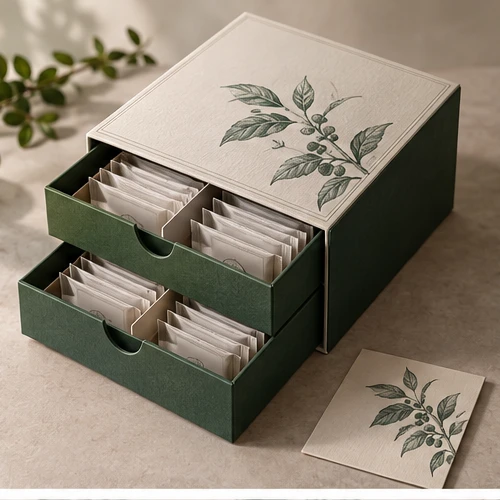
Rigid gift boxes · Two-drawer box
Fine linen-textured wrapping paper
View structure & details →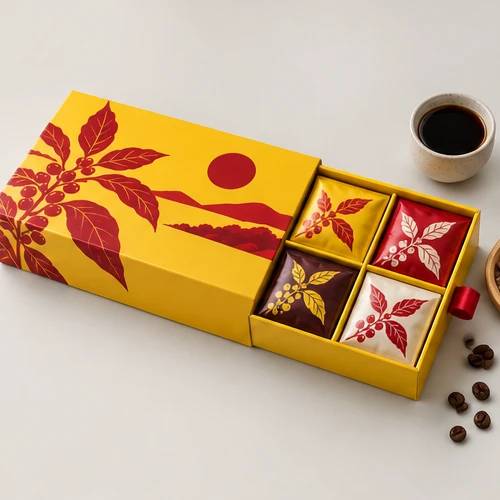
Rigid gift boxes · Drawer box
Smooth coated printed wrapping paper
View structure & details →Payment Options
Available for confirmed production orders.
Available for eligible payments.
Available payment methods may depend on order value, project stage and transaction arrangements confirmed with MTT Packaging.
 Bank Transfer
 PayPal