Matte vs Gloss Packaging: What to Approve on a Box
Quick answer
Choose a matte or gloss packaging finish on a decorated, assembled sample, not from a screen image alone. Specify the film grade separately from the appearance, then check colour, foil, corners and handling marks. An MTT chocolate-box quotation specifies gloss lamination, but it does not record a matte comparison or a durability result. That distinction matters when a buyer asks to change the finish after quotation.
By Hugo He · Custom Packaging Consultant, MTT Packaging · Updated 2026-10-29
Packaging design reference. Final fit, materials and finish are confirmed on an approved sample.
At a glance
Compare matte and gloss packaging finishes using an MTT quotation: specify the film, review colour and foil, and agree scuff checks before approval.
A real MTT brief: gloss was specified, performance was not
Our quotation dated 7 October 2026 describes an assembled drawer box for 24 truffles, with finished external dimensions of 220 × 160 × 30 mm. It specifies 157 gsm C2S wrapping and lining paper over 1200 gsm greyboard, gloss lamination, a purple or burgundy colour matched to approved artwork, and a gold-foil logo with an embossed finish.
The record establishes a proposed material build. It does not establish the laminate brand or grade, an approved colour sample, a matte alternative or a completed scuff test. We would retain gloss as the quoted baseline and ask for any matte option to be identified and priced separately. A finish substitution should not silently replace the approved specification.
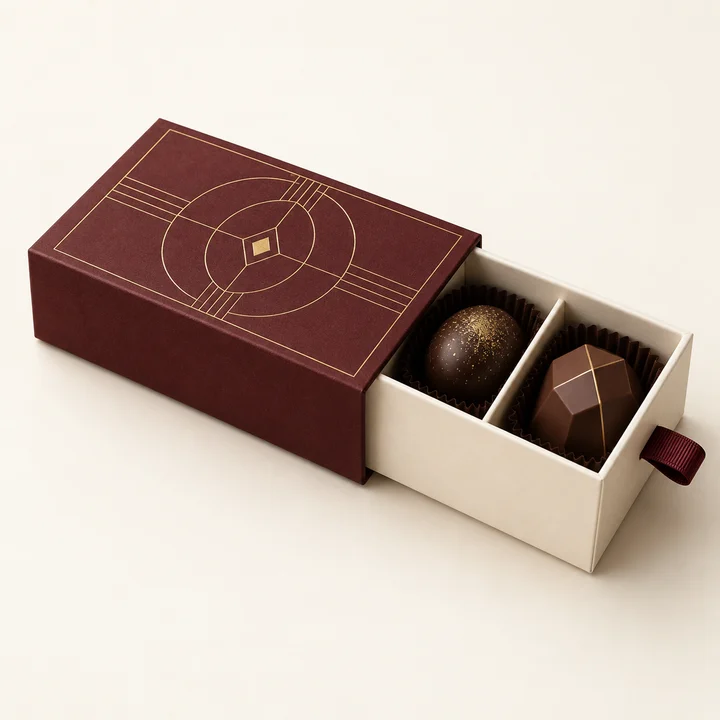
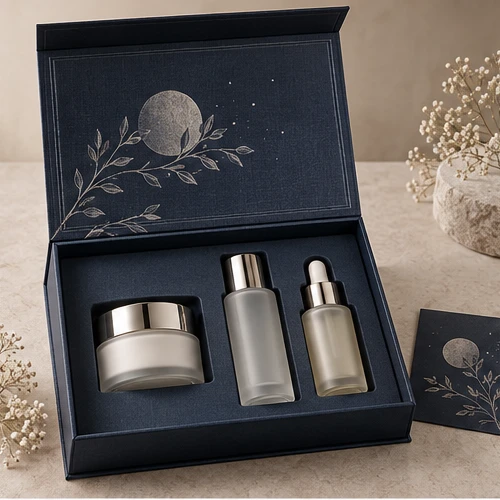
The opening image is an existing MTT website illustration. Its two visible compartments do not depict the quoted 24-truffle layout, and its appearance cannot establish the actual laminate or surface durability. Customer identity and commercial prices are withheld.
Reflection across the printed colour and readability under the intended display light
Resistance to rubbing, fingerprints or corner damage
Standard matte laminate
The desired lower-sheen appearance on the same printed wrap
That it is an anti-scratch grade
Scuff-resistant matte grade
Supplier specification, processing compatibility and an agreed sample check
That the complete box cannot be marked or damaged
03
Compare the same artwork before judging the colour
For the quoted purple or burgundy wrap, we would request both finishes over the same artwork and intended paper. Keep the print reference and sample identification consistent so a colour change is not mistaken for a laminate effect. Place the samples under the same light and view them from the same angles.
Start with flat decorated samples to assess the appearance, then review an assembled box. The broad top panel, wrap corners and drawer front are different viewing and contact areas. A swatch that looks acceptable on a desk does not resolve how the closed box looks on a shelf or when the drawer is pulled.
Record the chosen reference physically where possible. A phone image is useful for showing where a mark occurs, but exposure and reflections make it a poor sole approval reference for surface appearance.
04
Review the foil and embossed area on the chosen laminate
Our quotation combines lamination with a gold-foil embossed logo. If the laminate changes, ask the converter to confirm the finishing sequence and test the actual logo on that build. Do not assume the same foil application will work unchanged on every surface.
KURZ describes hot stamping as a transfer process using heat and pressure. That supports treating the decorated surface as a process combination, rather than approving a loose foil colour card alone. Temperature, pressure and tooling settings belong to the converter’s trial, not a universal web checklist.
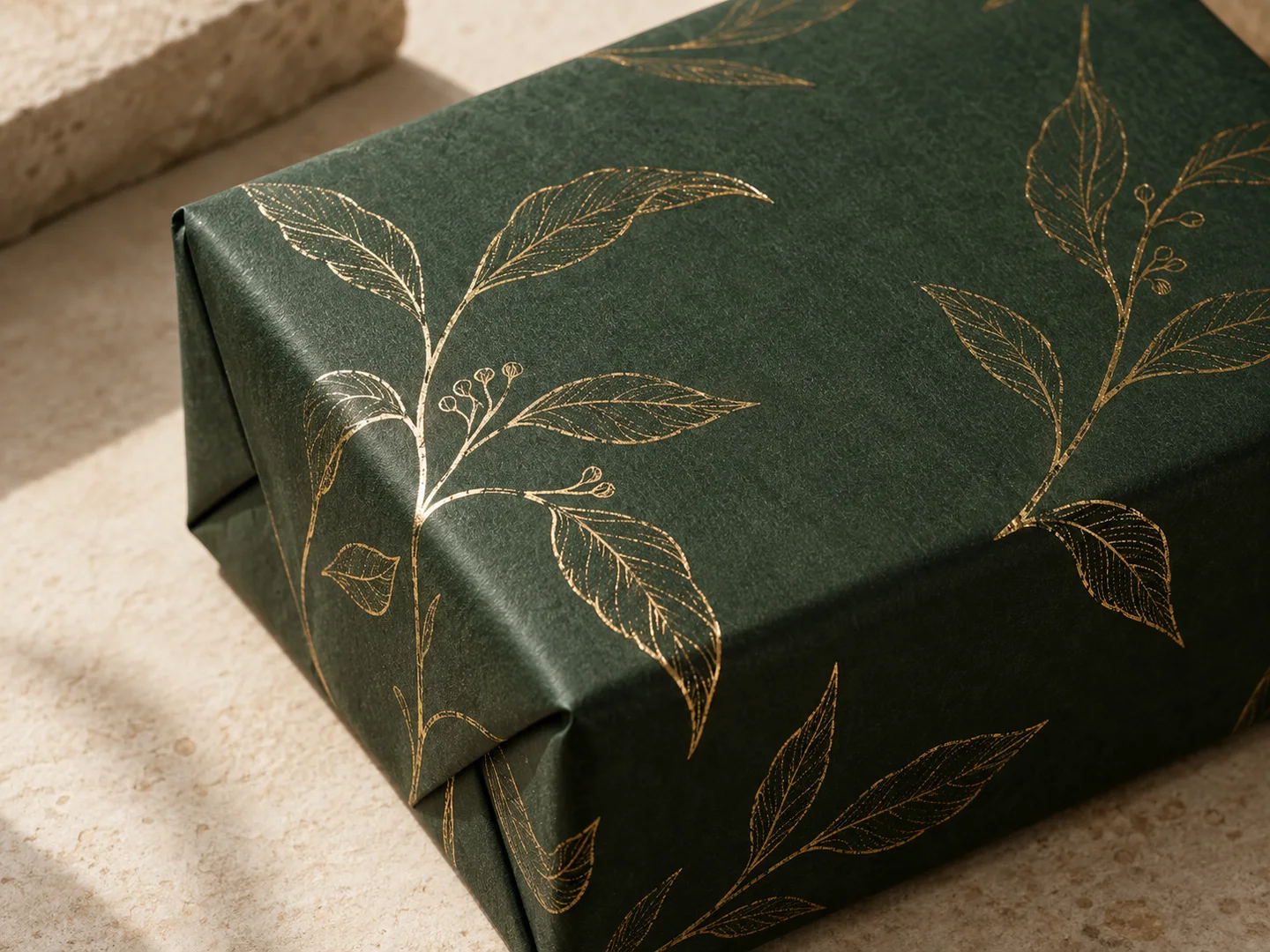
Existing MTT finish illustration: use the final artwork and actual laminate for approval. This image is not evidence of a passed foil adhesion or rub test.
Check the solid logo area, fine gaps and edges after assembly. If foil shade matching across different components is the main issue, use the separate box-and-bag foil matching guide.
05
Agree a handling check that represents the packed box
For this drawer structure, we would inspect the sleeve top, drawer front, exposed edges and the areas touched during opening. Also identify what contacts the decorated surface in the shipping carton: adjacent boxes, tissue, dividers or another material. Review that contact arrangement before selecting a protective interleaf.
Agree the method with the converter: sample conditioning, contact material, load, number of cycles, inspection lighting and the acceptable appearance. There is no verified test record for this quotation from which to publish pass limits. A casual fingernail scratch is not a substitute for a repeatable method.
Proposed sample record, not completed test results
Area
Record
Decision
Printed top panel
Film reference, print reference and agreed viewing conditions
Accept appearance or request a revised sample
Foil and emboss
Artwork revision and observations on the decorated sample
Approve the combined process or investigate transfer defects
Corners and drawer front
Before/after photos under the agreed handling method
Accept, change material or adjust the packing arrangement
A supplier’s film data supports material selection; it does not replace review of the finished box. Keep the broader sample approval record with the selected finish reference.
06
Keep a finish change visible in the quotation
Ask for matte as an alternative to the quoted gloss build, holding size, quantity, print and logo coverage constant where practical. Have the converter identify any required changes to film, tooling, finishing or sample charges. Otherwise a lower unit price may describe a different specification.
Confirm the sample approval date separately from production and delivery timing. If a new finish needs another trial, revise the schedule before promising a launch date. We have no approved matte alternative or measured cost difference for this MTT quotation, so neither is presented as a result.
For a cosmetic launch or fragrance set, the same comparison can be included in a cosmetic packaging brief or perfume packaging brief. Keep the finish decision attached to the exact box and insert specification.
From guide to product
Compare packaging for your brief
Explore the opening, material and insert details for each design. These are options to review, not proof of a tested fit for your product.

 Bank Transfer
 PayPal