In this guide · 6 sections
- Start with the shipment, not the presentation box alone
- Choose the distribution scenario before the procedure
- Define acceptable results before sending samples
- Control changes after a test
- What to send MTT
- Sources
99 / Distribution Testing
Quick answer
A perfect presentation sample does not establish how the filled product and its outer pack will perform during distribution. Define the complete test specimen, intended route, inspection method and acceptable damage with the brand and laboratory before testing. Record the exact configuration so a later change can be evaluated against it.
 By Hugo He · Custom Packaging Consultant, MTT Packaging · Updated 2026-11-17

At a glance
Prepare a complete packaged-product test brief, distribution scenario and acceptance criteria before selecting a laboratory procedure.
Imagine a brand ordering 1,000 perfume gift boxes per design. The bottle is filled and labelled at one site, placed into a fitted insert at another and later sent to consumers by parcel. The visual sample was approved with an empty bottle; the shipping test needs a representative filled product or an agreed substitute. This is an illustrative scenario, not an MTT customer project.
List the components in the order they are packed: bottle and closure, label or decoration, insert, presentation box, protective layers and outer shipping carton. Note which parts are production-equivalent and which are substitutes. Record each component's version, dimensions, mass and orientation; photograph the assembled sample before it is sealed. An attractive empty box cannot establish the protection offered by a fully loaded pack.
A carton of multiple gift sets shipped on a pallet and a single set sent through a parcel network face different handling sequences. Tell the laboratory the shipment configuration, intended route, handling method and number of packages. Provide the destination and channel without assuming that one standard automatically represents every shipment.
ISTA distinguishes non-simulation screening procedures from general simulations and enhanced simulations. A screening procedure can be useful during development, but its choice and interpretation depend on the problem being assessed. Ask the laboratory to explain why a procedure fits the actual distribution scenario rather than treating a test name as a universal guarantee.[1]
The brand, packer and other parties should agree what will be checked and what outcome is acceptable. ISTA states that pass/fail determinations depend on the product, package, distribution system and other factors, and should be agreed among the parties concerned.[2]
These are questions for a project-specific specification, not default tolerances. For a scented glass bottle, agree how leakage and spray function will be inspected and who has authority to assess the filled product.
Keep the report together with the component list, drawings and photographs. If the bottle shape, filled weight, insert, board grade, closure, carton or packing sequence changes, compare the new configuration with the tested specimen. The responsible brand and laboratory should decide whether additional assessment is needed; a previous report does not automatically validate a changed pack.
ISTA describes its procedures as tests of a specific packaged product, rather than certification of an individual packaging material.[3] For example, an insert material's supplier data does not certify a complete perfume kit.
Send the capped product dimensions, filled weight, intended quantity per design, photos of delicate surfaces, proposed insert and box format, packing location, destination and shipping channel. Tell us who will supply the filled products, who chooses the test laboratory and what result your customer needs. MTT can review the packaging brief and prepare a project-specific quotation for orders from 1,000 pieces per design. Confirm laboratory scope and any test costs separately.
From guide to product
Explore the opening, material and insert details for each design. These are options to review, not proof of a tested fit for your product.
Rigid gift boxes · Lift-off lid
Gloss-laminated printed wrapping paper
View structure & details →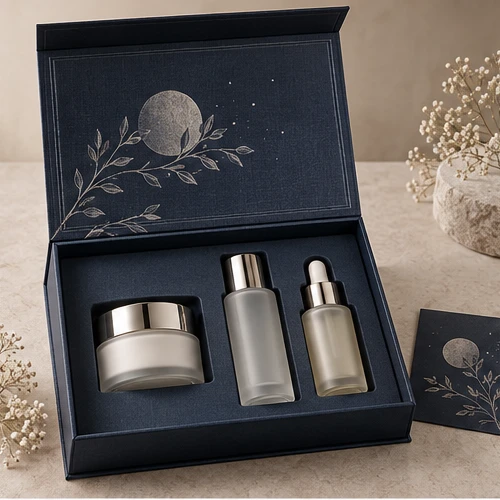
Rigid gift boxes · Magnetic book box
Fine linen-textured wrapping paper
View structure & details →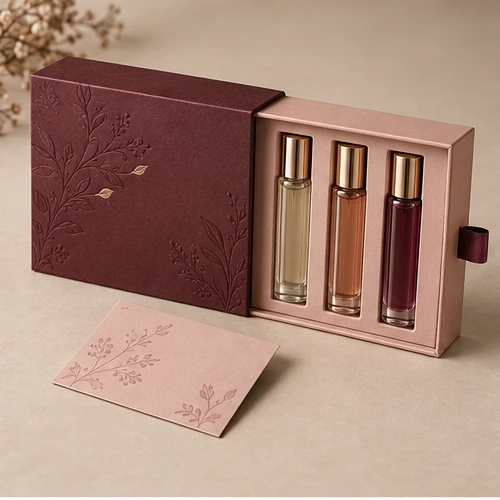
Rigid gift boxes · Drawer box
Smooth matte printed wrapping paper
View structure & details →Payment Options
Available for confirmed production orders.
Available for eligible payments.
Available payment methods may depend on order value, project stage and transaction arrangements confirmed with MTT Packaging.
 Bank Transfer
 PayPal