In this guide · 6 sections
- Start with the filled product and route
- Separate the presentation box from its transit pack
- Specify the vulnerable details
- Build a handoff checklist
- Compare quotations on the same scope
- Sources
90 / Fragrance Shipping
Quick answer
Before approving a perfume gift box for shipping, identify the filled bottle, the presentation pack, the protective outer pack and the route each shipment will take. Ask the product owner and carrier to determine whether the filled fragrance has transport restrictions. A decorative box or insert alone does not establish transport compliance or protection.
 By Hugo He · Custom Packaging Consultant, MTT Packaging · Updated 2026-11-15
At a glance
Separate presentation, packed-product protection and carrier requirements when briefing a perfume gift box.
Record the finished bottle dimensions with its cap and atomiser fitted, filled mass, fragile or decorated surfaces and the number of products in each set. State whether completed sets travel in cases to a retailer or individually to customers. Include the countries, intended transport mode and fulfilment location; each can change the information the shipper needs.
UPS lists perfume among common items that may contain flammable liquids. The classification of a particular product cannot be established from its name or the appearance of its gift box. Ask the responsible product owner for the relevant safety information, and obtain the carrier or qualified dangerous-goods adviser’s route-specific instructions before shipment.[1] Do not assume an empty-box quotation covers shipment of filled perfume.
The insert locates the bottle and supports the intended opening. The outer transit package must be assessed with the filled product and complete presentation box inside it. Decide who supplies each layer, who packs the product and whether packing is performed before or after the gift boxes reach the filling site. Use the perfume insert guide for bottle support and the outer carton guide for protecting the presentation pack.
ISTA describes pre-shipment testing as evaluation of a packaged product in its expected distribution environment. The selected procedure, acceptance criteria and any compliance obligations depend on the actual shipment; an image or individual material is not evidence that a complete package passed a test.[2]
Identify where support contacts the bottle, where the cap and pump need clearance, and whether the recipient can remove the product without pulling a fragile closure. If multiple components share a set, review contact between them as well as contact with the outer box. Check a loaded sample through the intended opening and closing sequence. Protecting a decorative finish and restraining a heavy bottle may require different materials or contact points.
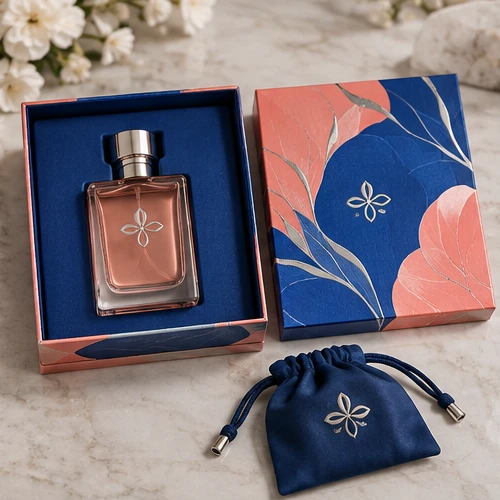
Compare the physical presentation with the fragrance packaging collection. The pictured lift-off box is a design reference, not an example of a tested perfume shipment.
If the destination, formulation, bottle, insert, cushioning or distribution route changes, assess whether the previous evaluation still applies. Keep approved drawings and photographs with the physical reference; a phone photograph alone is not a test record.
Separate empty presentation boxes, inserts, tooling, samples, transport cartons, protective materials and freight. Confirm quantities per design, number of artwork versions and whether the quoted size is internal or external. Avoid comparing an empty-box shipment with an individually packed filled-product shipment as if they were equivalent. Record unresolved carrier requirements as pending, not included by assumption.
From guide to product
Explore the opening, material and insert details for each design. These are options to review, not proof of a tested fit for your product.
Rigid gift boxes · Lift-off lid
Gloss-laminated printed wrapping paper
View structure & details →
Rigid gift boxes · Lift-off lid
Fine linen-textured wrapping paper
View structure & details →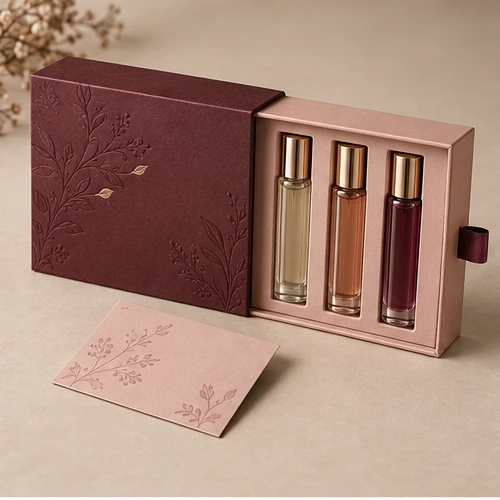
Rigid gift boxes · Drawer box
Smooth matte printed wrapping paper
View structure & details →Payment Options
Available for confirmed production orders.
Available for eligible payments.
Available payment methods may depend on order value, project stage and transaction arrangements confirmed with MTT Packaging.
 Bank Transfer
 PayPal