Custom Packaging Storage: Produce Once, Release in Batches
Quick answer
Custom packaging storage separates production from delivery, allowing agreed stock to be released in batches. MTT offers two months of free storage for agreed orders; longer-term charges depend on product quantity and occupied volume. Before production, confirm when the free period begins, what is included, how stock versions are recorded and the notice needed for dispatch. Ready stock does not guarantee same-day shipping.
Plan storage and staged delivery for custom boxes, inserts and bags. Understand stock records, release instructions, storage terms and dispatch preparation.
When production and delivery need different schedules
A fragrance launch may need packaging for several replenishments, while the filling operation can only receive a limited quantity at a time. A jewelry brand may need one approved box design across several collections. A seasonal gift business may want packaging ready before the final packing date without filling its own storage area too early.
In these situations, receiving all the packaging immediately can create a practical problem even when the production quantity is appropriate. Holding finished packaging for scheduled releases is one option to compare with multiple production runs or local warehousing. It does not automatically reduce the total cost: handling, storage, transport and the risk of unused stock still need to be assessed.
The starting point is a delivery plan rather than a request to “keep the boxes until needed.” Share your first requirement, expected later releases and how much uncertainty remains in the forecast.
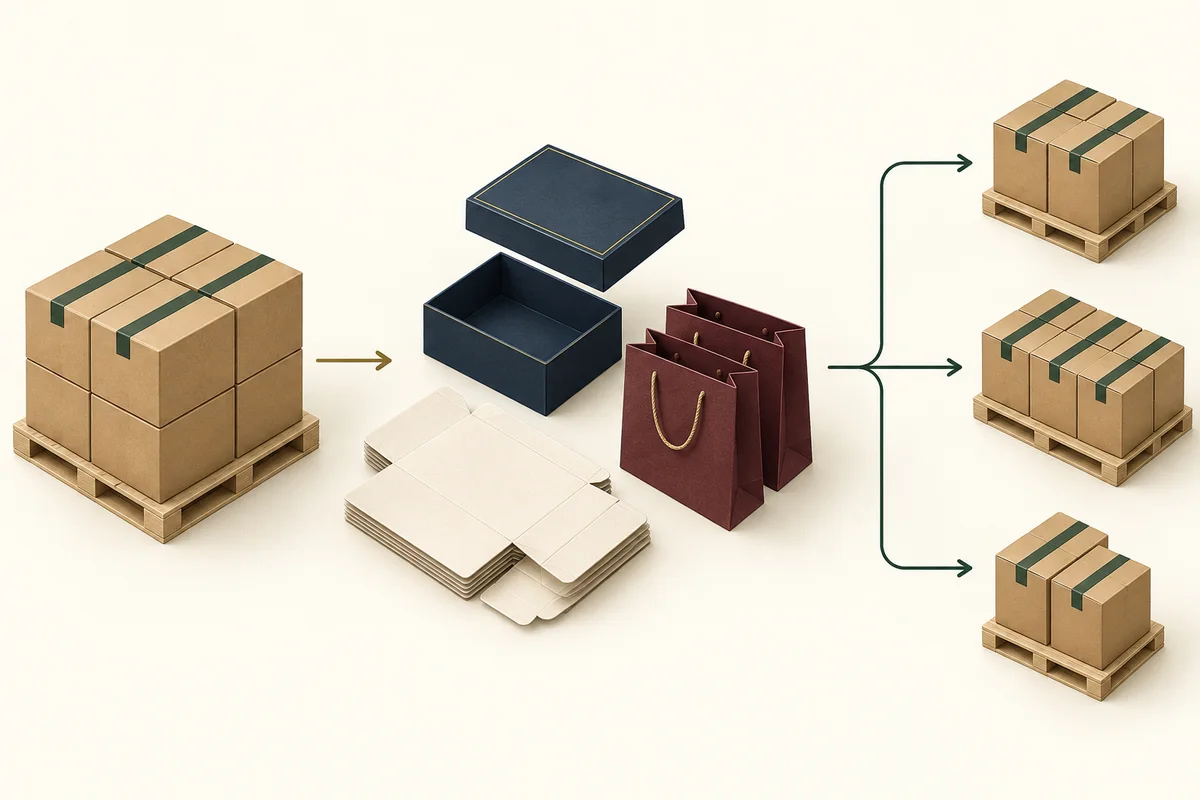
AI-generated concept illustration: production stock and separate shipment batches. This is not a photograph of an MTT warehouse or a production specification.
02
Separate the production order from each release
The production quantity and the quantity dispatched in a particular shipment serve different purposes. For MTT projects, the starting production MOQ is 1,000 pieces. A staged-release arrangement does not automatically create a lower production MOQ, change payment terms or establish a minimum release quantity. Confirm those terms separately for the project.
Consider an illustrative order of 3,000 presentation boxes. A buyer might request 1,000 first and plan two later releases. This example describes an inventory plan, not a promise that every order can be divided into those quantities or held for a particular period. The remaining stock, payment position and later delivery arrangements should all be clear before production begins.
Also identify whether boxes, inserts and bags are released as matched sets. A balance of 1,000 boxes does not establish that 1,000 complete gift sets remain available if accessories are counted separately.
03
Two months of free storage, with longer-term fees based on quantity and volume
MTT offers two months of free storage for agreed custom packaging orders. For storage beyond the free period, fees depend on the quantity of products and the storage volume they occupy. Request a project-specific quotation rather than assuming one fixed fee applies to every box size or order. Confirm the start date of the free period, service scope and storage arrangement before placing the order.
Ask when the storage period starts: production completion, inspection approval or another agreed event. Confirm how the balance is measured and how charges apply when only part of the stock remains. Do not assume that a storage fee includes picking, repacking, export preparation or freight.
A useful written arrangement answers four questions:
What quantity and packaging specifications are covered?
When does the free period end, and what happens after it?
Which charges apply to storage and to each shipment?
How are delayed collection, excess stock and specification changes handled?
“Long-term” should describe an agreed period with review dates. It should not imply unlimited storage or indefinite protection of every material and finish.
04
Confirm how the packaging will be held
Different packaging structures need different handling plans. An erected rigid box, a flat folding carton and a paper bag should not be treated as interchangeable storage units. Ask for the packed form, carton count and handling instructions for the actual components.
For corrugated packaging, the Fibre Box Association’s storage and handling guidance addresses moisture, temperature and physical handling risks. That guidance is not proof that a particular warehouse or finished gift box meets a requirement. Agree suitable conditions with the responsible supplier for your actual board, covering paper, adhesive, lining and decoration.
Discuss protection from moisture, dust, crushing and unwanted contact with other goods. Ask how damaged cartons are identified and what inspection is appropriate before a later release. Do not infer climate control, insurance or a long-term material guarantee from the word “storage.” Those are separate matters to confirm.
05
Keep stock versions visible
Use a stock record that identifies the product code, box size, artwork revision, quantity received, quantities released and remaining balance. Record inserts, cards and bags separately where they have their own versions or quantities. Identify any stock held for inspection rather than showing it as ready for dispatch.
If a bottle, logo or language version changes while packaging remains in storage, decide whether the old stock is still usable before requesting the next release. A new product should not be placed in an old insert solely because the outer box looks correct.
Agree how stock updates will be shared and who is authorized to instruct a release. This is particularly useful when purchasing, filling and logistics are handled by different teams.
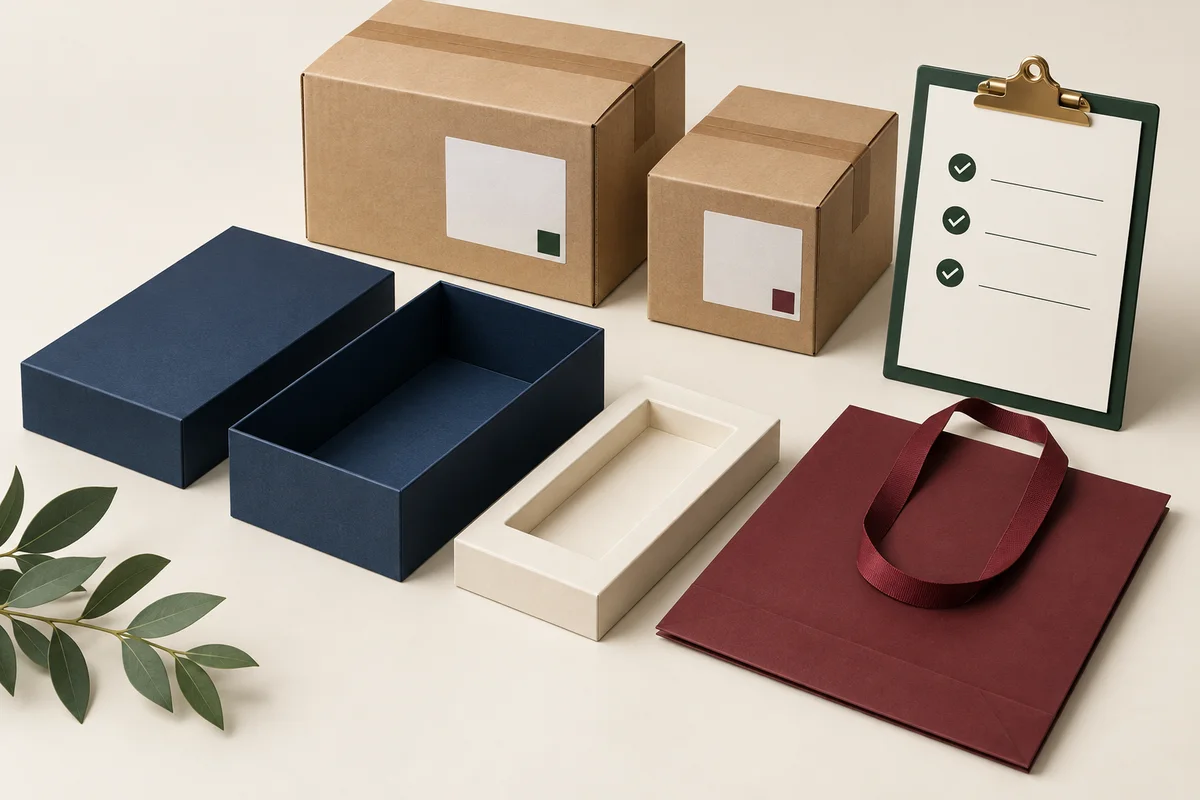
AI-generated concept illustration: boxes, inserts and bags need identifiable stock records. The illustration does not document an actual inventory inspection.
06
Request dispatch with a complete instruction
A release request should specify the stock reference and revision, quantity, destination, receiving contact, required delivery window and shipping responsibility. Confirm whether labels, repacking or other preparation are needed. The supplier can then confirm stock availability and the dispatch arrangement.
Ready stock can remove the need to produce those particular units again before dispatch. It does not guarantee same-day departure or immediate arrival. Release confirmation, preparation, carrier availability and any relevant export arrangements still affect the schedule. Distinguish the requested delivery date from the confirmed dispatch date.
For repeated releases, provide an indicative schedule and update it when demand changes. Keep a clear record of what was requested, what was confirmed and what actually left storage.
07
Prepare a production, storage and delivery brief
Send the packaging specification, total production quantity, first delivery quantity, expected storage duration and likely later releases. Include destinations, the packing location and whether boxes, inserts and bags must move together.
The custom packaging brief guide can help organize the product information. Add your storage needs to the same brief so the production and delivery scopes can be reviewed together.
From guide to product
Compare packaging for your brief
Explore the opening, material and insert details for each design. These are options to review, not proof of a tested fit for your product.



 Bank Transfer
 PayPal