In this guide · 4 sections
- Mark the contact map
- Change one movement at a time
- Compare two fixes with different costs
- Agree what counts as a defect
121 / Cosmetic packaging procurement
Quick answer
When a decorated bottle picks up a mark, identify the first operation that produces it. Loading, closing, carrying and removal can each create contact at a different point. Compare photographs after each operation before changing the finish or widening every cavity in the insert.
 By Hugo He · Custom Packaging Consultant, MTT Packaging · Updated 2026-11-20
At a glance
When a decorated bottle picks up a mark, identify the first operation that produces it.
Use a sacrificial decorated sample and photograph the clean bottle under fixed light. Note label edges, raised foil and seams relative to the cradle. Load it once and remove it along the intended grip path. Check both the bottle and the corresponding paper edge for residue.
Repeat with a fresh sample for lid closure, then for handling the complete closed kit. A line that appears on loading directs attention to the lead-in edge. A broad rub patch that appears only after movement calls for checking retention and side play. These are hypotheses to confirm on another sample.
Changing the loading angle or moving a support below a decorated band may preserve the existing surface material. A softer contact layer may protect a sensitive label but adds thickness that can tighten the pocket. Check the narrowest opening and repeat removal before approving the revised lining.
Record lighting, viewing angle, reference photographs and the specific visible face that matters. Give the packer a photo of the approved loading orientation. If parcel transport is part of the brief, send the complete shipper for an agreed assessment; a clean hand-loaded presentation sample answers only the handling question.
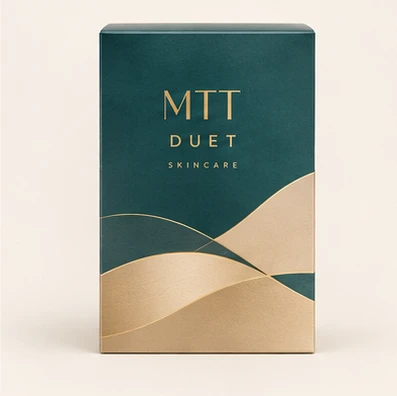
Review the two-pump folding carton alongside your actual components. See the cosmetic packaging specification guide for the dimensions and artwork needed for a quotation.
From guide to product
Explore the opening, material and insert details for each design. These are options to review, not proof of a tested fit for your product.
Folding cartons · Tuck-flap carton with folded cradle
Printable paperboard; surface and colour confirmed by sample
View structure & details →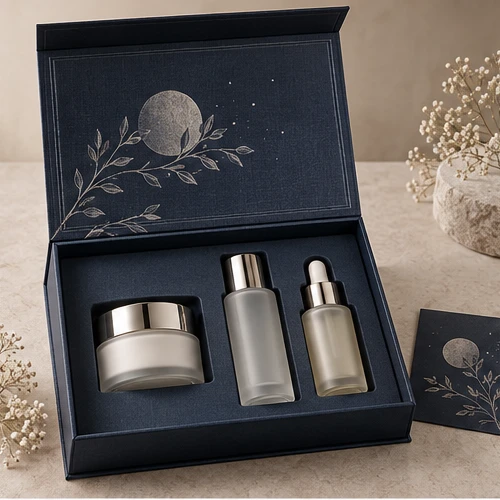
Rigid gift boxes · Magnetic book box
Fine linen-textured wrapping paper
View structure & details →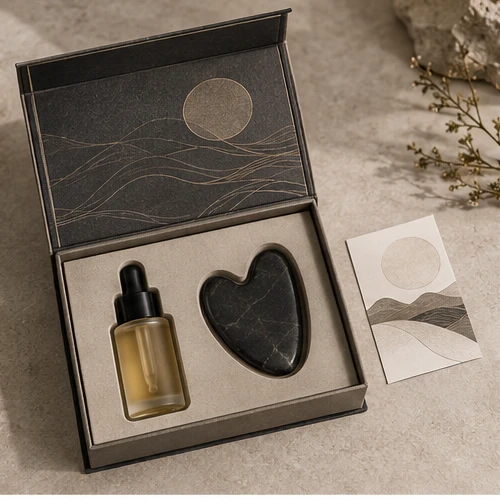
Rigid gift boxes · Magnetic book box
Textured uncoated wrapping paper
View structure & details →Payment Options
Available for confirmed production orders.
Available for eligible payments.
Available payment methods may depend on order value, project stage and transaction arrangements confirmed with MTT Packaging.
 Bank Transfer
 PayPal