In this guide · 7 sections
- Start with the sequence
- Locate the card
- Control rotation and substitution
- Run a pack-out rehearsal
- Agree the production files
- Build a simple control sheet
- Discuss the packaging brief
123 / Discovery set pack-out
Quick answer
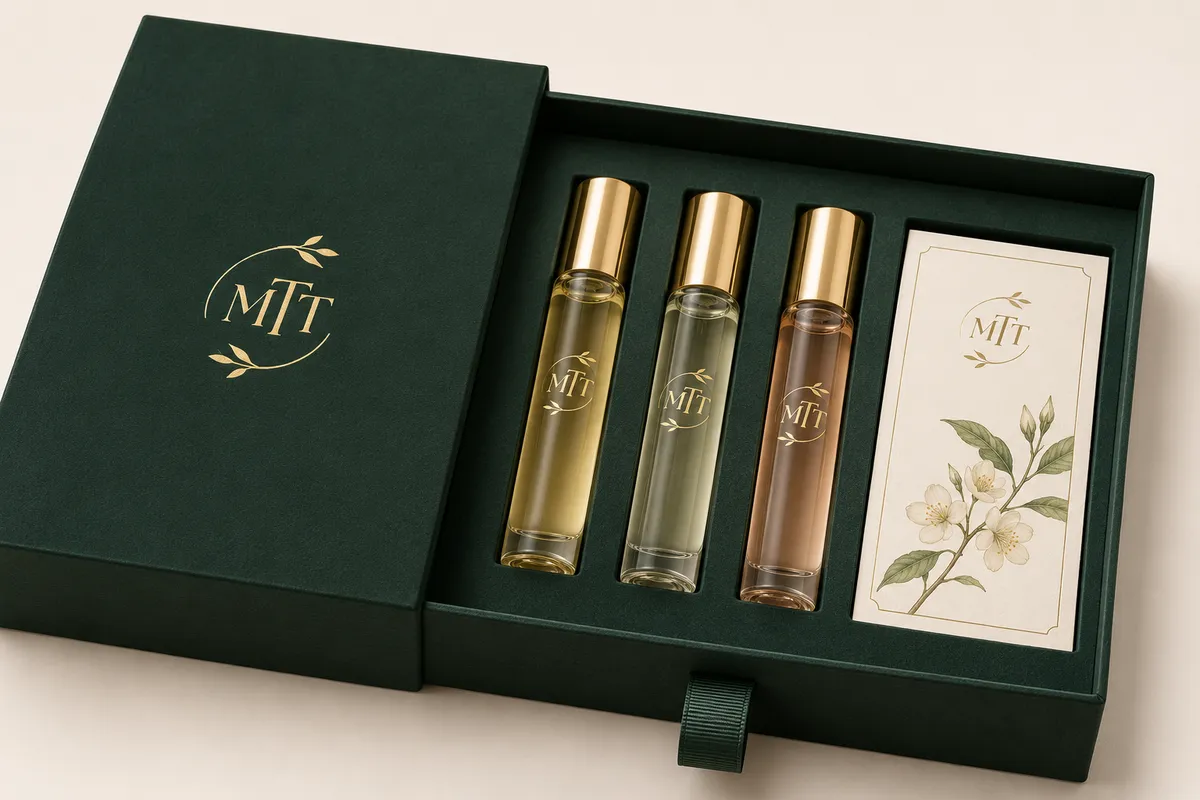
When three similar bottles share a drawer, design the card and packing sequence so the intended scent order remains clear. Mark each vial position, define the reading direction and confirm the card is retained without touching decorated surfaces. Check the complete pack with the actual labels and card stack.
 By Hugo He · Custom Packaging Consultant, MTT Packaging · Updated 2026-11-20
At a glance
Keep three fragrance vials and their scent card in the intended order during drawer-box packing.
Write the intended scent sequence in a packing brief and show which side of the tray is the front. If each bottle has a different name or colour, compare the filled and labelled products in the proposed position. Leave room for the longest name and any barcode or required label. The illustrated sample artwork is a customizable concept.
Decide if a customer reads the card before or after removing bottles. A separate pocket may keep the card visible, but the open edge needs a removal path and the card should not obstruct the drawer. Measure the complete printed stack including any folded leaflet, not just a single sheet.
If the bottle must face a particular direction, document how the packer recognises the front. A circular cavity may allow rotation. Compare a shaped support or a packing instruction only after checking the actual geometry and cost. Confirm variants with the brand before substituting a bottle or card; do not infer interchangeability from an identical nominal fill.
Give the sample and a short photo instruction to someone who did not design it. Time is not a quality target here: record where the person hesitates, reverses a vial or catches the card. Open and close the loaded drawer several times, checking card position and visible marks. Record observations without calling the exercise a transport certification.
List the approved card version, vial sequence, language, quantities and assembly location. Decide who prints and packs each item and how changes reach the packer. Review the discovery set identification guide for another sequence-control approach. If the card carries a retail barcode, the brand should confirm its intended scanning use and artwork; GS1’s general specifications describe placement and quiet zones.
For each set, record position number, product name, label or colour, card version and the person responsible for checking the packed set. A packing photograph should show the closed and open orientations and enough of the label to identify each variant. If products are loaded at a separate fulfilment site, confirm the instruction travels with the approved packaging sample. Where identifiers differ by market, the brand should confirm the approved artwork and language before printing.
See the illustrative packaging concept and send the actual components for a project-specific review. Share dimensions, filled weights, artwork, quantity per design and destination with MTT. We can review a sampling brief for orders from 1,000 pieces per design.
From guide to product
Explore the opening, material and insert details for each design. These are options to review, not proof of a tested fit for your product.
Rigid gift boxes · Drawer box
Custom wrapping paper, colour and texture by sample
View structure & details →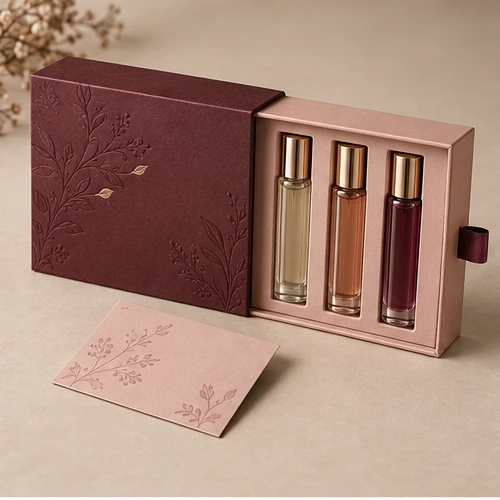
Rigid gift boxes · Drawer box
Smooth matte printed wrapping paper
View structure & details →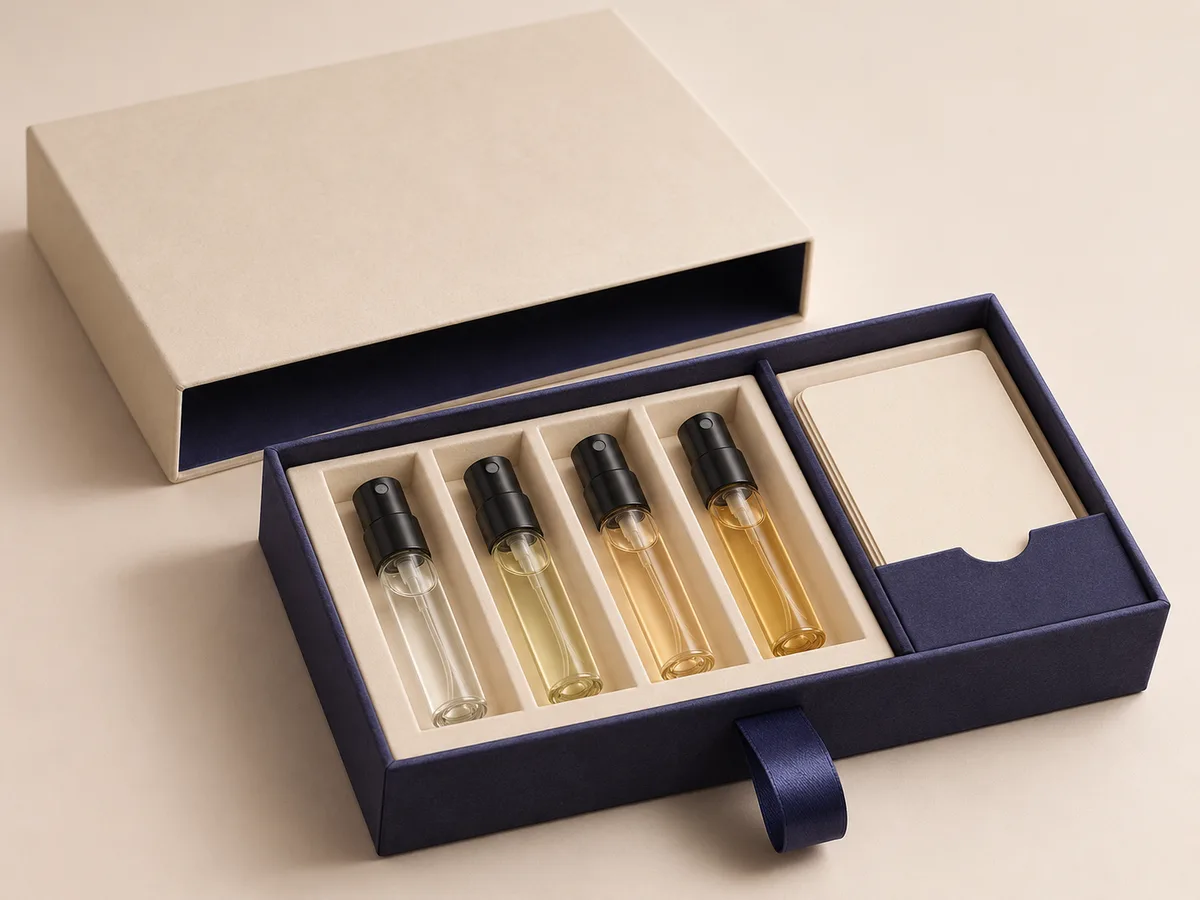
Rigid gift boxes · Drawer box
Wrapping paper; color and texture confirmed during sampling
View structure & details →Payment Options
Available for confirmed production orders.
Available for eligible payments.
Available payment methods may depend on order value, project stage and transaction arrangements confirmed with MTT Packaging.
 Bank Transfer
 PayPal