In this guide · 4 sections
- Build the divider around the resting headset
- Check the locking sequence on a loaded sample
- Distinguish a sales kit from a service shipper
- What to include in the supplier brief
142 / Medical instrument packaging procurement
Quick answer
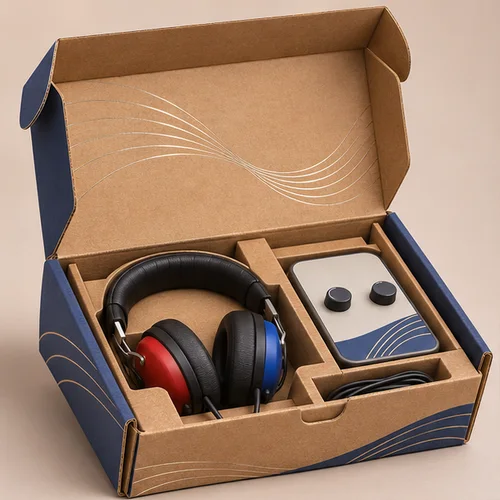
A headset is easy to draw as a flat oval and surprisingly awkward to pack that way. Ask the instrument owner for its approved resting position and measure the relaxed assembly before setting the mailer depth. The folded sidewalls, locking wings and divider take up space that the external carton dimensions do not reveal.
 By Hugo He · Custom Packaging Consultant, MTT Packaging · Updated 2026-11-23
At a glance
Size a roll-end audiometer mailer around the relaxed headset. Inspect cable clearance at the locking wings and agree the intended shipping route.
Use the actual supplied headset or a representative dummy. Mark the headband arc, ear cushion envelope, plug and relaxed cable exit. Compare a dedicated side compartment with a shared base and a folded partition. If the control unit can cross into the headset space when the box is tilted, locate its support independently before changing the carton size.
Fold the roll ends, install the divider and load the components in the proposed bench sequence. Watch the leading edge of each locking wing as the lid closes. A wing can catch a cable even if everything sits below the lid line. Try removing the unit first and the headset first. Record which sequence gives the packer a clear view of the plug.
Interacoustics gives model-specific instructions to retain the AS608 shipping carton for service returns. A printed demo mailer does not supersede that instruction. Ask whether the intended use is hand delivery, a secondary pack inside an approved shipper or a proposed new distribution system. Cost the master carton and validation separately when the route changes.
Mark the approved contact areas and the surfaces that must remain clear on a drawing of the packed instrument. Identify who supplies protective covers, who packs the device and who signs off the loaded sample. Compare the portable audiometer headset roll-end mailer concept with the device owner’s approved transport packaging. Request separate prices for the presentation box, insert, sample and shipping outer.
Technical reference: Interacoustics AS608 shipping and unpacking instructions. Model-specific instructions take precedence. This article addresses secondary packaging for new equipment and makes no sterile-barrier or clinical-use claim.
From guide to product
Explore the opening, material and insert details for each design. These are options to review, not proof of a tested fit for your product.
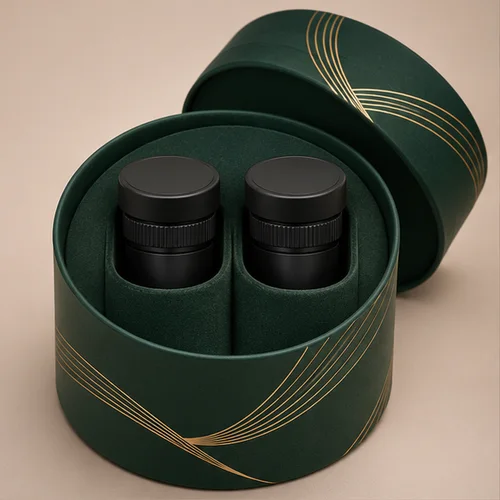
Rigid gift boxes · Round box
Custom wrapping paper, colour and texture by sample
View structure & details →Corrugated packaging · Roll-end mailer
Kraft liner
View structure & details →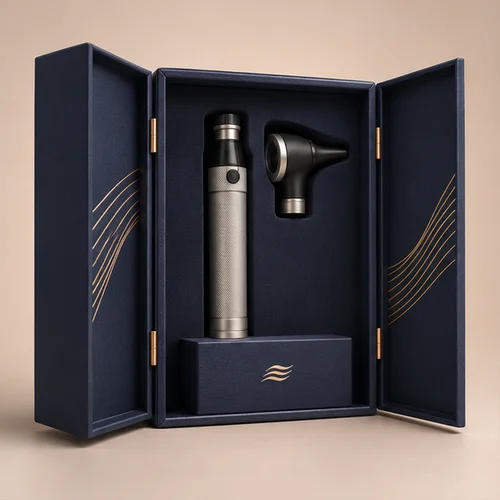
Rigid gift boxes · Double-door box
Custom wrapping paper, colour and texture by sample
View structure & details →Payment Options
Available for confirmed production orders.
Available for eligible payments.
Available payment methods may depend on order value, project stage and transaction arrangements confirmed with MTT Packaging.
 Bank Transfer
 PayPal