 View detail ↗01
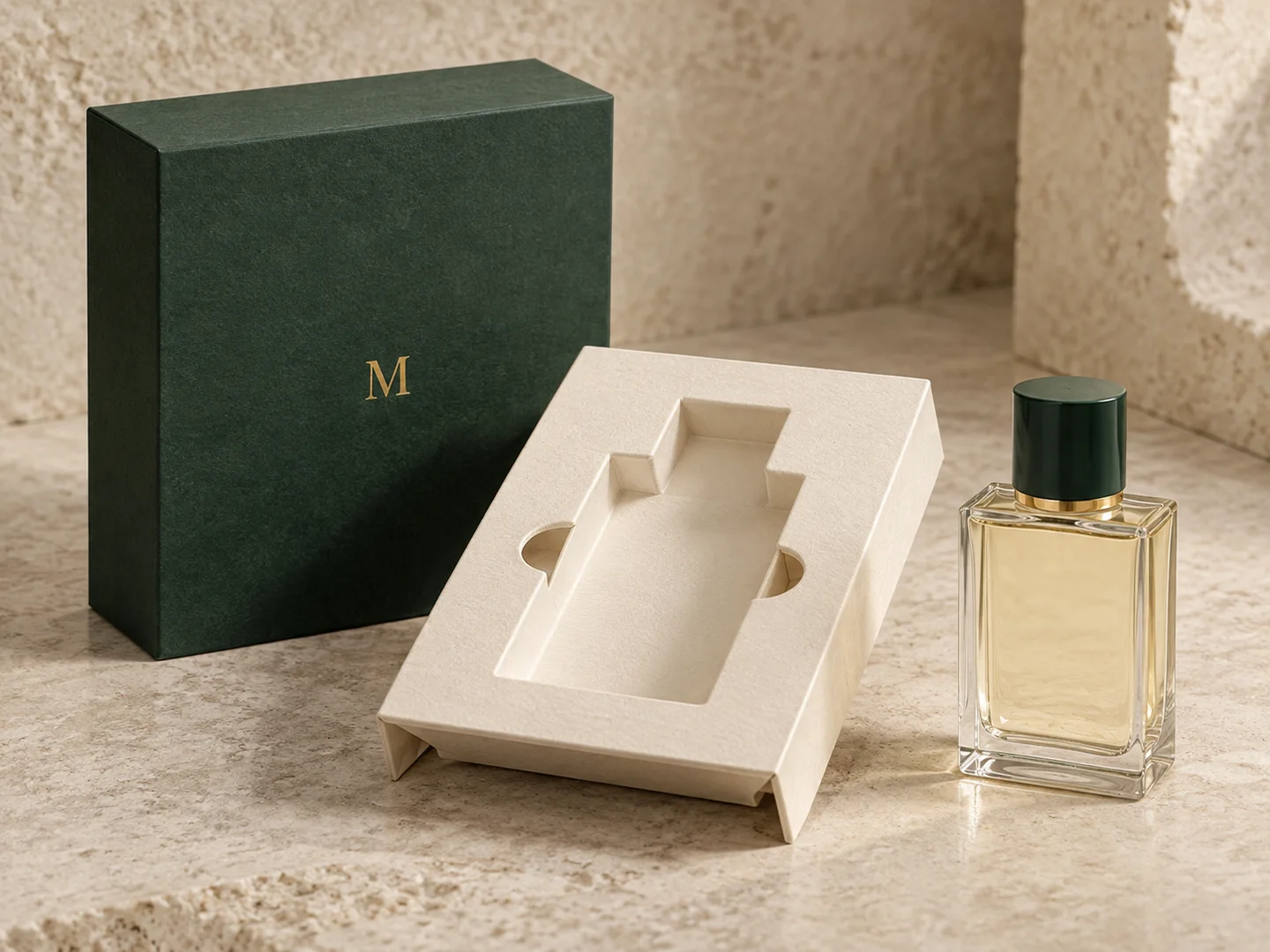
Paperboard platform
Folded or die-cut paperboard. Review print, support and local recycling compatibility for the chosen construction.
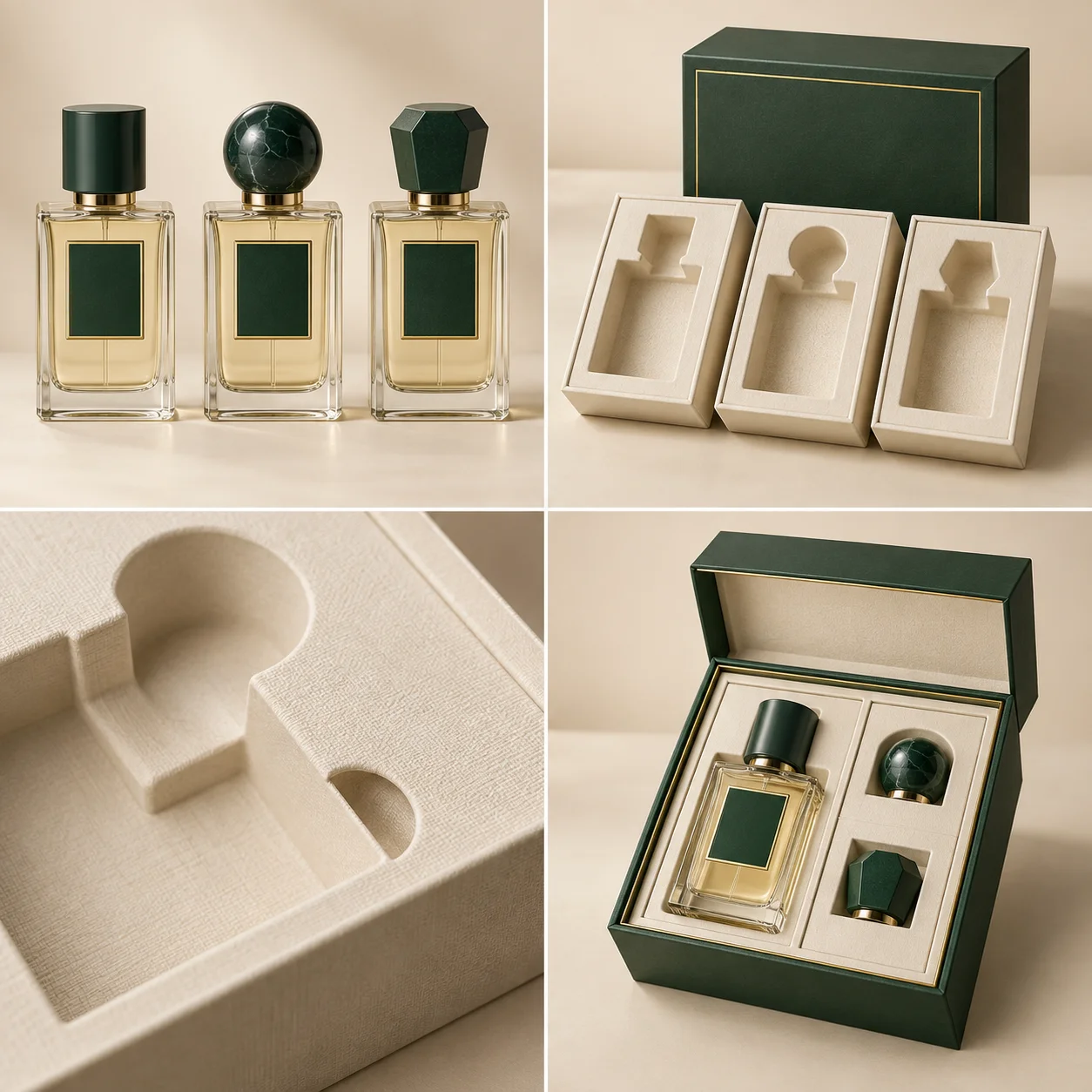
Related packaging studyPerfume: adaptable insert layoutsCustom Inserts
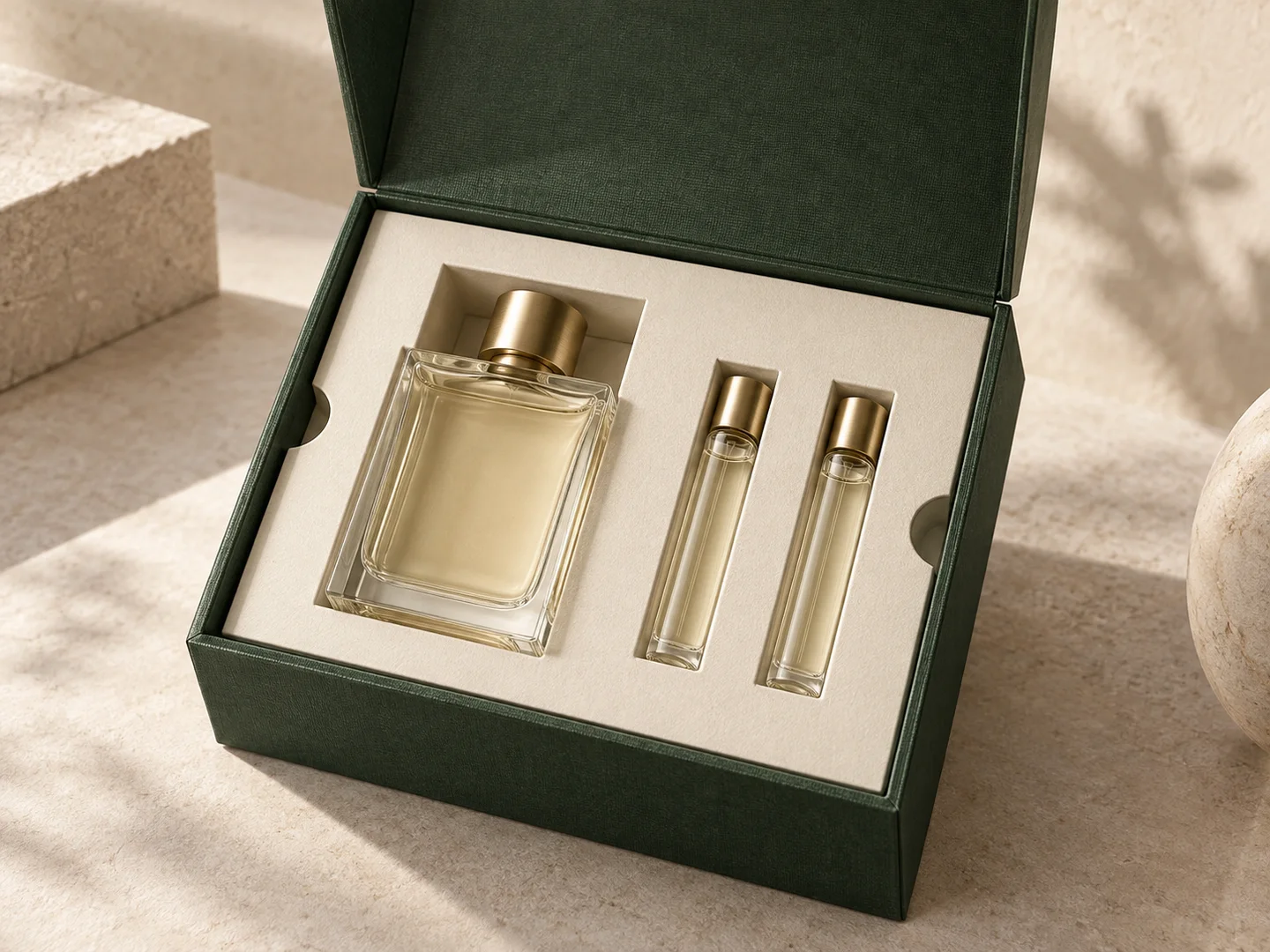
Paper, molded pulp, EVA and fabric-covered inserts engineered around your product dimensions. Designed for retention, protection and presentation.
Insert types
View detail ↗01Folded or die-cut paperboard. Review print, support and local recycling compatibility for the chosen construction.
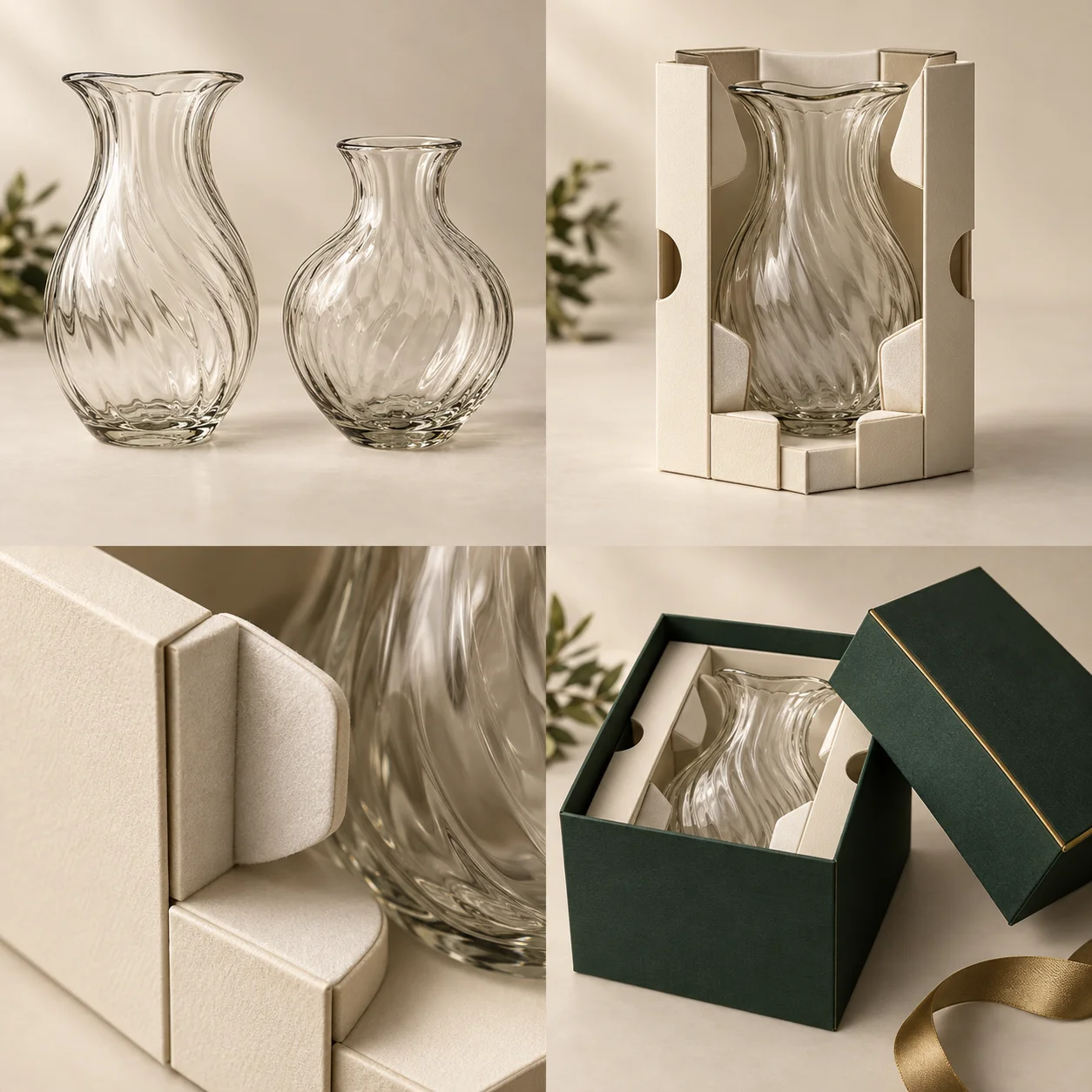
Related packaging studyPerfume: adaptable insert layouts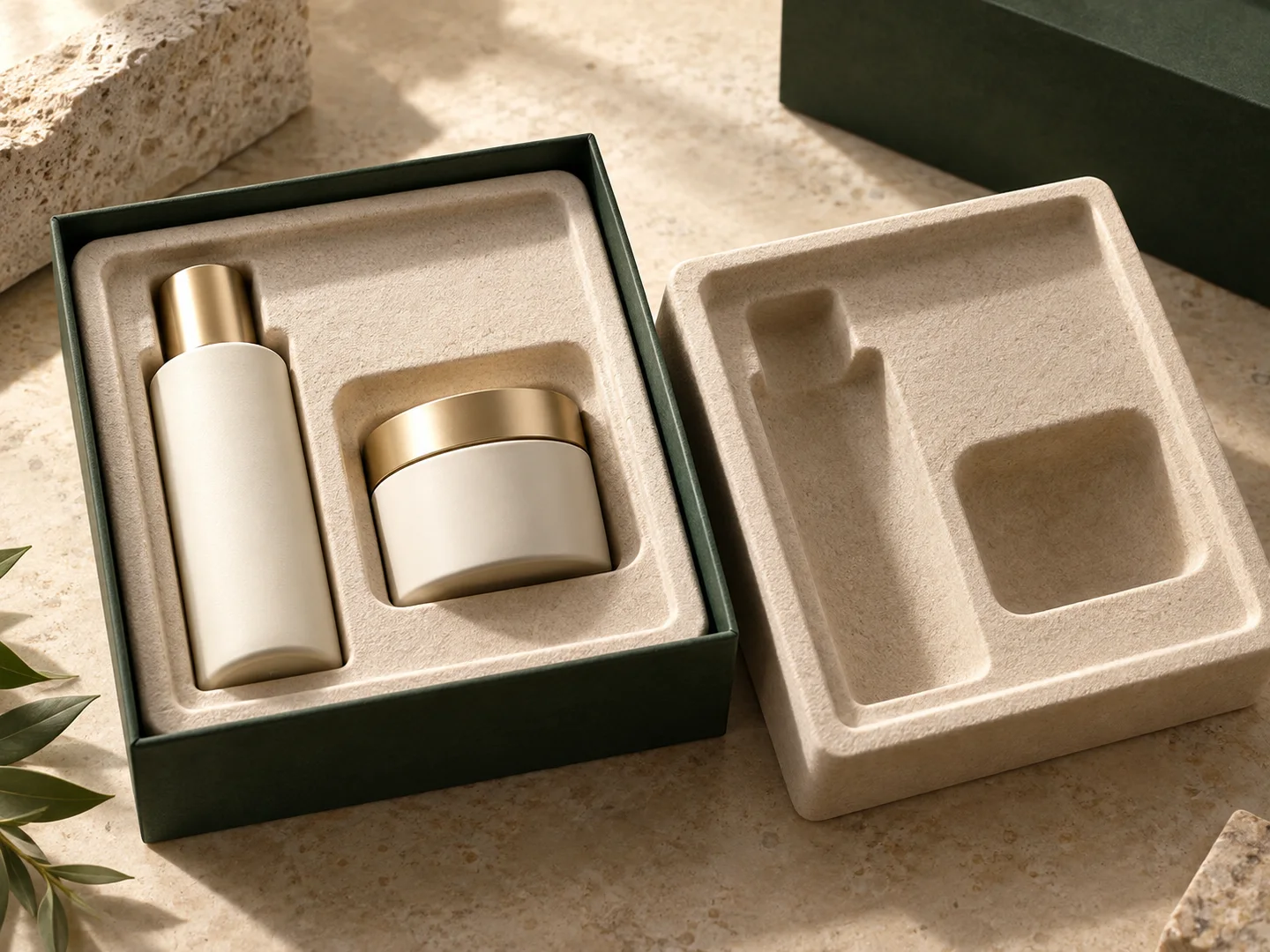 View detail ↗02
Custom-molded from recycled fibre. Supports complex shapes and reduces plastic use.
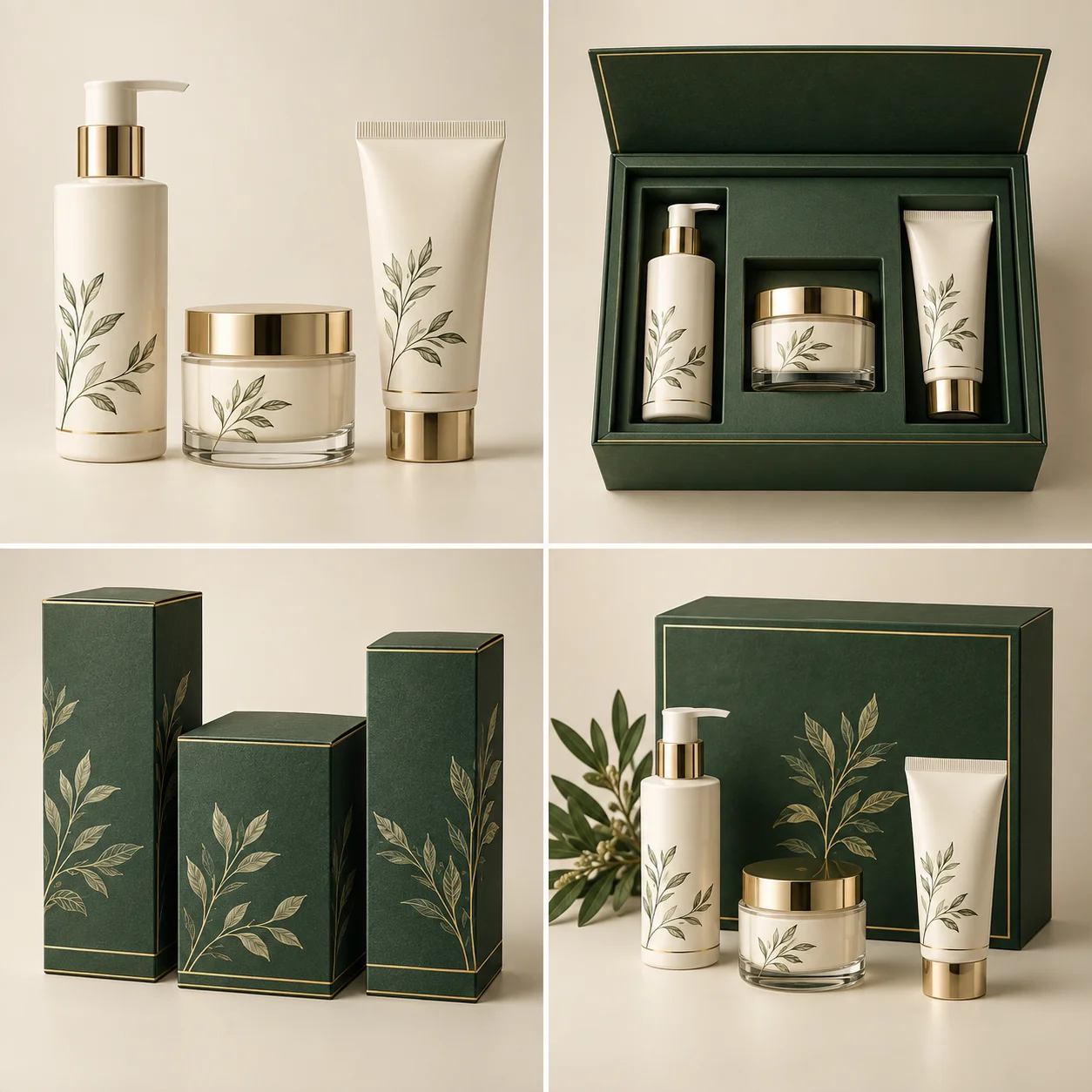
Related packaging studyCoordinated skincare packaging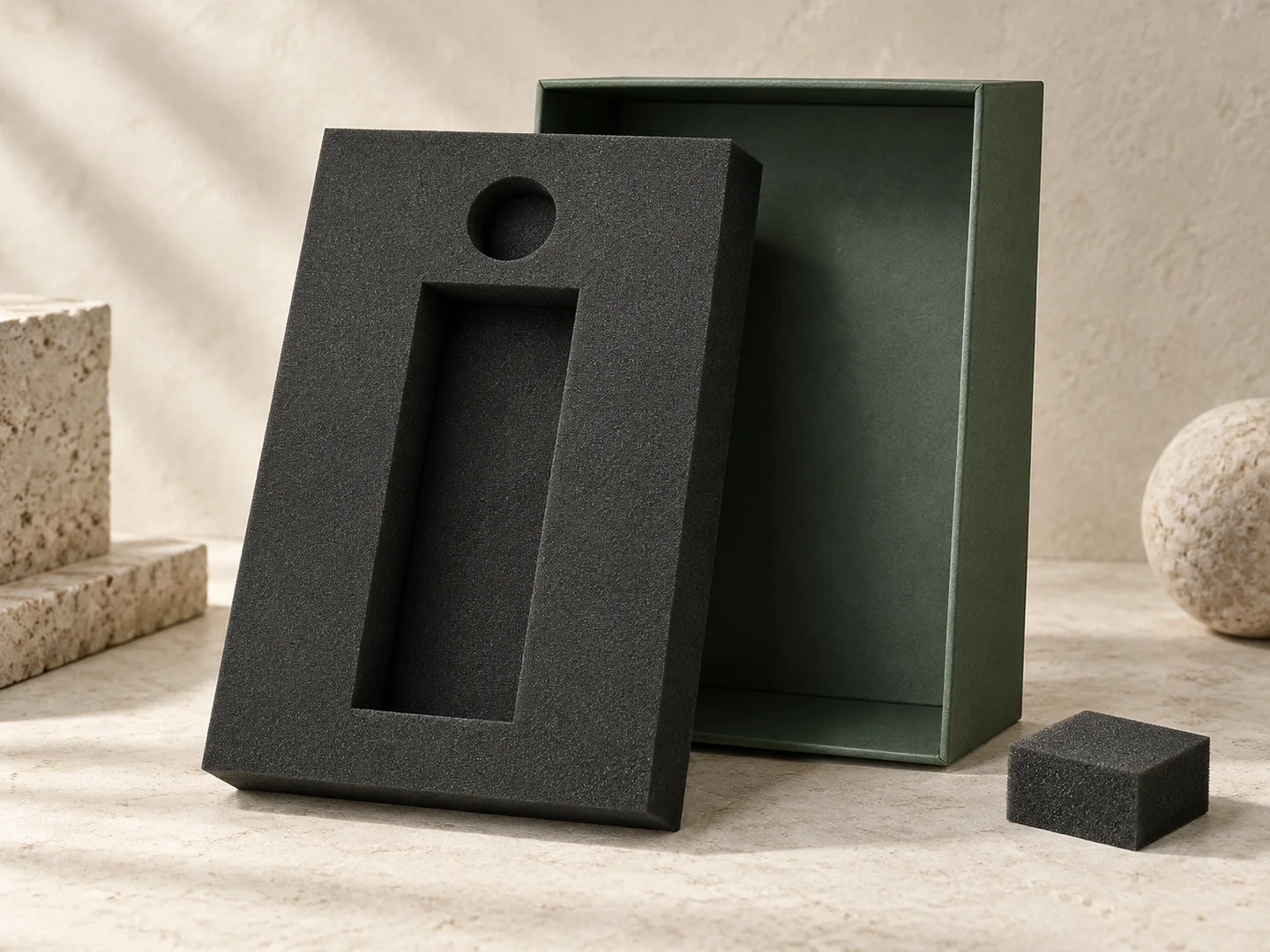 View detail ↗03
Precise cavities for cushioning. Available in multiple densities and colors.
Related packaging studyPerfume: adaptable insert layouts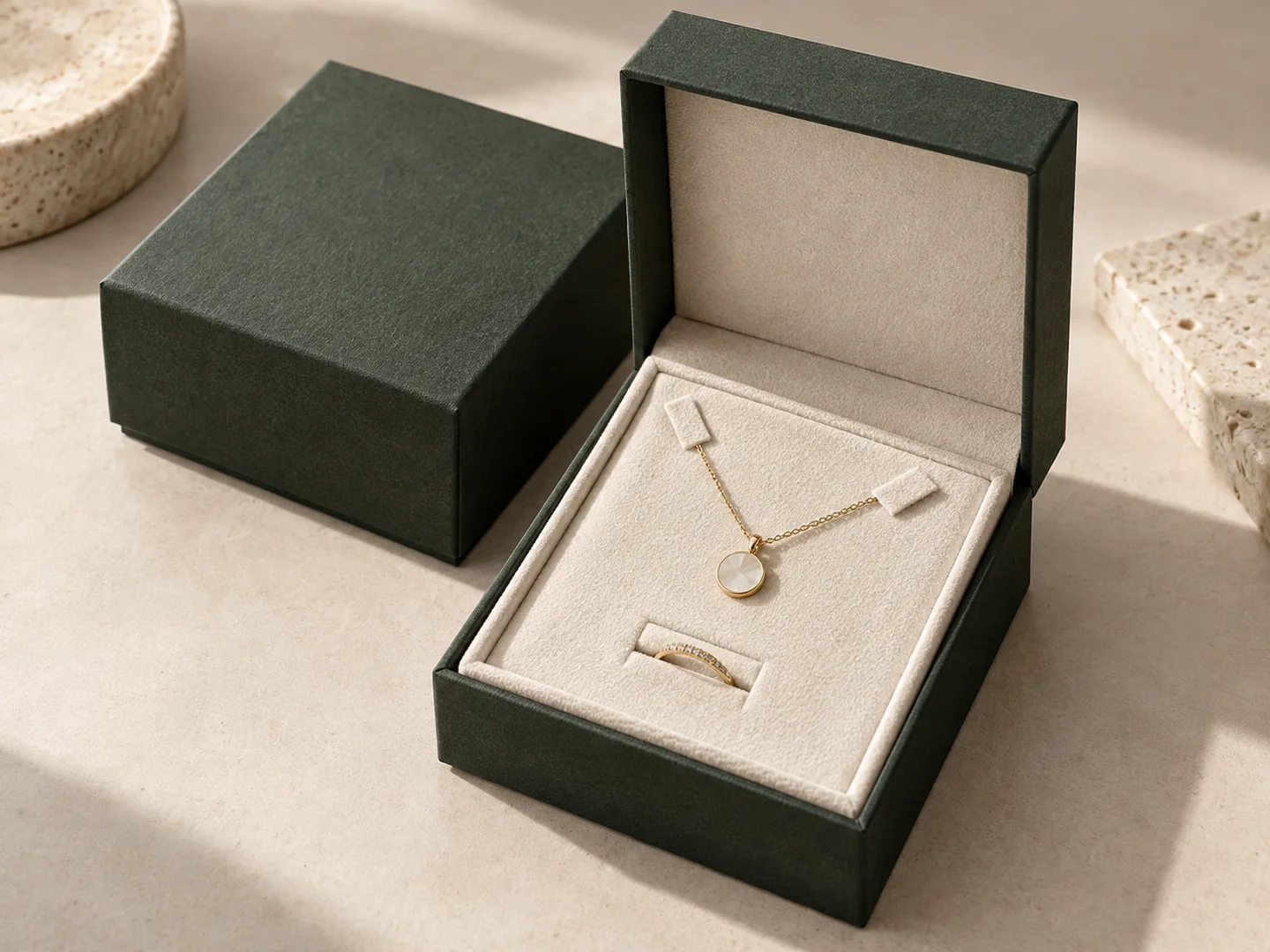 View detail ↗04
EVA or foam wrapped in velvet, microfiber or paper for premium presentation.
Related packaging studyJewelry: presentation and product contact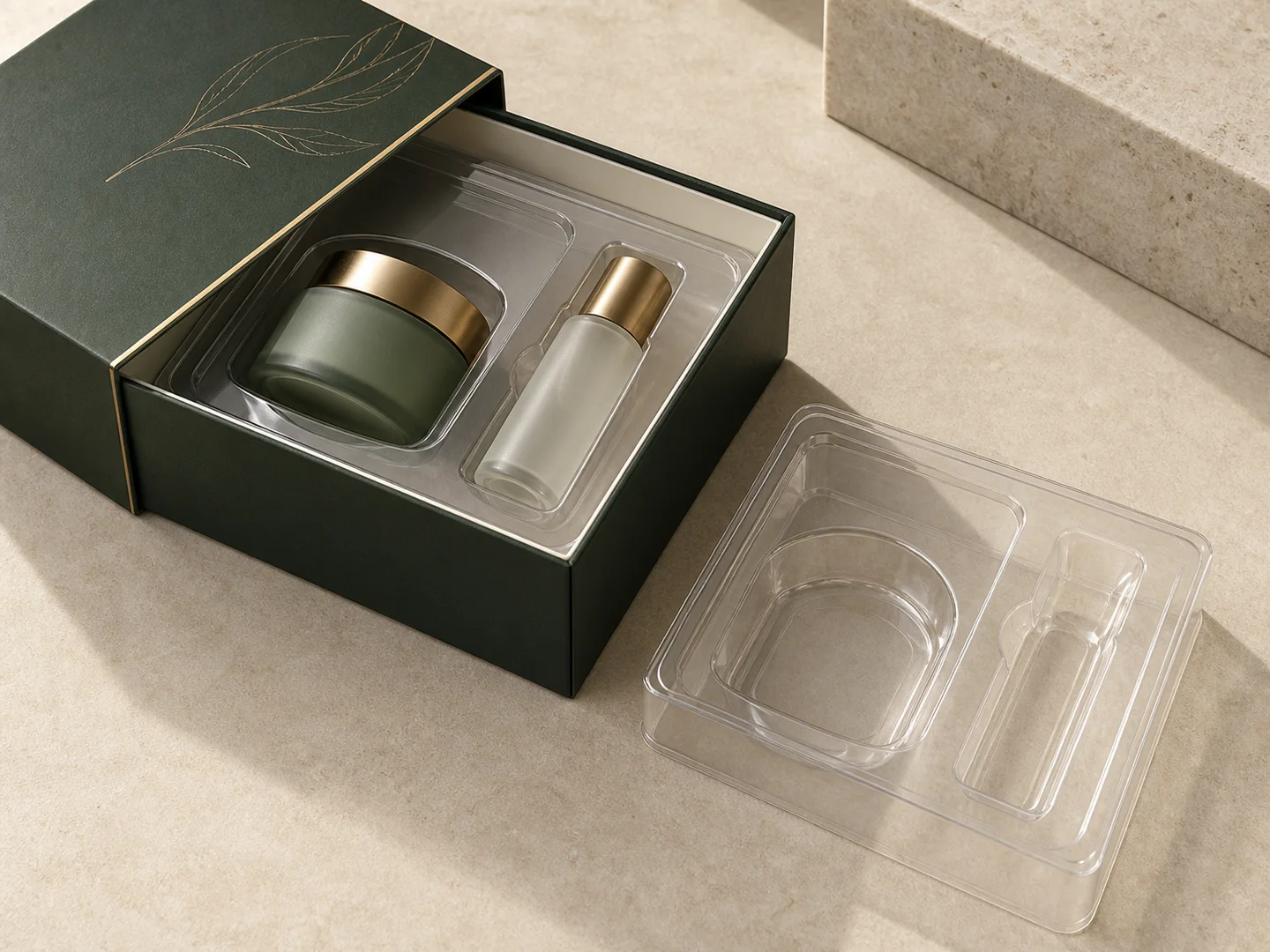 View detail ↗05
Clear or colored plastic trays for exact product fit.
Related packaging studyCoordinated skincare packaging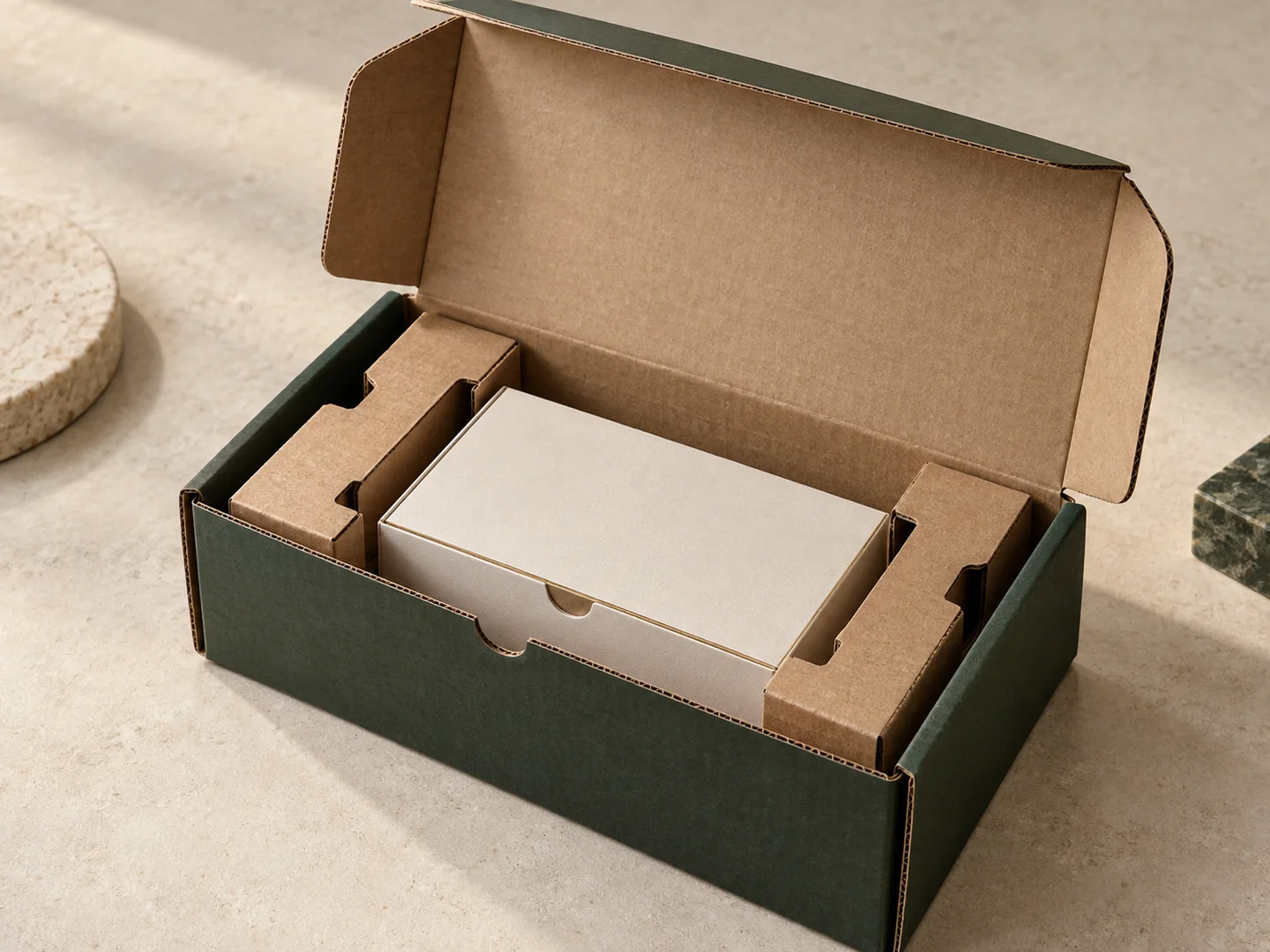 View detail ↗06
Budget-friendly protection for shipping and e-commerce.
Related packaging studyElectronics: paperboard supportIllustrative material examples. Final shape, density, finish and product fit are confirmed through specification review and physical sampling.
For a set containing a jar, bottle and accessories, start with the actual filled products. Measure each item’s widest point, height and weight; include caps, pumps and labels. Decide which items must stay upright and how a customer can remove them without pulling a fragile part.
A molded pulp insert can be considered for shaped cavities; confirm the proposed material, surface finish, tooling and sample cost for the design. A folded paperboard platform can separate products and leave space beneath them. Foam offers another cavity option; compare its density and appearance against the product’s weight and finish. The paperboard and EVA comparison explains the tradeoffs. For a multi-item set, review the cosmetic gift box divider guide.
Check lid clearance, cavity fit, finger access and contact with decorated surfaces using representative products. Review the complete inner and shipping pack for the intended distribution method; an attractive insert alone does not establish transit protection. See the skincare set packaging example for a multi-item presentation.
For a quote, share product measurements, item count, box dimensions if known, quantity per design and delivery country. The minimum order is 1,000 pieces per design; tooling, sampling and shipping are confirmed for each project. Send your insert brief →
Engineering
Measured L × W × H, weight, center of gravity and fragile points.
Friction fit, elastic, cradle or platform. Depends on product shape and orientation.
Product visibility, finger access and removal ease when the box opens.
Before you order
Product dimensions in mm, weight, quantity by size or design, destination, intended use and artwork or reference images. Tell us your preferred material and finish—or ask for a recommendation.
Price depends on the confirmed specification, tooling and quantity. Sample/tooling charges and freight should be identified separately in the formal quotation.
Test representative products, including dimensional variation. Check insertion, removal, rubbing and movement; confirm the outer box and transport packaging together.
Concept visuals illustrate a direction; they are not proof of a completed production order. Final fit, appearance and protection require engineering review and physical sampling.
Request a quote
Buyer questions
MTT Packaging coordinates production of paper inserts (folded paperboard platforms), molded pulp inserts, EVA foam inserts and fabric-covered foam inserts. The choice depends on product weight, fragility, presentation and sustainability requirements.
The right insert depends on bottle weight, fragility and presentation target. Compare paperboard, molded pulp and foam using the actual bottle and distribution conditions. Protection must be verified by sampling and agreed testing; recyclability depends on composition and local collection.
Yes, but each product needs its own cavity dimensioned from measured product sizes—not from a photo or nominal fill volume. The lid clearance, finger access and product sequence should be planned before the insert is engineered.
Provide measured product dimensions (L × W × H in mm), weight, center of gravity, fragile points, desired retention method and sustainability requirements. Nominal capacity or a product photo is not enough to engineer a secure fit.
Details to specify
Use these points to turn a visual direction into a clear packaging brief.
Provide dimensions and filled weight for each item. For handmade or variable products, describe the expected variation as well as the nominal size.
Identify where the insert may touch the product. Review necks, fragile edges, printed surfaces and any coating that can rub or mark.
Paperboard, pulp, foam and formed plastic require different cavity geometry. Material appearance alone does not establish protective performance.
Use finger recesses, lift tabs or a suitable presentation angle. The product should be accessible without pulling on a fragile cap or decoration.
Check insert depth, product height and lid clearance together. Include cards or tissue above the product when reviewing the assembled sample.
Check retention, packing effort and removal using real products. Define transport testing separately for the product and distribution route.
Packaging in detail
Explore the product, structure and finishing decisions behind a related packaging study.
Payment Options
Available for confirmed production orders.
Available for eligible payments.
Available payment methods may depend on order value, project stage and transaction arrangements confirmed with MTT Packaging.
 Bank Transfer
 PayPal