In this guide · 3 sections
- EVA vs. EPE vs. PU: how they behave in production
- Design rules for cavity bridges and finger notches
- When to switch from foam to paperboard or molded pulp
166 / Protective insert engineering
Quick answer
Choose EVA foam (38–45 kg/m³) when you need crisp die-cut edges, velvet flocking, and firm retention for luxury glass bottles or instruments. Choose EPE (expanded polyethylene) when cost and shock absorption in shipping cartons matter more than visual presentation, and reserve soft open-cell PU foam for lightweight items that need gentle compression. Always test filled glass containers in the exact foam cavity to check label scuffing and finger-notch removal.
 By Hugo He · Custom Packaging Consultant, MTT Packaging · Updated 2026-11-26
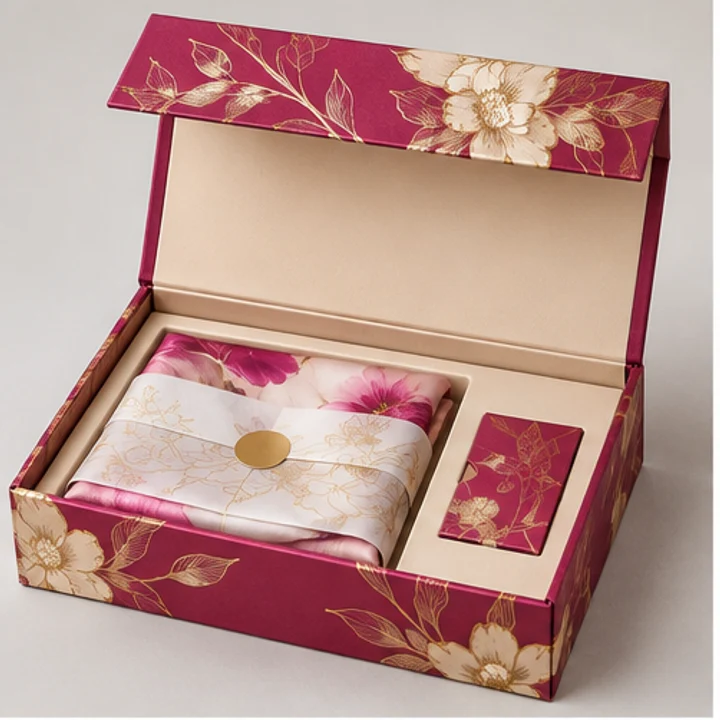
At a glance
Compare EVA, EPE, and PU foam inserts for custom rigid boxes: density, die-cut edge precision, surface scuffing, cost, and when to choose paperboard instead.
EVA (Ethylene-Vinyl Acetate) is a closed-cell cross-linked foam with a smooth, fine-cell surface. It holds tight ±0.5 mm die-cut tolerances, supports velvet flocking or paper lamination on top, and resists crumbling. It is the most expensive of the three but standard for custom EVA foam insert rigid boxes.
EPE (Expanded Polyethylene) has a visible bead-like cell structure and lower unit cost. It absorbs repeated transit impacts well in outer corrugated cartons, though its rougher cut edge looks utilitarian inside a retail gift box. PU (Polyurethane) is an open-cell sponge foam that compresses easily around irregular shapes, but yellows under UV light and offers less lateral support for heavy glass.
Leave at least 8–10 mm of foam wall between adjacent bottle cavities and 10–12 mm between any cavity and the outer rigid box wall; thinner bridges tear during die-cutting or bottle insertion. Add opposing semi-circular finger notches (14–18 mm wide) on heavy or snug-fitting items so customers can lift the product without prying at the label.
If your target market enforces strict plastic-reduction rules or EU PPWR recyclability targets, a multi-layered 350 gsm SBS paperboard cradle or wet-pressed molded pulp tray can replace EVA while keeping mono-material paper recycling. Compare both paths in our EVA vs. paperboard inserts guide.
Most cosmetics, fragrance, and electronics presentation boxes use 38–45 kg/m³ closed-cell EVA foam. Lower densities feel spongy and tear around thin bridges, while 60 kg/m³+ feels overly stiff for finger-pull removal.
Yes. A thin rayon or nylon flock sheet can be laminated onto the top surface of EVA before die-cutting, or the entire molded cavity can be flocked. Note that die-cut vertical walls still show the base EVA colour unless CNC-routed or flocked post-cut.
From guide to product
Explore the opening, material and insert details for each design. These are options to review, not proof of a tested fit for your product.
Rigid gift boxes · Two-piece rigid box
157 gsm C2S art paper with anti-scratch matte lamination or specialty paper
View structure & details →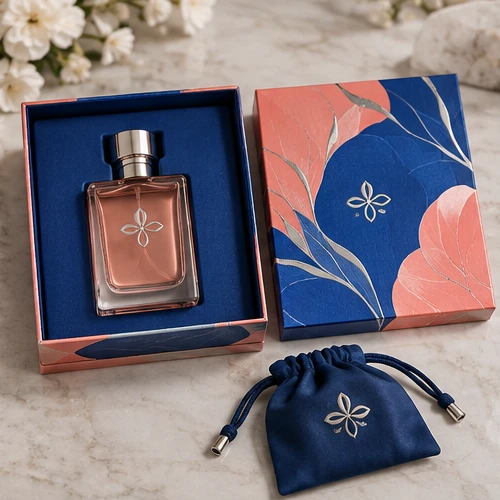
Rigid gift boxes · Lift-off lid
Gloss-laminated printed wrapping paper
View structure & details →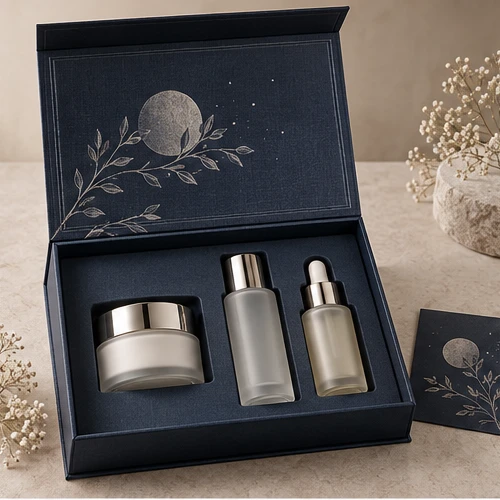
Rigid gift boxes · Magnetic book box
Fine linen-textured wrapping paper
View structure & details →Payment Options
Available for confirmed production orders.
Available for eligible payments.
Available payment methods may depend on order value, project stage and transaction arrangements confirmed with MTT Packaging.
 Bank Transfer
 PayPal