In this guide · 3 sections
- Compare the four folding carton paperboards
- Glue-flap and barcode behavior across coatings
- Matching board grain direction to heavy bottle loads
176 / Material & folding carton engineering
Quick answer
Specify 350–400 gsm C1S virgin SBS (Solid Bleached Sulfate) or FBB (GC1) paperboard when crisp white interiors, tight fold tolerances, and hot-foil or emboss detail matter for cosmetics, fragrance, or retail cartons. Choose CCNB (Clay Coated Newsback) with a recycled grey back when carrying heavier hardware inside litho-laminated or cost-sensitive shelf cartons where interior color is secondary, and use virgin unbleached kraft board (300–400 gsm) when natural brown fibers fit brand positioning. Always specify stiffness and GSM together with grain direction before quoting.
 By Hugo He · Custom Packaging Consultant, MTT Packaging · Updated 2026-11-27
At a glance
Compare virgin SBS (C1S/C2S), FBB, recycled CCNB grey-back, and unbleached kraft paperboard at 300–400 gsm for folding carton stiffness, print finish, and cost.
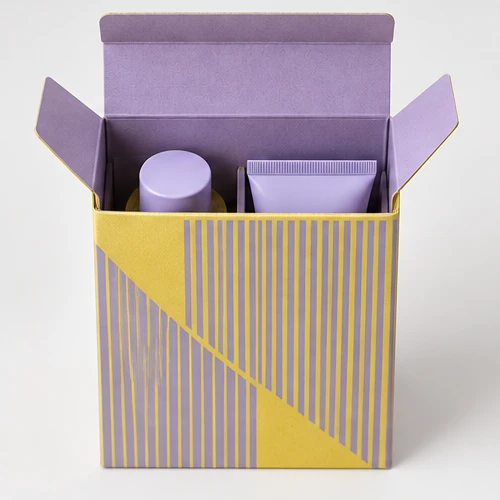
Not all 350 gsm cartons behave alike on die-cutting presses or filling lines. Stiffness depends on multi-ply caliper and fiber length, not weight alone. Review these typical 350 gsm board properties when specifying a custom crash-lock auto-bottom folding carton or straight-tuck retail box.
| Board grade | Approx. caliper (350 gsm) | Interior appearance | Stiffness & crease behavior | Primary packaging fit |
|---|---|---|---|---|
| Virgin SBS (C1S / C2S) | 0.45–0.50 mm | Bright white chemical pulp | High tear resistance; clean emboss/foil edge | Skincare, fragrance, supplements, luxury tuck cartons |
| FBB / GC1 (Folding Boxboard) | 0.52–0.58 mm | Bleached white top & back | Highest stiffness-to-weight ratio per GSM | Tall multi-bottle cartons needing panel rigidity |
| CCNB (Clay Coated Newsback) | 0.43–0.48 mm | Uncoated recycled grey back | Short fibers; prone to crease cracking without film | Cost-driven hardware, mailer top-sheets, inner boxes |
| Natural Unbleached Kraft | 0.46–0.52 mm | Warm brown natural fiber | High tear strength; absorbs ink slightly darker | Organic skincare, candle, apothecary, eco retail |
Choosing C2S white board improves interior flood printing, yet coated reverse fibers prevent standard cold-PVA glue from anchoring firmly unless the dieline strips clay or film along the side seam. Meanwhile, unbleached kraft absorbs standard process CMYK inks unevenly and shifts light pastel tones warmer unless backed by a white ink underbase.
Before approving plates for multi-finish retail cartons, pair substrate choice with our custom foil-stamped folding carton spec, barcode preflight checklist, and folding cartons overview.
Align machine-direction paper grain vertically parallel to the main score lines on tall 350–400 gsm skincare cartons so side walls resist top-load pallet compression without bowing outward. When carrying glass dropper bottles over 150 g, test a crash-lock base alongside our folding carton closure guide on a physical wet-glue sample before mass production.
C1S (Coated One Side) has a clay-coated print face outside and an uncoated crisp white surface inside suitable for glue bonding or lot coding. C2S (Coated Two Sides) adds clay coating to the inside face too, improving interior print vibrancy but requiring strict glue-flap varnish knockout.
Virgin bleached chemical pulp fibers in SBS and three-ply FBB offer higher tensile stiffness and cleaner score folding than short recycled post-consumer fibers in CCNB, which need heavier caliper to match panel bulge resistance.
Yes. Because recycled grey-back fibers are shorter and stiffer near the reverse plies, sharp 180-degree crash-lock folds can split the coated face unless laminated with BOPP film or scored with wider creasing channels.
From guide to product
Explore the opening, material and insert details for each design. These are options to review, not proof of a tested fit for your product.
Folding cartons · Crash-lock bottom carton
Direct sheetfed offset CMYK + Pantone spot ink with glue-flap varnish knockout
View structure & details →
Folding cartons · Tuck-end carton
Sheetfed offset CMYK + Pantone spot ink directly on coated board face
View structure & details →Folding cartons · Crash-lock bottom carton
Uncoated kraft paperboard
View structure & details →Payment Options
Available for confirmed production orders.
Available for eligible payments.
Available payment methods may depend on order value, project stage and transaction arrangements confirmed with MTT Packaging.
 Bank Transfer
 PayPal