In this guide · 3 sections
- Pre-wrap stamping vs. post-wrap debossing
- Brass dies vs. magnesium dies
- Preventing paper cracking and laminate lift
167 / Finishing & tooling engineering
Quick answer
On paper-wrapped rigid boxes, blind debossing (recessing the logo) is far more common than embossing (raising it) because rigid greyboard cannot be stamped cleanly from the back once laminated. To emboss a rigid box lid, the 120–157 gsm wrapping paper must be stamped flat before wrapping—requiring careful registration and risking crush during box assembly. Folding cartons (300–400 gsm) can be embossed or debossed in-line with brass or magnesium dies.
 By Hugo He · Custom Packaging Consultant, MTT Packaging · Updated 2026-11-26
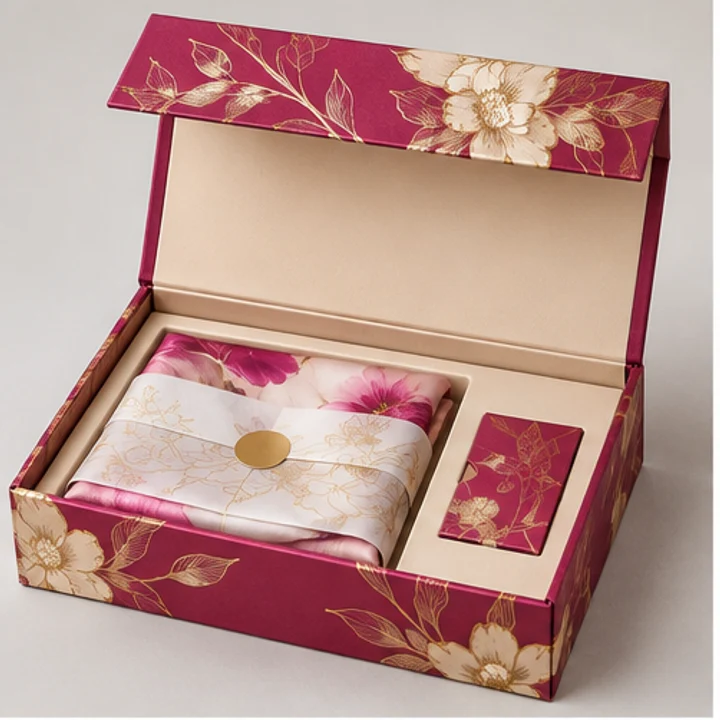
At a glance
Understand emboss vs. deboss on rigid boxes and folding cartons: brass vs. magnesium dies, paper weight limits, and why debossing is preferred on greyboard.
When wrapping a 1,200 gsm greyboard lid, the wrap sheet passes through glue rollers and corner-turning brushes. Any raised embossed area on that thin 157 gsm wrap can get partially crushed or misaligned against the lid center. By contrast, blind debossing or blind deboss on specialty paper can be stamped cleanly with a single brass die, delivering consistent depth without registration drift.
Magnesium (or zinc) dies cost less upfront and work well for short runs or simple flat debosses. CNC-engraved brass dies cost more but last through 50,000+ impressions, hold sharper 45-degree bevels, and are mandatory for multi-level sculpted embossing or combined foil-and-emboss (registering hot foil and raised relief in one pass).
Deep embossing on 350 gsm folding cartons can crack coated surfaces if the die edges are too sharp or the paper grain runs perpendicular to the longest stroke. Softening the die shoulder slightly and using a tougher 157 gsm wrap or long-fiber dyed paper prevents white stress lines around the logo.
Debossing presses a heated or unheated male die directly into the finished wrapped lid or flat wrap, creating a crisp shadow recess. Embossing requires a matched male-and-female die set on flat sheets before wrapping, and the raised paper dome can flatten under box-making rollers.
Keep positive lines at least 0.35–0.5 mm wide and avoid ultra-fine serif text under 8 pt. Coated art papers with matte lamination hold sharp edges, while long-fiber cotton or specialty papers give a softer, deeper impression.
From guide to product
Explore the opening, material and insert details for each design. These are options to review, not proof of a tested fit for your product.
Rigid gift boxes · Two-piece rigid box
157 gsm C2S art paper with anti-scratch matte lamination or specialty paper
View structure & details →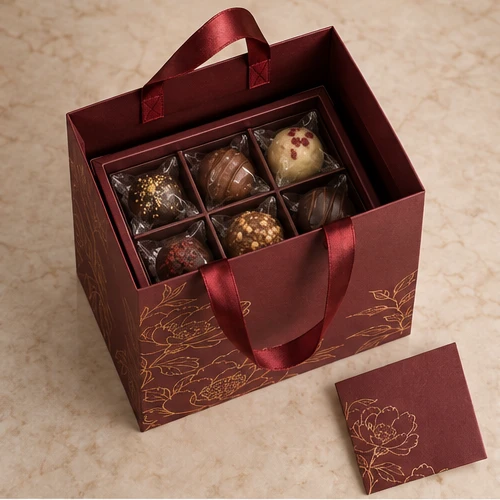
Custom paper bags · Ribbon-handle bag
Uncoated specialty or matte-laminated C1S art paper; confirmed by sample
View structure & details →
Folding cartons · Tuck-end carton
Direct print on paperboard
View structure & details →Payment Options
Available for confirmed production orders.
Available for eligible payments.
Available payment methods may depend on order value, project stage and transaction arrangements confirmed with MTT Packaging.
 Bank Transfer
 PayPal